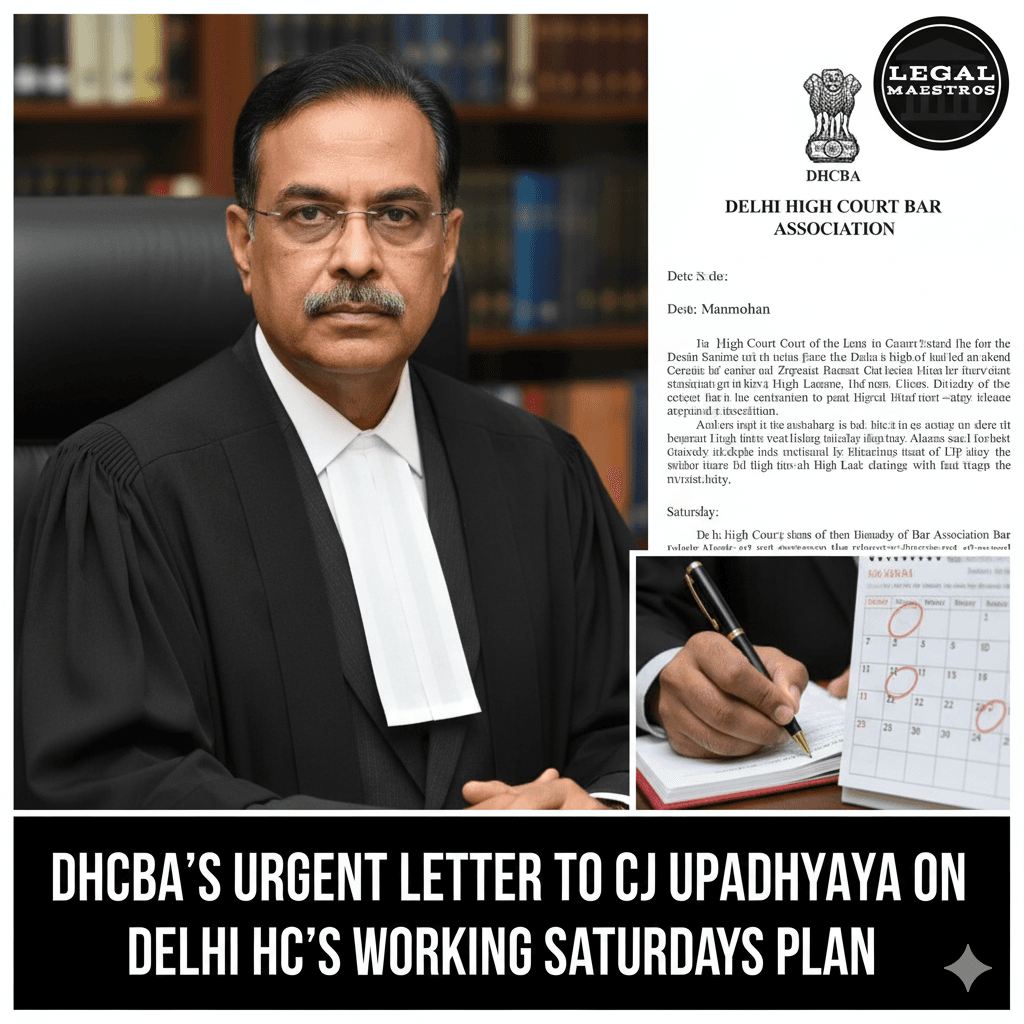
Bar Association Opposes Saturday Sittings
The Delhi High Court Bar Association, also referred to as DHCBA, has officially protested against a new proposal of making Saturdays workdays at the court. This was an anguish, the concern of thousands of lawyers, who practice in the High Court, and was put across in this letter. The court administration came up with the plan to handle a huge number of pending cases.
The lawyers association left no doubt that no consultation was done with them prior to the announcement of this huge change. The DHCBA in their letter termed the decision as unilateral and coercive, that is, a one-way decision which lawyers had no choice but to follow. According to the leadership of the Bar, such a move interferes with a long-standing tradition of a five-day work week.
This five-day program is very old and the legal society feels that it is an indispensable part. The DHCBA stated that such a decision without any consultation is irreverent to the lawyers. The association assumes that the lawyers and the judges are two equal components in the justice system (This is the Bar and the Bench). They believe that such a big decision ought to have been arrived at jointly.
Special Saturday sittings were proposed, and were to hear and dispose of very old cases, and especially long pending criminal appeals. Although there is a common purpose of the Bar association to reduce the case backlog, it highly disagrees with this approach. To them, they believe that the lawyers are being overburdened with the responsibility of finding a solution to this administrative issue. It was an official request to the Chief Justice to rethink the plan at once and withdraw it.
Impact on Lawyers’ Work-Life Balance
The letter by DHCBA elaborated the reasons why Saturdays are important to lawyers and are not just a day off. To the majority of advocates, it is not the free time on the weekend but a time to do the necessary case related work. Saturdays are also used by lawyers to prepare the cases that are listed on the next week. This entails in-depth study, perusing thick cases files and writing legal documents and this is hard work, especially on the hectic court days Monday through Friday.
Moreover, lawyers mostly meet their clients during Saturdays. Throughout the week, both the clients and lawyers are busy attending court hearings. The only viable time they have to carry out these crucial consultations is on the weekend where they can deliberate on the strategy of cases and evidence preparation. By compelling lawyers to appear in the court on a Saturday, such crucial meetings with the clients would be practically impossible to book.
The association also mentioned the overwhelming pressure that is already a part of the legal profession. The hours that lawyers work are long, unpredictable and the court pressure is ever present. The letter cited that depriving them of a full-day of preparation and personal rest would cause a high level of burnout. This in turn may adversely impact the quality of law services that they offer to the clients.
The DHCBA noted that this would particularly be a negative effect to first generation lawyers. They are the advocates who are not of legal families and who usually do not have large support networks or any offices. They extensively use the weekend to cope with their workload and develop their practice. The Bar claimed that this plan hurts these younger members of the legal fraternity in disproportion and this impacts their capacity to work and live.
A Call for Consultation, Not Conflict
One of the biggest themes of the DHCBA protest was the total absence of a discussion prior to the decision being made. According to the leadership of the association, the plan was sprung without any kind of warning. Such communication failure is perceived as a violation of trust between the lawyers and the administration of the court. The letter pointed out that the Bar and the Bench are expected to operate as two wheels of the same chariot in order to administer justice.
The DHCBA also asked the Chief Justice to hold a full court reference to hear the matter. Full court reference is an official gathering of all the judges of the High court and the representatives of the Bar Association in which they can deliberate on some crucial issues. The DHCBA feels that this is the best course of action in dealing with such a substantial change in the court calendar. It would enable the lawyers to express their interests directly before the judges.
The association also warned against imposing this plan without consultation because this might create undesirable circumstances. This was interpreted as a strong indication that unless the administration changed their minds, the lawyers may have to protest or even strike. The Bar indicated that they would rather talk than to fight, but they were adamant in objecting to what they consider as an unreasonable and imposed rule.
The letter is a reminder that the ecology of the court is based on mutual respect and collaborative cooperation. The DHCBA does not simply refuse Saturday work, it is requesting its position as a major stakeholder to be heard. They desire a cooperative approach to the issue of case backlogs, rather than a top-down dictum that is not based on their real-world realities.
Questioning the Solution to Case Backlogs
Although the DHCBA concurs that the high count of cases outstanding is indeed a very serious issue, it severely opposes the idea that working on a Saturday is the right thing to do to the lawyers. The association believes that it is not the lawyers at fault as they are already doing their job to the fullest. According to them, the new plan is punishing lawyers who did not create or solve the problem by themselves.
The Bar in their communication have cited what they consider the actual cause of the delays and that is the high rate of vacancies in the judiciary. The Delhi High Court is given a sanctioned strength of 60 judges but with a lot less judges at work. The DHCBA seems to take a stance that the backlog is a systemic problem.