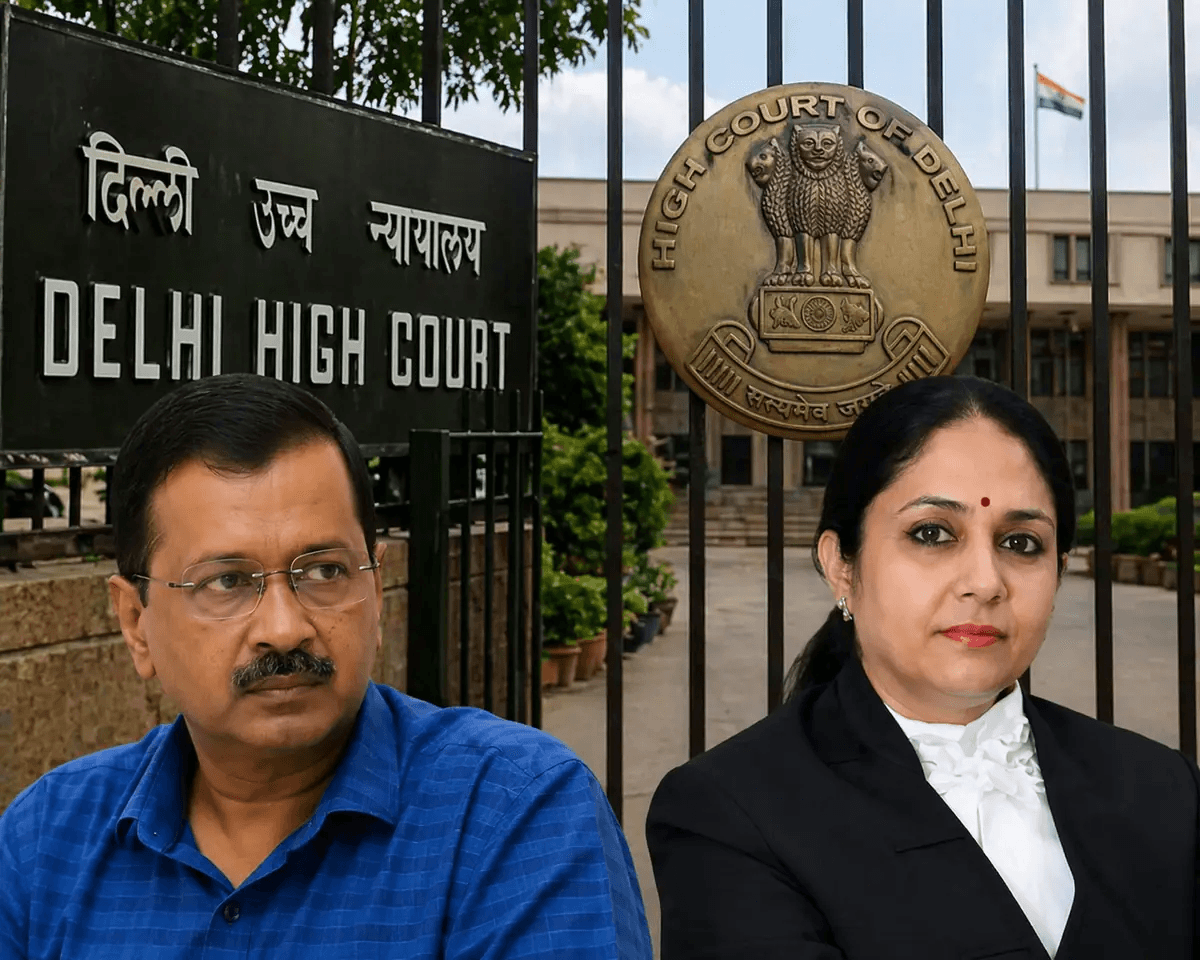
On April 13, feeds on X, YouTube and Facebook were thrown into a frenzy with videos of the Delhi Chief Minister, Arvind Kejriwal. He was not conducting a political rally or press conference. The Aam Aadmi Party convenor was sitting in a virtual court of law, arguing his own legal case almost an hour. It was sucked by the internet. Fragments of his raving cry spread quickly, via WhatsApp chats and political networks. The Delhi High Court was not amused though. The judicial system went ahead to delete the footage completely in a few days. The court administration clarified beyond doubt that hybrid and virtual hearings are not theatrical events that attract social media use. Filming a judge and a litigant without consent is a clear breach of the legally accepted procedures. The following crackdown has pulled big tech companies, political leaders, and reporters into a tricky legal fight over privacy in courtrooms.
The Hearing That Started It All.
In order to comprehend how serious the released video is, one must refer to what was going on in that particular hearing. The main problem is linked to the Delhi Excise Policy investigation which was long-term. An earlier trial court had dismissed Kejriwal and a few other people, with no concrete evidence to level charges against them. The Central Bureau of Investigation countermoved and appealed that discharge order to the Delhi High Court. This case was placed in the hands of Justice Swarana Kanta Sharma. She gave a directive that in part put a hold on the findings of the trial court. This action made Kejriwal and his co-accused, such as Manish Sisodia, apply to have her recused in the case. They claimed that her prior instructions caused a reasonable fear of prejudice. On April 13, Kejriwal chose to present his case. He had entered the hybrid hearing and talked about forty-five minutes. He criticized how the detailed order of the trial court was stayed and expressed his worries about natural justice. One of the callers pressed the record button. Soon after he had spoken the clips were all about.
The Rapid Legal Crackdown.
The Delhi High Court administrative wing responded swiftly. Registrar General Arun Bhardwaj looked into the matter and coded the viral clips a major violation of judicial procedure. He observed that the illegitimate sharing of these videos absolutely compromises the regulatory system of virtual hearings. He instructed the Delhi Police to initiate direct action to remove the illegal recordings in any media. The court referred to the severe breach of the Electronic Evidence and Video Conferencing Rules of 2025, as well as the old 2021 rules. These frameworks expressly outlaw any screening of any recording or publication of any proceedings that are carried out in virtual modes. The command was wholesome. It was applicable to all single individuals and organizations that uploaded or distributed the content online. The officials of the registry publicized that law-enforcement agencies were officially asked to undertake any action against anybody who shared the footage, no matter their political affiliation or number of followers.
The Public Interest Litigation
When Advocate Vaibhav Singh brought forward a public interest litigation, the situation escalated to a formal legal battle as an administrative takedown was converted to a formal legal battle. He directly approached the court seeking to have contempt proceedings initiated. Singh did not only attack anonymous uploaders. In his complaint, he specifically mentioned Arvind Kejriwal, a high-profile journalist as Ravish Kumar and a number of other political leaders. The defendant claimed that the audio and video recordings were taken illegally and intentionally spread as a premeditated conspiracy. The clips were also purposefully edited and disseminated through the petition, according to it, to advance a certain political agenda and defame the image of the judiciary. According to Singh, the numerous distribution of the video was aimed at putting pressure on the judge presiding over the case. He gave a call to the High Court to initiate an in-depth investigation to find out who made the initial video and how it was organized on several social media platforms.
Tech Giants in the dock.
On April 23, the case of the public interest litigation was presented to a Division Bench consisting of Justice V. Kameswar Rao and Justice Manmeet Pritam Singh Arora. The debate in the courtroom did not take long before it turned into a political play and technological nightmare of deleting viral contents. The leading attorneys of Meta Platforms and Google were forced to clarify their sides to the court. Arvind Datar, representing Meta, informed the court that the company had already responded to the first takedown requests made by the registry. But he noted one significant technical fact. Social media sites are based on the use of special URLs and official complaints to delete information. Technologically, it is difficult to automatically identify all re-uploaded clips. The attorneys described that even though there are backend data such as IP logs, to locate the very first individual who uploaded the video, a highly focused digital investigation is required. The judges were quite conscious of these practical challenges, but took a strong position. They instructed the tech platforms to provide any available information that may assist in tracing the source of the first upload. The bench also instructed X to remove any content that is identified by the petitioner the moment it is flagged.
Rules of Virtual Justice.
At the hearing on April 23, the judges noted that the case is much broader than a single politician or a particular case of the excise policy. Justice Rao added that the court was worried about the institutional consequences of such unauthorized broadcasts. As virtual hearings became the new reality after the global pandemic, the courts needed to make a set of strict rules that would preserve the stature of a real courtroom in an online format. To live-stream a court case, there must be infrastructure, and judicial approval. Hidden recordings by-pass such measures. This was echoed by the Additional Solicitor General, Chetan Sharma, at the proceedings. He claimed that the illegal sharing of court arguments inherently harms the reputation of courts. When litigants, lawyers and judges suspect that they are covertly being videotaped to gain influence in social media, the forthrightness of legal arguments will be lost. The court took advantage of this controversy to remind the masses that the justice system is not an open system but by no means should it be viewed as unregulated internet content. That the notice has been given to all parties is an indication of a greater future analysis of platfor.