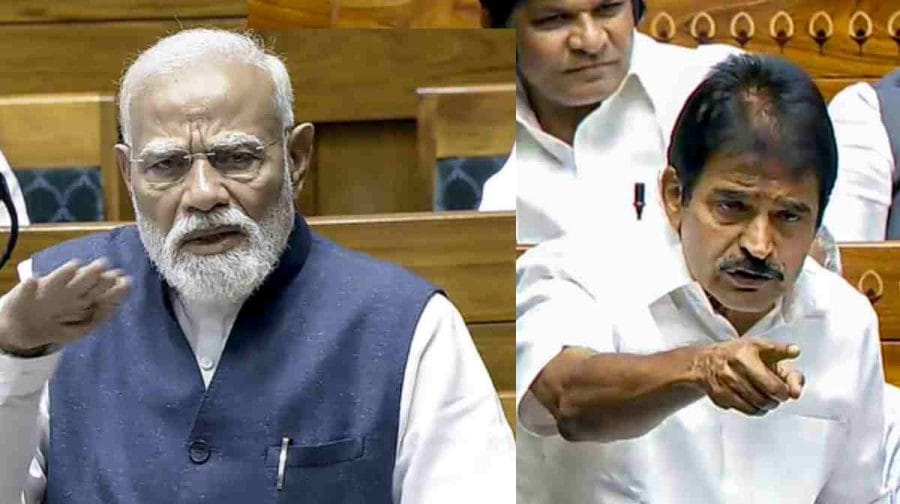
It was as hot as tho inside the parliament. On Tuesday, April 21, Congress general secretary KC Venugipal pulled an extremely rare legal lever. He filed a notice of breach of privilege against Prime Minister Narendra Modi. It is not an everyday occurrence to see the head of the government go after with this particular tool of parliament. Venugipal submitted his official grievance to Lok Sabha Speaker Om Birla. He desires instant results. The whole story revolves around the reaction of the Prime Minister to a huge legislative defeat earlier in the week.
Defeat of the Amendment Bill.
To understand the cause of this disagreement, it is useful to take a glance at the recent voting session. The Bill (131st Amendment) Constitution, 2026 was one of the Bills that the government was attempting to pass. This act had monumental impact. It aimed to relate the growth of Lok Sabha seats and a high-profile delimitation exercise to a quota of women seats. It was forced by the ruling party. Nevertheless, to amend the constitution, two-thirds majority is necessary. The numbers could not be gathered by the government.
The opposition parties came together and voted against the bill. The fine print was of great concern to them. They said that the aspect of delimitation would be detrimental to the federal structure. Delimitation entails the re-definition of the boundaries of parliamentary seats using population statistics. Southern states are also worried that the process will diminish their representation in Congress as compared to more densely populated states in the north. The opposition felt that the government was taking advantage of the universally popular concept of women reservation as a veil to silently impose these structural changes with article 82 of the Constitution. The bill fell to the floor in a heap, due to its joint resistance.
The Prime Minister Goes on Air.
The after-effect of that voting session did not remain within the four walls of the parliament. On April 18, Prime Minister Modi appeared on national television to speak to the nation. Such national addresses are usually left by broadcasters to huge emergencies or significant policy rollout or a time of national unity. Modi instead used the airtime to discuss the failed bill.
He harshly criticised the opposition parties who thwarted the legislation. He doubted their motives. The opposition claimed that he had referred to the fact that their decision to vote against the bill was an insult to women and that they were driven by certain evil intentions in their voting action. He framed their opposition to legislation as anti-women. It is precisely this television appearance that sparked the present legal backlash on the Congress side.
Decoding Rule 222
Venugopal did not only write an angry letter to vent his frustrations. He based his objection on a very narrow section of the parliamentary rulebook. He referred to Rule 222 of the Rules of Procedure and Conduct of Business in the Lok Sabha. This rule is concerned with special rights/immunities of members of parliament. These privileges are in place to enable lawmakers to vote and make speeches without intimidation and external influence.
The head of the Congress claimed that Modi had overstepped a huge boundary in his broadcast. Based on the traditional parliamentary norms, no one can cast any speculations on the way a member votes. You can not publicly conjecture or imput evil intent to their legislative decisions. Venugipal made it very clear that it is an explicit attack on the authority of the parliament to question an elected representative about doing his constitutional duty. He described the speech made by the Prime Minister as a gross breach of privilege and contempt of the House.
The Requirements of the Speaker to the Desk.
The documents that have been sent to Speaker Om Birla contain a precise description of what the Congress party is seeking to be the next action. According to Venugipal, the national address by the Prime Minister was unprecedented and totally unethical. He termed it as an outrageous use of executive authority. A complaint on a lack of numbers in the parliament using the platform of a national broadcast, he argued, is dangerous precedent.
The official request is that the Speaker be requested to officially notice the incident. Venugipal wishes the matter to be referred to the Committee on Privileges. This committee is more or less an internal court to the parliament. Should they pick up the issue, they will initiate a thorough investigation into the words and deeds of the Prime Minister. Venugipal urged the Speaker to act promptly. He insisted that the sacredness of the legislative branch must be defended by the executive branch.
A Rare Confrontation
The real politics of this move bring to fore the rifts of the present political scene. Privilege motions are fairly frequent, although they are nearly always directed at fellow members who have been rowdy in the House, or at the external media for distorting the truth. Speaking to the sitting Prime Minister straight in the face is a speech delivered outside the walls of the parliament which stretches the limits on which these rules are usually exercised.
The opposition believes that they were just doing their work. They read the bill and did not like the clauses that related to quotas of women and delimitation and voted against it. They feel that they need not be subjected to nationwide televised reprimand on taking part in the democratic process. They believe that their basic right to vote freely was compromised by the top executive office.
The ruling party considers the activity of the opposition to be an intentional blockage of progressive laws. They perceive the Prime Minister address as a communication that is required to the people about a stalled reform.
It is high time that Speaker Om Birla takes the ball. He must read the notice and determine whether there is sufficient merit to send it to the committee. The next few days will tell whether the parliamentary administration will be able to cope with a direct challenge to the Prime Minister. The Congress party has drawn their line in the sand and are awaiting to find out whether rules of the house apply to the most powerful politician in the nation.