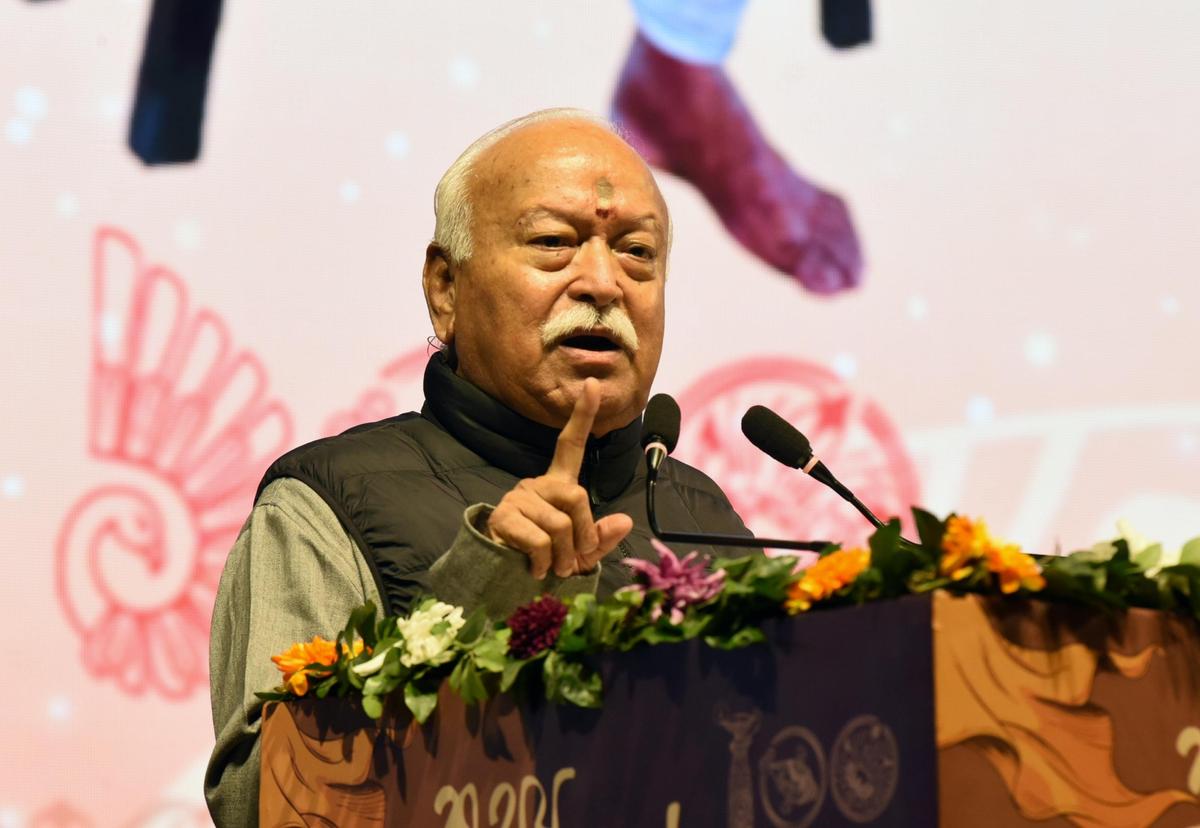
A Public Interest Litigation just was harshly dismissed by the Nagpur Bench of the Bombay High Court. This very petition targeted the Z-plus security cover that Rashtriya Swayamsevak Sangh chief Mohan Bhagwat is currently receiving.
The Nub of the Legal Challenge.
Legal battle began with Lalan Kishore Singh. He is a Nagpur social activist. Singh had presented the Public Interest Litigation with the help of his lawyer, Ashwin Ingole. The main premise was concerning money. Specifically, taxpayer money.
Singh had argued that the government was using anywhere between Rs 40 lakh to Rs 45 lakh each month in order to ensure that Bhagwat was kept safe. He said it was a colossal waste to the state treasury. The activist also mentioned that the Rashtriya Swayamsevak Sangh is not a registered organization. To him, it was outright misappropriation of funds to shield the leader of a group that was neither registered. He desired the court to intervene. He desired that the government should recoup all those security expenses directly out of the organization or Bhagwat himself.
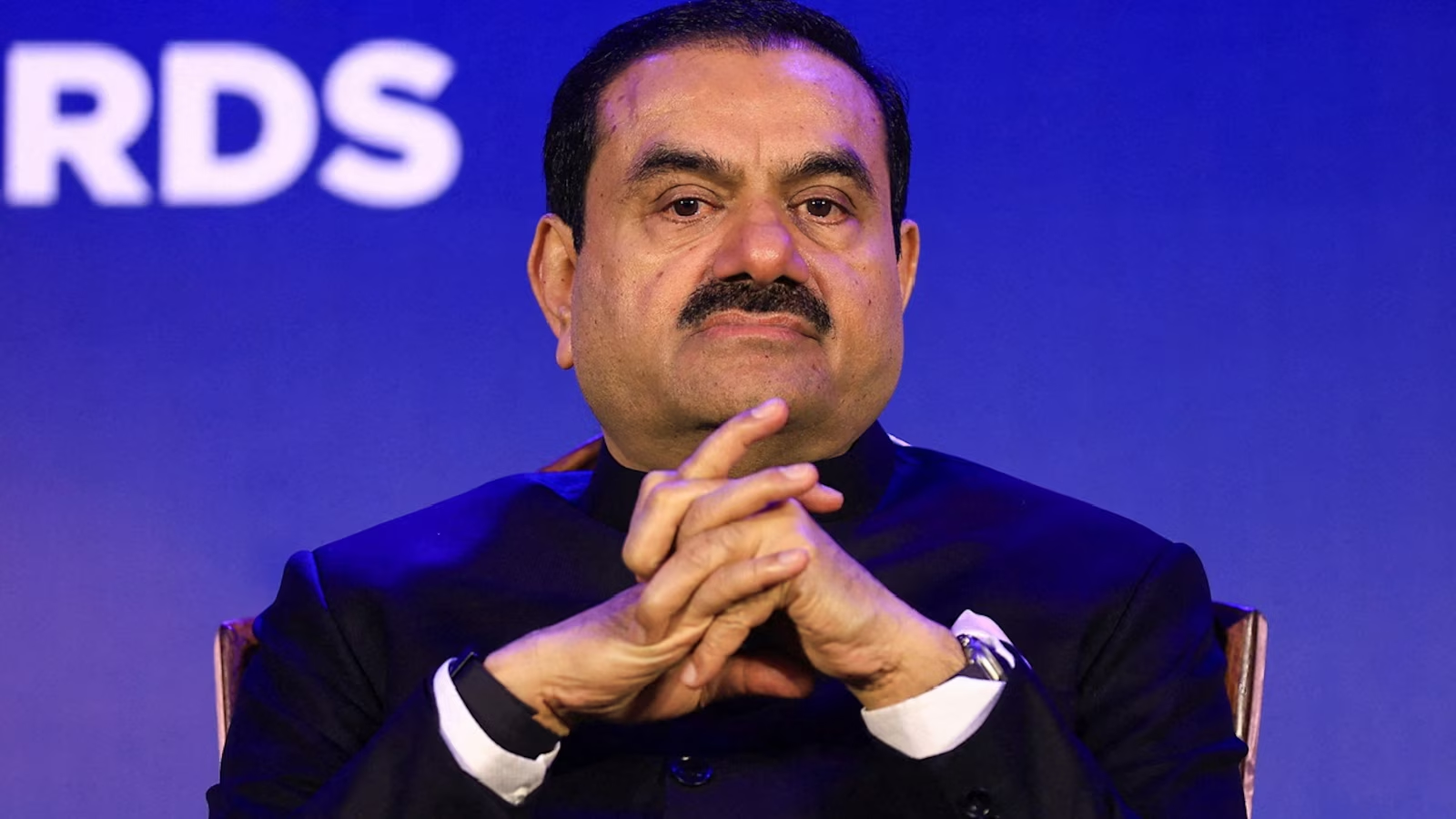
Singh used a recent legal precedent in order to support his arguments. He cited a 2023 Supreme Court ruling of a billionaire industrialist, Mukesh Ambani. In the particular case, the top court in the country held that though Ambani would enjoy the highest level of government security, his family would have to pay the full cost. This is one of the parallels that the lawyer of the petitioner attempted to create. He said that when a person desires extraordinary protection not stipulated by some particular statutory or constitutional office, he or she should reach into his or her own pockets and fund it.
A Stinging Shirtwaist Scolding.
Court did not accept the argument. Not the slightest.
On Monday, April 20, 2026, a division bench heard the issue. The hearing was conducted by Chief Justice Shree Chandrashekhar and Justice Anil S. Kilor. They never simply dismissed the petition. They ripped up the purpose of it.
The paperwork was examined by the judges, and glaring holes were observed. They indicated that Singh had not given the basic information about himself. He merely mentioned that he was an Indian citizen and that was all. It was very irregular to the bench that a citizen should have instituted a huge legal challenge without revealing proper background or source of information that could be verified.
The court noted that Singh appeared to have hurriedly gone straight to the courts upon reading a couple of newspaper articles. The bench observed that there was no independent research. There should be ground work in filing a Public Interest Litigation. The court believed that this petition lacked. Since the petitioner was solely dependent on what media reported and not the actual facts that are verified, the judges were quick to make an inquiry on his motives.
The last command was savage. The judges termed the petition as a plea of inspiration. They also took it a step further and termed it as a complete abuse of the process of law. They clarified that a real Public Interest Litigation needs to be of service to the public interest. This particular dispute did not attract any public interest on the bench.
The Government of the State Interferes.
The state government was represented in the case of Devendra V. Chauhan. He was a strong advocate against the petition.
Chauhan suggested that the petition was totally without merit. He raised an interesting fact about the activist that gives background information. Chauhan informed the court that the petitioner had engaged in a similar dispute in the past. Singh had already made requests, under the Right to Information Act, regarding the same security arrangements several years ago. The government pleader indicated that Singh was concealing previous orders issued against him by the State Information Commissioner.
The state wanted to demonstrate a trend by pointing out such historical encounters. It was argued that it was a particular interest of the petitioner in this matter and not a general interest in taxpayer money. The court eventually concurred with the state that the petition was filed due to other factors other than true public good.
Knowledge of the Security Protocols.
What is it this security cover is all about? It is an enormous logistical exercise.
Mohan Bhagwat is presently of Z-plus category security. This is the maximum level of security provided in India. It entails an elaboration of more than fifty trained staff members. These guards are typically recruited into such specialized forces as the Central Industrial Security Force. They are always closely encircling the protectee.
But the security detail surrounding the RSS chief is even more elaborate than an ordinary Z-plus detail. His security has recently been enhanced following some of the alerts raised by the Intelligence Bureau over the threat perceptions. The Advanced Security Liaison protocol is now in force over him.
This is a big deal. The Advanced Security Liaison protocol is very stringent. It is the very same level of security coordination that is given to the Prime Minister and the Home Minister. A person who has this protocol will create a huge chain effect when traveling. Local governments, state police agencies, and even state health departments must plan days ahead. They clean up grounds, organize evacuation plans, and organize emergency medical situations.
This fact was discussed by the court at the hearing. The judges made it clear that no decisions on high-level security are made in a vacuum. These calls are issued by very real, highly classified threat inputs by competent authorities. The court made it very clear that the judiciary, based on its own will, cannot second-guess these security determinations simply because someone has petitioned it.
The Public Interest Litigation Standard.
The dismissal throws a bleak light on the vision of the courts to the Public Interest Litigation system today. The first purpose of the PIL tool was to provide marginalized voices with an opportunity to be heard. It was to deal with colossal human rights abuse or profound environmental issues. Courts over the years have been getting annoyed with individuals resorting to this potent weapon to air personal grievances or even political grandstands.
When a judge is examining a PIL, he is examining a valid grievance that affects a significant portion of the society. They are seeking careful studies. The bench closed it down when it became apparent that Lalan Kishore Singh had mostly copy-pasted allegations made in newspapers without gnashing his teeth to collect independent evidence. The Bombay High Court message could not be misunderstood. Judiciary will not give its time to waste in petitions that are not well grounded in facts.
The Precedent of Ambani, explained.
It is also worth deconstructing the petitioner relying on the case of Mukesh Ambani. In the case of Bikash Saha, the Supreme Court did order the Ambani family to pay their own Z-plus cover. But the situation of a business leader in a company is quite different as compared to the leader in a large socio-cultural institution.
The petitioner attempted to cross these lines. He contended that the RSS is not technically a registered government agency and therefore, its leader is a private citizen. The lawyer drove the thought that extraordinary protection should be compensated by the beneficiary in case he/she is not in a statutory office. The court totally avoided this wider policy discussion. The question of who should pay was not even heard by the judges. They concentrated all their attention on the fact that the very petition was procedurally invalid and did not have the good intentions.
Since the paperwork behind the issue was considered extremely suspect, the court was not going to venture into the more complex waters of security funding policy. The Z-plus cover and the Advanced Security Liaison protocol to the RSS chief will be in full form and state-funded.