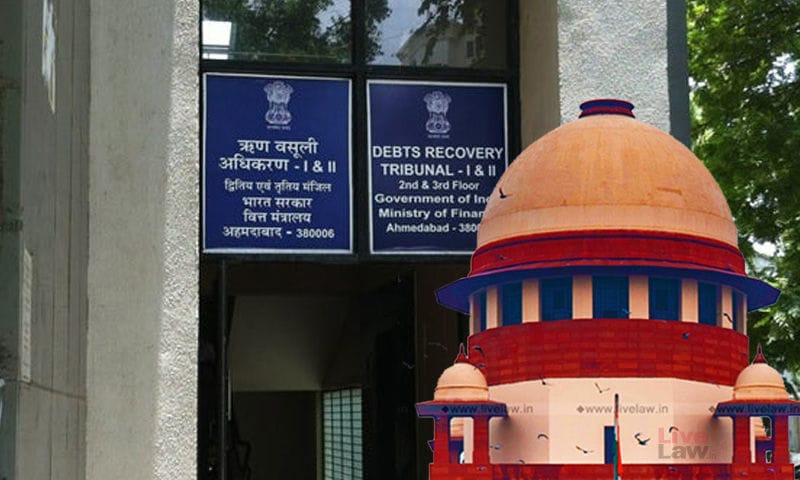
In a nation that claims to be guided by the spirit of justice and welfare, the condition of the borrower today raises profound moral questions. The establishment of the Debt Recovery Tribunals was intended for the effective and efficient recovery of bank dues. Yet, in spirit, law must not become an instrument of oppression. Under Section 34 of the SARFAESI Act, 2002, the jurisdiction of the Civil Courts has been barred. While this has strengthened the hands of banks and financial institutions, it has, at the same time, placed the borrower in a position of grave disadvantage.
From the standpoint of Mahatma Gandhi’s ideals, every system must be tested against the measure of truth (Satya), non-violence (Ahimsa), and the welfare of the weakest (Antyodaya). In recent times, NBFCs and housing finance companies have invoked the provisions of the SARFAESI Act in a manner that burdens and often harasses poor borrowers. These institutions frequently target individuals who lack clear land titles or possess only society or panchayat pattas. Scheduled commercial banks hesitate to extend credit to such borrowers due to risk considerations. The poor, deprived of access to capital, are thus compelled to turn to private financial companies.
These companies approach vulnerable individuals and offer loans at exorbitant interest rates, often exceeding 20–30% per annum. Loan documents are drafted in English—a language many borrowers do not understand. Blank cheques are taken as security. The borrower, often without fixed income, faces a high likelihood of default. Upon default, penal interest is levied, followed by additional charges in the name of recovery. Recovery agencies—frequently unregulated—are employed. Their methods sometimes involve intimidation and humiliation, contradicting the principles of human dignity and non-violence. Even the costs incurred for such recovery efforts are added to the borrower’s account.
Imagine the misery of such a borrower. He carries a mounting financial burden while simultaneously paying for the very machinery that harasses him. His house or property—often his only asset—is at risk of being taken away. Alongside financial distress comes humiliation and social suffering. In a Gandhian vision of India, the poorest and most vulnerable should be the first concern of governance, not its casualties.
Law as an Impediment to the Borrower
When a bank or financial institution issues a notice under Section 13(2) of the SARFAESI Act, 2002, the borrower cannot approach the Civil Court due to the bar under Section 34. A challenge before the Debt Recovery Tribunal at this stage is often considered premature. The only immediate recourse is to reply to the notice.
Thereafter, under Section 14 of the Act, banks may approach the District Magistrate or Chief Judicial Magistrate to take possession of the property. Under this provision, the authority performs a largely ministerial function and is not required to issue notice to the borrower. Orders passed under Section 14 empower banks to take physical possession with police assistance. Police protection charges—often ranging from ₹1.5 to ₹2 lakhs—are added to the borrower’s dues.
Thus, a borrower already burdened with high interest rates and penalties may lose his home through state machinery. From a Gandhian perspective, the state must be a protector of the weak, not a silent partner in their dispossession.
The borrower’s recourse lies in approaching the Debt Recovery Tribunal. However, these tribunals are generally located in capital cities, often with only one presiding officer. A borrower may need to travel hundreds or even a thousand kilometers to seek justice. The Act requires payment of court fees based on the outstanding amount before the matter is heard. Justice, in effect, becomes conditional upon financial capacity.
Even where the borrower succeeds before the DRT, the lender may issue a fresh demand notice including interest accrued during litigation or approach the Debts Recovery Appellate Tribunal (DRAT). Conversely, if the borrower loses and wishes to appeal, he must deposit 50% of the outstanding amount—an enormous burden for someone already in financial distress.
This framework appears heavily tilted in favor of the lender. Tribunals seldom impose penalties on lenders for excesses. The system, as experienced by many poor borrowers, seems to perpetuate their suffering rather than alleviate it.
From the standpoint of Gandhian philosophy, economics must be governed by morality. Wealth must be held in trusteeship, not used as a tool for exploitation. The Directive Principles of State Policy envision a welfare state committed to justice—social, economic, and political. When legal mechanisms disproportionately empower capital over the vulnerable, they depart from this vision.
Conclusion: Toward a Just and Compassionate Financial Order
If Mahatma Gandhi were to reflect upon the plight of the borrower, he would remind us that the true test of any law lies in its treatment of the weakest citizen. A system that enables recovery without compassion, procedure without fairness, and enforcement without humanity cannot claim moral legitimacy.
The recovery of debts is necessary for economic order. Yet it must be balanced with dignity, transparency, accessibility to justice, and protection against exploitation. The spirit of a welfare state demands that laws do not merely secure financial discipline but also uphold human dignity.
A just society must harmonize the rights of lenders with the survival and self-respect of borrowers. Only then can we claim to walk the path of truth, non-violence, and justice that Mahatma Gandhi envisioned for India.