Supreme Court

Supreme Court Grants Relief in 1999 Cheque Bounce Case Citing Possible Mistaken Identity

The Supreme Court is considering an appeal made by C.K. Abdurahiman, who alleges he was incorrectly identified in a 1999 cheque bounce case. Even after maintaining he had nothing to do with the transaction, he was convicted under Section 138 of the Negotiable Instruments Act. The Court granted interim relief on grounds of misidentification and underlining the significance of due process and the presumption of innocence. The case emphasizes the importance of protection against wrongful convictions in economic crimes.

High court

Delhi HC Rules Against Patanjali’s False Efficacy Claims in Chyawanprash Ads

In this post the case of the Delhi High Court handling the deception around the Patanjali Chyawanprash advertisement is analysed in view of its legal precedent related to false efficacy claims and disparagement. It goes into the pace of development of commercial speech under Article 19(1)(a) of the Indian constitution, the landmark cases which outline its extent and restriction in advertising.

High court

Kerala High Court Draws on Ramayan Author Valmiki’s Life to Advocate Criminal Rehabilitation

Delhi High Court decision on Dabur v Patanjali enlightened the Ayurvedic medicines with regard to advertising. It highlighted the need for tighter truthfulness on health products as the ads were considered by Patanjali as demeaning on Dabur Chyawanprash and other brands. The court also noted how misleading comparisons are not permissible and fair competition should be guarded against.

High court

Kottayam Medical College Tragedy Sparks PIL in Kerala High Court

A Public Interest Litigation has been moved in the Kerala High Court in the wake of the building collapse at the old bathroom block at Kottayam Medical College Hospital that resulted in the death of one woman and left three others injured. The PIL points to gross administrative failures, infrastructure deterioration, and seeks judicial intervention for ensuring hospital safety and responsibility.

Supreme Court

Supreme Court: No Compensation for Legal Heirs if Driver Dies Due to Own Negligence

In G Nagarathna Vs. G Manjunatha, the Supreme Court held that legal heirs of a driver who died as a result of his own rash and negligent driving could not claim compensation under the Motor Vehicles Act. The Court confirmed orders of the Tribunal and Karnataka High Court, placing reliance upon precedents which rule out the possibility of one deriving benefit from one’s own wrong. The ruling makes it clear that insurance firms are not responsible in such situations and supports fundamental tort law and public policy tenets.

High court

Delhi High Court Rejects Toyota’s Patent Infringement Plea Against Indian Firm

This article explains the case in the Delhi High Court between Kabushiki Kaisha Toyota Jidoshokki and LMW Limited on patent IN2447593. Toyota Jidoshokki claimed that LMW Spinpact machines had violated the patent rights of its invention entitled Fiber Bundle Concentrating Apparatus. The court denied the request for an injunction on the basis that the patent expires on May 24, 2025, which renders the technology publicly available.

High court

Privacy over Procedure: Bombay HC Orders ₹50K Compensation for Denial of Bank Account Without Aadhaar

In Microfibers Pvt. Ltd. v. Yes Bank Ltd., the Bombay High Court criticized the bank’s insistence on Aadhaar to open an account, even in violation of Supreme Court orders prohibiting compulsion. The petitioner, whose inability to rent property without a bank account led to this writ, petitioned for Rs. 10 lakhs in compensation. Finding constitutional violation and monetary loss, the Court granted a compensation of Rs. 50,000. The decision upholds citizen rights under Article 21 and asserts institutional accountability in the compliance with privacy and service access jurisprudence following Puttaswamy.

High court

Delhi High Court Affirms Disability Pension for Soldiers: Upholds Presumption of Service-Linked Ailments Even in Peace Postings

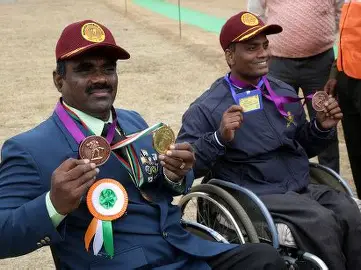
In Union of India & Ors. v. Maj Gen Rajesh Chaba (Retd), the Delhi High Court affirmed the order of the Armed Forces Tribunal directing disability pension for soldiers afflicted with diseases such as hypertension and ischaemic heart disease, even on peace postings. The Court held that stress inherent in military life warrants presumption of service connection under the Entitlement Rules. It spurned non-verdict medical board views that were without reasoned detail and noted pensions are a constitutional entitlement, not charity. This ruling reinforces welfare jurisprudence and requires accountability and transparency from medical boards in determining disabilities.