Supreme Court

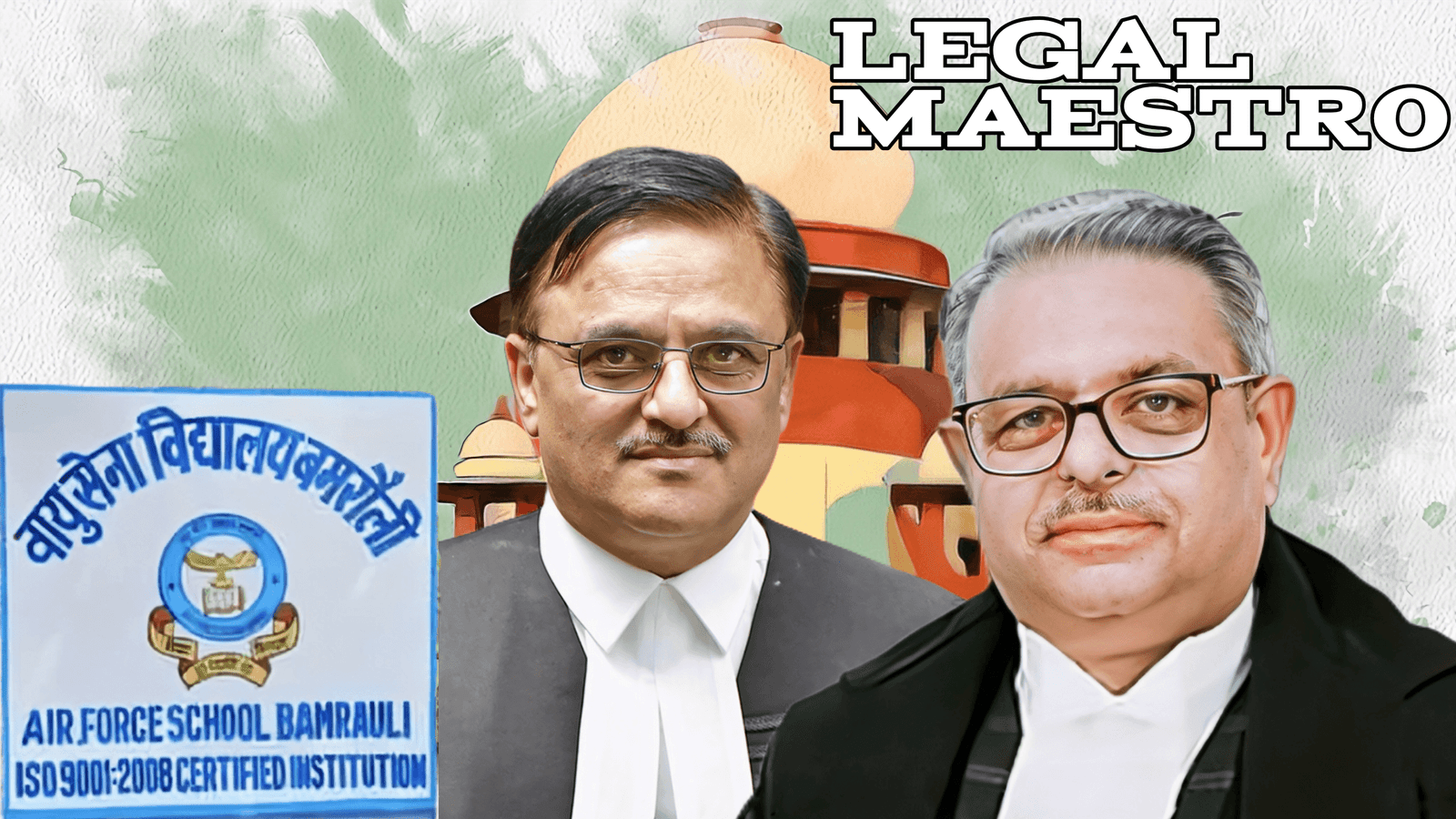
When Private Institutions Wear a Public Mantle: The Air Force School, Bamrauli Case Judgment by Justices Abhay S. Oka and Augustine George Masih

The ruling that was handed down by Justices Abhay S. Oka and Augustine George Masih in the case of Dileep Kumar Pandey v. Union of India and Others (Civil Appeal Nos. 10899 & 11378 of 2013) said that the Air Force School at Bamrauli is considered to be a state authority in accordance with Article 12 of the Constitution. The Court came to the conclusion that the private society was changed into a public instrumentality as a result of the pervasive control exercised by the government. This control was exercised through funding, administration by serving officers, regulated pay schedules, and disciplinary authority. In light of this, the actions taken by the School that have an impact on the working conditions of teachers are subject to writ jurisdiction in accordance with Article 226. Through this precedent-setting decision, it is reaffirmed that organizations that carry out public responsibilities under the authority of the government cannot avoid constitutional accountability.

Supreme Court

Ensuring Safe and Encroachment-Free Highways: A Landmark Ruling by Justices Abhay S. Oka and Augustine George Masih

The Supreme Court of India addressed a significant issue that affects millions of people in India on a daily basis in the writ petition Gyan Prakash v. Union of India & Ors. [Writ Petition (C) No. 1272 of 2019]. This issue is the unlawful encroachments on National Highways and the direct impact that these encroachments have on traffic safety. Concerning the urgent need to enforce the requirements of the Control of National Highways (Land and Traffic) Act, 2002 (which will be referred to in the following paragraphs as “the 2002 Act”) and its related rules, the case was presided over by Justices Abhay S. Oka and Augustine George Masih.

In the petition, the alarming number of fatalities that have occurred as a result of highway accidents was brought to light, and the petition sought the Court to compel the authorities to apply regulations that are designed to ensure the safe and legitimate use of roadways.

Supreme Court

Balancing Forest Conservation and Human Needs in In Re: Zudpi Jungle Lands – A Judgment by CJI B.R. Gavai and Justice Augustine George Masih

The classification of more than eighty-six thousand hectares of Zudpi scrub forests in eastern Vidarbha was the subject of the decision that was handed down by the Supreme Court in the case known as In Re: Zudpi Jungle Lands (Writ Petition (C) No. 202 of 1995). This decision was written by Chief Justice of India B.R. Gavai and Justice Augustine George Masih. In its analysis of the Forest (Conservation) Act of 1980, the court struck a balance between the preservation of ecological integrity and the requirements of the community. Following an examination of surveys and reports from specialists, it decided to maintain forest status for key parcels while permitting the denotification of areas that had been utilized for purposes other than forestation prior to December 12, 1996. The decision outlines a framework for sustainable development that allows for the protection of the environment as well as the promotion of social justice.