Current Legal Update

Amit Malviya and Arnab Goswami Face FIR for False Congress Office Claim in Turkey: A Look at Goswami’s History of Alleged Fake News Cases

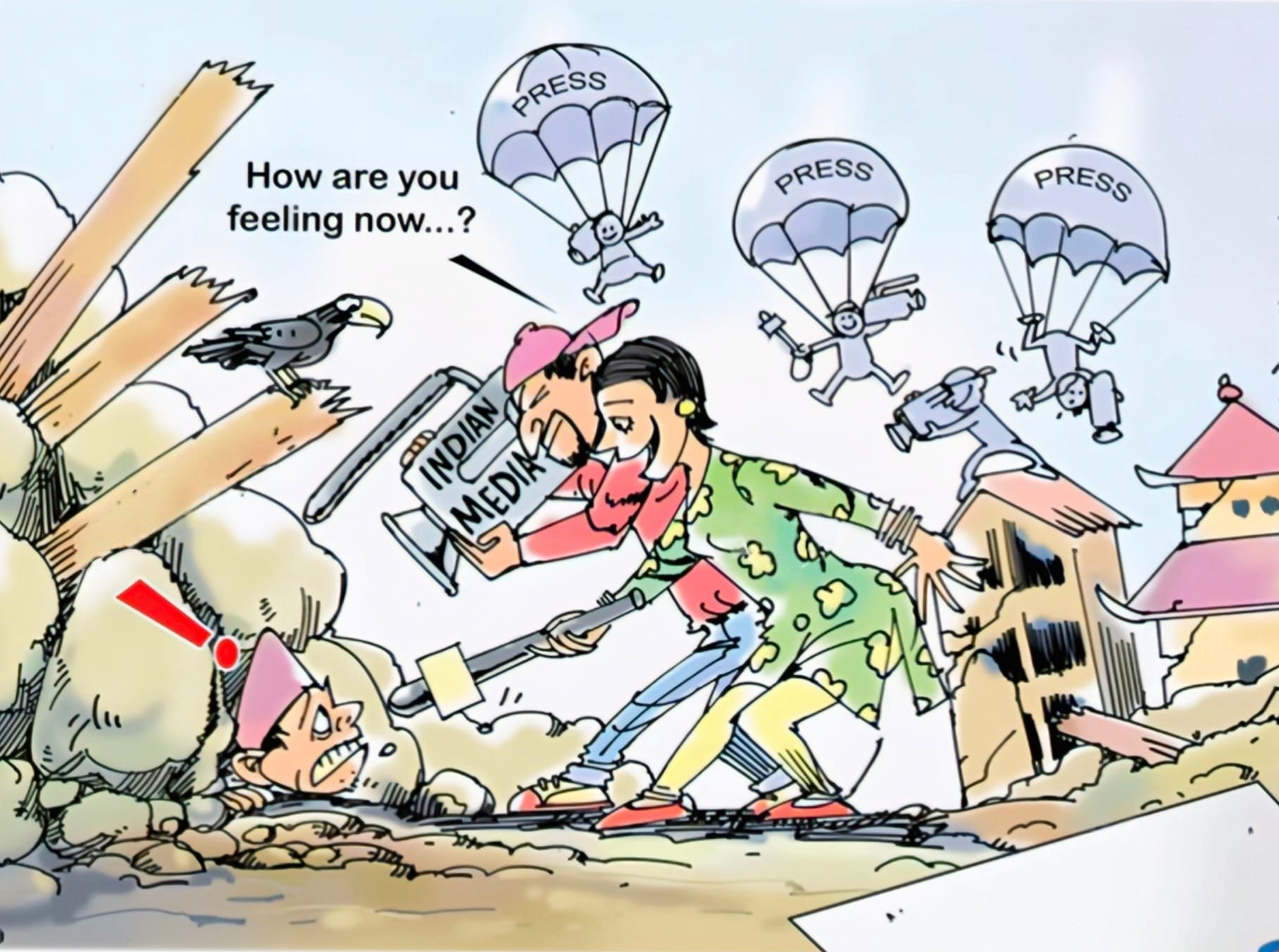
Two individuals have been mentioned in a First Information Report (FIR) that was submitted by the Indian National Congress. These individuals are Amit Malviya, who is the head of the social media unit for the BJP, and Arnab Goswami, who is the editor-in-chief of Republic TV. According to the allegations made in the lawsuit, they disseminated a false allegation regarding the existence of an office of the Indian National Congress in the Istanbul Congress Centre in Turkey. This article investigates the specifics of the First Information Report (FIR) and traces a pattern in Arnab Goswami’s career, showing multiple instances in the past in which his reporting met with claims of providing false information. While we are evaluating these incidents, we are also taking into consideration the more general difficulty of ensuring that Indian news media are responsible and accurate.

Current Legal Update

BJP’s Modern-Age Mir Jafar Accusation Against Rahul Gandhi Sparks Defamation Debate Under BNS Section 356

A recent statement made by leaders of the Bharatiya Janata Party (BJP) referring to Rahul Gandhi as “modern-day Mir Jafar” has caused a stir. This article provides an explanation of the meaning of the term “defamation” in Indian law and provides an overview of Section 356 of the Bharatiya Nyaya Sanhita (BNS), which addresses the issue of defamation. This study investigates whether or not the act of labeling a political leader as a “traitor” could satisfy the legal requirements for defamation. When discussing defamation, the discussion refers to decisions made by the Supreme Court as well as major cases. As part of the study, viewpoints from legal experts and political pundits are taken into consideration. The analysis compares the right to free speech with the right to reputation. In addition to this, it discusses political reactions and the manner in which defamation claims are processed in Indian politics.

Current Legal Update

Supreme Court’s Three-Year Legal Practice Ruling Likely to Face Review Petition from Judiciary Coaching Members

The Supreme Court of India has ordered that in order for candidates to be qualified for entry-level judicial officer jobs, they must have a minimum of three years of experience working as advocates in the legal field. In contrast to the policy that had been in place for the past two decades and permitted recent law school graduates to compete for these positions, this decision represents a significant adjustment. It is the intention of this order to ensure that new judicial officers have real legal expertise, which will ultimately lead to an improvement in the quality and integrity of the judicial system. This move, on the other hand, has prompted disputes among members of the judiciary coaching community and those who are seeking to become judges. These individuals claim that it may create barriers for first-generation lawyers and impede the admission of fresh talent into justice. The ramifications of the decision made by the Supreme Court, the arguments in favor of and against the mandatory practice requirement, and the potential impact on the future of judicial recruiting in India are all discussed in this article.

Current Legal Update

Stalin v Modi : Tamil Nadu’s Legal Battle in Supreme Court for ₹2291 Crore Samagra Shiksha Funds Release

Tamil Nadu’s Chief Minister M.K. Stalin moved the Supreme Court seeking release of ₹2,291 crore under the Samagra Shiksha scheme, arguing statutory entitlement. The Centre cited procedural lapses for withholding funds. The Court ordered partial release and timelines for compliance, underlining the balance between federal cooperation and accountability.

Current Legal Update

Akshay Kumar Sues Paresh Rawal for ₹25 Crore: Alleged Breach of Contract Under Indian Contract Act in Hera Pheri 3 Fallout

Bollywood star Akshay Kumar is suing Paresh Rawal for ₹25 crore, alleging breach of contract after the actor exited Hera Pheri 3. Kumar’s production house claims Rawal’s departure violated their agreement, causing delays, reshoot costs, and revenue losses, seeking damages under Sections 39 and 73 of the Indian Contract Act.

Current Legal Update

Haryana YouTuber Jyoti Malhotra’s Espionage Case: NIA and IB Probe Pakistan Links Under Official Secrets Act

In accordance with the Official Secrets Act and the Bhartiya Naya Sanhita, YouTuber Jyoti Malhotra, who was based in Haryana, was taken into custody on May 16, 2025, on the suspicion that he was spying for Pakistan. She is accused of acquiring sensitive information on her travels to Kashmir, Ladakh, and other locations around the world and then sharing it with Pakistani handlers because she is known for her travel channel called “Travel with JO.” An investigation on her connections to a wider espionage network is being conducted by the National Investigation Agency and the Intelligence Bureau. This investigation is looking into her travel history, digital communications, and financial transactions. This article investigates the circumstances behind her detention, including the background of the case, the legal framework, the advancements in the investigation, and the ramifications for national security.

Current Legal Update

Government to Amend IBC: New Provisions to Ease CCI Clearance for Resolution Plans Before CoC Approval

The government of India intends to make changes to the Insolvency and Bankruptcy Code (IBC) in order to reduce the necessity of obtaining approval from the Competition Commission of India (CCI) prior to the Committee of Creditors (CoC) being able to adopt a resolution plan. This modification is a result of decisions made by the Supreme Court that have caused doubt regarding whether or not CCI clearance is required prior to CoC endorsement for plans that involve company mergers. The purpose of the modification is to simplify the process of resolving insolvency, cut down on delays, and minimize the costs associated with compliance. Through the modification of Section 31(4) of the IBC, the government intends to strike a balance between the necessity of competition oversight and the business wisdom of creditors. This will ensure that recoveries are completed more quickly and that the framework for corporate rescue is more effective.

Current Legal Update

Take It Down Act Explained: Trump Signs Melania-Backed Law to Combat AI Deepfakes

For the purpose of establishing government safeguards against non-consensual intimate imagery, including deepfakes generated by artificial intelligence, the Take It Down Act was signed into law by President Trump on May 19, 2025. First Lady Melania Trump also provided her visible support for the legislation. The law establishes criminal sanctions for individuals who distribute or threaten to spread content of this nature, mandates the prompt removal of content that has been detected by internet platforms, and gives the Federal Trade Commission the authority to enforce compliance with the law. As an extension of Melania Trump’s Be Best effort, the measure expresses the concern of both the Democratic Party and the Republican Party regarding the misuse of technology to exploit victims. An explanation of the act’s beginnings, its most important clauses, and its broader consequences for digital safety and free speech are provided in this article.

Current Legal Update

Indus and Sutlej Rivers from Tibet: Can China Legally Block Their Flow Under Helsinki Rules and UN Conventions

Although they originate in Tibet, the Indus and Sutlej rivers eventually flow into India and Pakistan, where they provide essential water resources for millions of people. Questions have been raised regarding the legality of blocking certain rivers as a result of recent efforts undertaken by China to construct dams and divert water systems. With a particular emphasis on the Helsinki Rules and United Nations agreements, this article takes a look at the international legal framework that governs rivers that are shared by many parties. This document provides an explanation of the concepts of equitable and reasonable use, the requirement to avoid causing severe harm, and the obligation to notify and discuss with states that are located downstream. Through this discussion, it is made clear if China is legally able to restrict river flows from Tibet in accordance with these norms and conventions.