Current Legal Update

Former CJI DY Chandrachud Calls for End to Retrospective Taxation, Urges Overhaul of India’s Tax Regime

In a speech during the Chamber of Tax Consultant’s centenary celebration, former CJI DY Chandrachud lambasted retrospective tax amendments as destabilizing and unfair. He stressed the necessity of legal certainty, equity, and investor confidence within India’s tax system. Referencing the negative effects of precedents such as Vodafone and Cairn, he appreciated the effort to simplify the proposed Income Tax Bill, 2025, but cautioned against introducing new uncertainties. His appeal represents an acute call for thorough tax reform.


Supreme Court

Supreme Court: No Compensation for Legal Heirs if Driver Dies Due to Own Negligence

In G Nagarathna Vs. G Manjunatha, the Supreme Court held that legal heirs of a driver who died as a result of his own rash and negligent driving could not claim compensation under the Motor Vehicles Act. The Court confirmed orders of the Tribunal and Karnataka High Court, placing reliance upon precedents which rule out the possibility of one deriving benefit from one’s own wrong. The ruling makes it clear that insurance firms are not responsible in such situations and supports fundamental tort law and public policy tenets.

Current Legal Update

India Eases SEZ Norms Spark Semiconductor Investment Wave in India

The recent liberalization of SEZ regulations is a strategic thrust towards India’s semiconductor indigenization. Top reforms are lighter land requirements, eased land encumbrance rules, permission for onshore sales, and operational flexibility—facilitating the investment of global and domestic companies. These reforms seek to place India in global supply chains, increase indigenous chip manufacturing, and lure big ticket investments. But infrastructure deficits, skill deficiencies, and environmental issues are still fundamental challenges to overcome for sustainable success.

High court

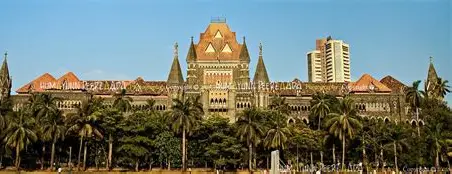
Privacy over Procedure: Bombay HC Orders ₹50K Compensation for Denial of Bank Account Without Aadhaar

In Microfibers Pvt. Ltd. v. Yes Bank Ltd., the Bombay High Court criticized the bank’s insistence on Aadhaar to open an account, even in violation of Supreme Court orders prohibiting compulsion. The petitioner, whose inability to rent property without a bank account led to this writ, petitioned for Rs. 10 lakhs in compensation. Finding constitutional violation and monetary loss, the Court granted a compensation of Rs. 50,000. The decision upholds citizen rights under Article 21 and asserts institutional accountability in the compliance with privacy and service access jurisprudence following Puttaswamy.

High court

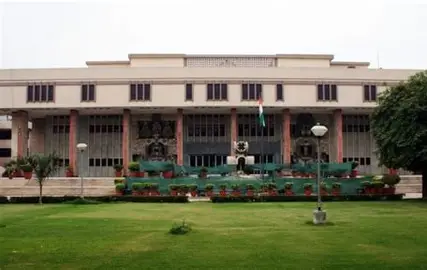
Delhi High Court Affirms Disability Pension for Soldiers: Upholds Presumption of Service-Linked Ailments Even in Peace Postings

In Union of India & Ors. v. Maj Gen Rajesh Chaba (Retd), the Delhi High Court affirmed the order of the Armed Forces Tribunal directing disability pension for soldiers afflicted with diseases such as hypertension and ischaemic heart disease, even on peace postings. The Court held that stress inherent in military life warrants presumption of service connection under the Entitlement Rules. It spurned non-verdict medical board views that were without reasoned detail and noted pensions are a constitutional entitlement, not charity. This ruling reinforces welfare jurisprudence and requires accountability and transparency from medical boards in determining disabilities.

High courtUncategorized

Delhi High Court Upholds Dismissal of Police Constable for Habitual Unauthorized Absence, Cites Need for Discipline in Force

In Govt. of NCT of Delhi vs Udai Singh, the Delhi High Court upheld the termination of a constable who had been taking unauthorized leave repeatedly over the course of many years. Despite producing medical certificates, the Court held them vague and without corresponding procedures. It held habitual absenteeism in disciplined services such as the police as habitual misconduct. Overriding the CAT’s reinstatement order, the Court underscored the supremacy of discipline and strict adherence to leave procedures in police forces.

High court

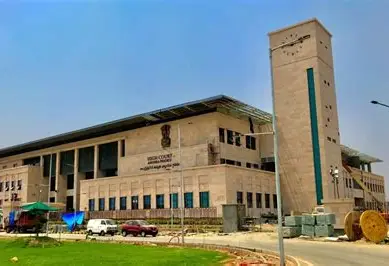
Interim Bail for Exams Granted to Life Imprisonment Convict Seeking Law Degree: Andhra Pradesh High Court in, Murli Jai Ganesh v. State of Andhra Pradesh

In Murli Jai Ganesh v. State of Andhra Pradesh, the High Court granted 17-day interim bail to a life convict pursuing a B.Com LL.B. degree to appear for his final semester exams. Convicted under Section 302 IPC, the appellant sought bail under Section 430(1) of the Bharatiya Nagarik Suraksha Sanhita, 2023. Acknowledging his academic record and absence of backlogs, the Court balanced penal objectives with rehabilitative justice, allowing bail solely for educational purposes with strict conditions.

High court

Suo Moto PIL on Transfer of Girls from Observation Homes Upon Attaining Majority: Bombay High Court Initiates Action

In The Registrar (Judicial) v. State of Maharashtra, the Bombay High Court (Aurangabad Bench) initiated a Suo Moto PIL based on a newspaper report revealing that girls in observation homes were being shifted to other districts upon attaining majority due to lack of local facilities. The Court emphasized the right to education and mental well-being of such girls, directing authorities to provide data and explore existing shelter home capacities. This PIL seeks systemic reform in post-care rehabilitation for orphan girls.

High court

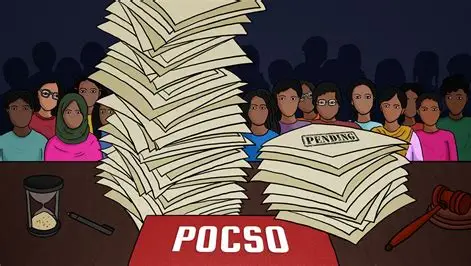
Expression of Affection Is Not Sexual Assault, Rules Bombay High Court by Acquitting 25-Year-Old Under POCSO

In Ravindra v. State of Maharashtra, the Bombay High Court set aside a conviction under POCSO and IPC, ruling that saying “I love you” and holding hands without sexual intent does not constitute sexual assault or harassment. The Court emphasized that criminal liability under POCSO requires proof of sexual intent and physical contact of a sexual nature. It clarified that mere expressions of affection, without more, cannot satisfy the statutory threshold for criminal prosecution.