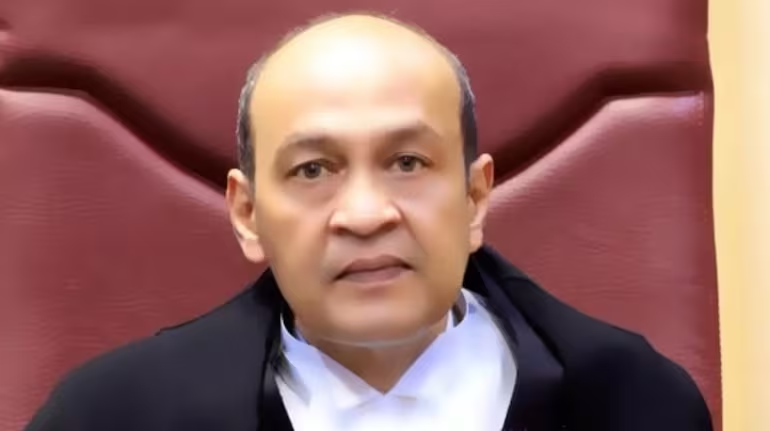
Top Court Declines Urgent Hearing The Supreme Court of India rejected a request for an early hearing of a plea concerning alleged police brutality against young individuals protesting in the nation’s capital. The Supreme Court bench was urged by lawyers on Wednesday to take up the issue on an immediate basis. The Chief Justice of India Surya Kant led the bench that was approached by the petitioners during the morning mentioning hour and indicated that the matter would not be expedited.
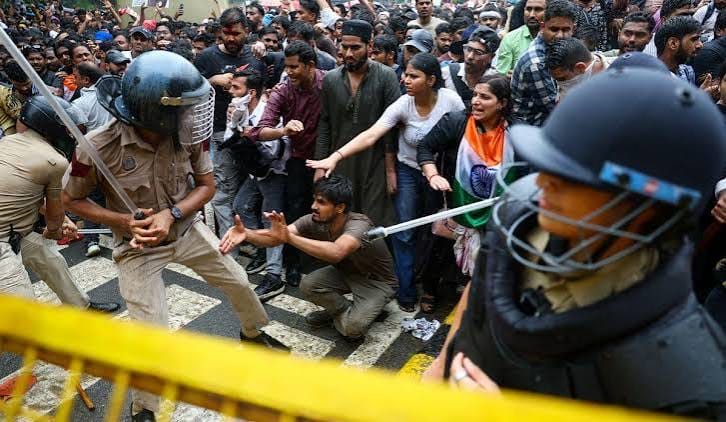
The petitioners’ advocate informed the judges that officers had used significant force against the students who had congregated on the streets of the national capital demanding answers on issues of paper leaks for major competitive examinations and reforms of the testing system.
However, the bench remained unmoved. CJI Surya Kant directly informed the petitioner’s counsel: “Don’t waste our time, and don’t waste your time.” When the counsel insisted that the matter required immediate intervention due to events on the ground, the judges clearly stated their intention to not derail their regular roster proceedings. Delhi Street Violence In question were recent demonstrations held in New Delhi protesting issues pertaining to national-level competitive entrance exams.
Activists of the Cockroach Janata Party, along with hundreds of students gathered near the Jantar Mantar and had intended to proceed towards Parliament.
The demonstrators demanded the resignation of Union Education Minister Dharmendra Pradhan, amid allegations of paper leakages and scoring discrepancies in recent exams. Prohibitory orders had been imposed in the New Delhi district, banning large public gatherings. Police officers had cordoned off the area, setting up barricades to prevent the protesters from reaching the Parliament.
The demonstrators, on the other hand, attempted to break through the barricades, leading to confrontation between the protesters and the law enforcement. Several students and a few police personnel were reported injured during the scuffle that ensued. Petition to Supreme Court In the Supreme Court on Wednesday morning, the advocate seeking early listing of the petition urged the judges to take cognisance of the events that had unfolded on the streets.
Need Help With Your PhD or LLM Thesis?
Explore our thesis and dissertation writing support services for PhD and LLM students. Get subject-specific academic assistance for your research project.
Explore Our Services →He pointed out that the students were only asking for clean examinations and corrective measures at the National Testing Agency.
He added that youth were being ‘manhandled’ for speaking out on ‘issues concerning their future’. The Chief Justice did not permit the advocate to elaborate on the facts. “Thank you very much,” CJI Surya Kant remarked while signalling an end to the mentioning request. The petitioners sought a directive from the Supreme Court to directly adjudicate the matter or initiate a judicial probe into the alleged police excesses.
However, the Court refused to list the petition on a priority basis.
Videos and the Supreme Court During the brief argument before the bench, the advocate told the judges that videos of the police action against the unarmed student protestors were available and showed use of force beyond the necessity. He offered to show the clips to the court so that they could assess the reality on the ground. CJI Surya Kant responded: “We are not interested in videos; we don’t have time to watch.”
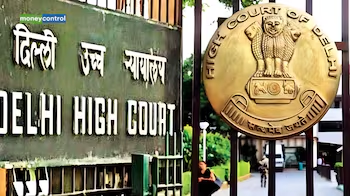
The judges noted that the morning mentioning procedure is intended only to seek early listing of cases and not for verification of facts, playing clips, or evaluating evidence. Delhi High Court’s Refusal It was not the first time that a court rejected a request for an immediate hearing on this issue. The day prior to this, the Delhi High Court also denied an urgent hearing on a petition that sought instructions for Delhi Police concerning the protest incident.
“Don’t drag the Court into this,” the High Court had remarked, rejecting the petitioners’ plea.
Following the Delhi High Court’s refusal, the case was taken to the Supreme Court, but with little success in terms of obtaining an expedited response. Police Reports and Law Suits Senior advocates and political personalities had previously condemned the Delhi Police’s actions. Senior Advocate Kapil Sibal had previously criticized the authorities for their treatment of students and called for an independent inquiry into the matter. He had expressed concerns about the likelihood of the Delhi Police filing FIRs and subsequently involving the students in criminal cases.
“In earlier protests of students in Delhi many a peaceful protester landed up being involved in criminal proceedings years after the protests,” Sibal had stated and added, “We request the police department to reveal names and medical records of police officers who were allegedly injured.”
Background to the Protests The ongoing protest is rooted in months of frustration over numerous incidents of question paper leaks and irregularities in the scores of major national entrance exams like NEET, JEE, etc. Lakhs of students who invest years of study and financial resources into these examinations have found their efforts undermined by these issues, fueling widespread discontent. Students and youth organisations have organised multiple demonstrations in the capital city, with the Jantar Mantar often serving as a gathering point for activists seeking to press their demands while Parliament is in session.
Their grievances include calls for reforms in the National Testing Agency, rescheduling of examinations in case of leaks, and accountability for Union Education Minister Dharmendra Pradhan. Police have maintained that the protests were held in prohibited zones and force was used when the restrictions were violated after requests to disperse. Future course of action As the Supreme Court has refused an early listing of the petition, the case will be heard on its normal roster date.
This means that the court will not be passing any immediate orders for a special investigation or restraining police action.
Students who participated in the protests may still face police action, and civil rights organisations have expressed concerns regarding the filing of criminal cases against them. The petition will follow the usual procedure for scheduling court hearings and will be listed once a slot becomes available.