Bengaluru, India’s own Silicon Valley thrives on human exhaustion, a sort of physical depletion, which is unlike the food deliverer or cabs plying on the roads of the city. These men and women are often hidden away in the cramped rooms of countless offices spread across the tech capital of India. Some even choose to work out of the kitchens in their respective homes.
All through their day, from dawn till the dim light of the night, they are constantly glued to their computer monitors.
Their daily grind consists of painstakingly labeling images, moderating violent videos, and rectifying bot texts. Effectively, they are responsible for training the cutting-edge AI that is all set to redefine the course of humanity, according to the tech giants who claim to be molding the future. Their plight comes to them as a rude shock – all this training and hard work fetches them peanuts with little to no legal protection whatsoever!
Here is a funny paradox: you devote your life educating software to master a particular job; you are compensated for this service by an exorbitant and pathetically small remuneration and the moment your creation masters your job, you are thrown out of your job. You spend months and years in training AI to perform the jobs that you would eventually be replaced from. The government does its best to protect the common man from getting exploit through a series of laws and regulations.
The “Karnataka Platform-Based Gig Workers Act”, drafted in 2025 is one such exemplary piece of legislation, which, while seeming like a godsend for workers, has an array of loopholes in it.
When you go through the written legal framework, it appears as though there are a slew of regulatory policies. In reality, they barely scratch the tip of the iceberg in the tech industry which depends heavily on data annotation for the development and improvement of the AI systems.
Need Help With Your PhD or LLM Thesis?
Explore our thesis and dissertation writing support services for PhD and LLM students. Get subject-specific academic assistance for your research project.
Explore Our Services →Invisible digital sweatshop of Bengaluru
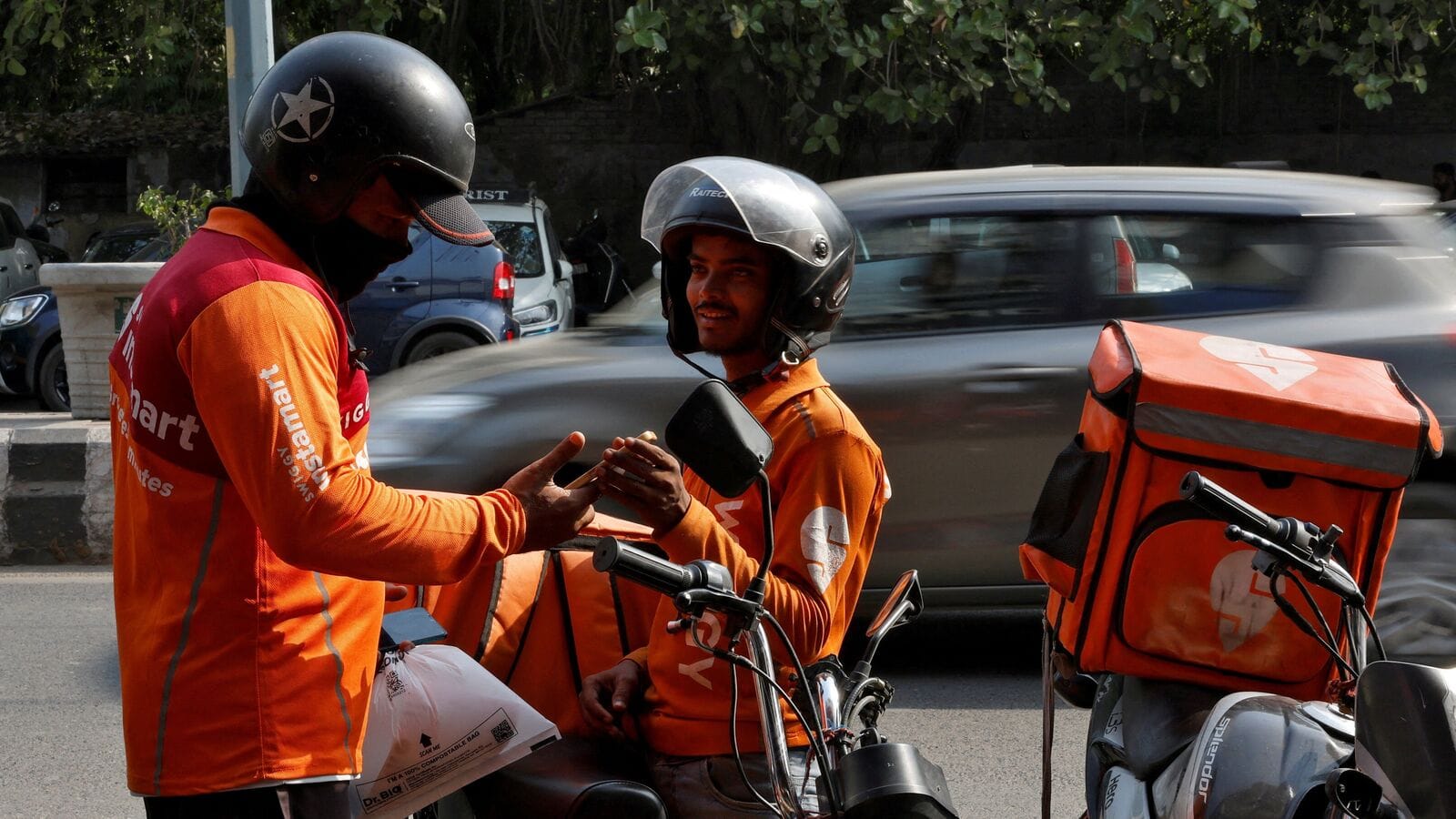
It has been observed that most new regulations on work in India are geared towards jobs in the physical space. They primarily aim to protect those who are working in the gig economy and have their work connected to a set physical location or to a single point-to-point interaction. If it’s food delivery, the delivery of the food is what gets assessed.
In case it’s a ride, the commute is a standard service which is tracked from point A to point B.
The government collects taxes on these services to regulate and ensure the well-being of the gig workers associated. The data annotation work doesn’t operate like this, for more than one reason.
Global tech companies don’t tend to hire these workers directly. To carry out data annotation tasks on a mass scale they choose third party intermediaries. These third-party companies sign huge contracts with the global tech businesses and break down the tasks into smaller bits and pieces which are then outsourced to freelancers and even contract workers in various places like Bengaluru.
These workers might spend hours in simply drawing boxes around signboards or on street photos, so that AI can better recognize these signs on future photo captured images.
In other instances, they spend hours in creating a dataset of sample answers for automated customer service chat bots to learn how to respond appropriately to customers and even make their responses more personalized and Human-like in future. A worker can expect a wage that could be as low as a fraction of a dollar per day depending on the tasks assigned to them. Even to make matters more dire, these data annotation workers often do not even come to know about who the clients are. They only log into the client’s platform, complete their tasks, hoping their completed work pass through the machine test, in order to qualify for the earned wage.
In case the program deems the box a little off-center it automatically rejects the job and there will no payment for all the efforts put in by the worker for that particular hour or even day.
Owing to the intermediary mode of operations and payment the contracting companies justify it by labeling their workforce as “independent contractors “ and hence exempt themselves from the legal and regulatory definitions laid out for aggregator workers or employers in a traditional setup. Hence a delivery worker is now entitled for social securities and benefits under the Karnataka Law by having their government mandated identification but an individual labeling images for an AI platform is left with absolutely nothing!
The price to pay for teaching machines, an endless cycle of suffering.
The work done by data annotators is not only arduous and monotonous; it often goes beyond a simple ‘workplace hazard’. Many data annotators are involved in moderating what the world has most to offer in terms of disturbing videos or violent images. In many ways, these workers are acting as the immune system of the Internet, purging content that should be removed.
While the amendments in the intermediary rules, by requiring faster removal of such contents in 2026 may sound like it’s for the general good, it can just put a lot more stress on the already overworked data annotation workforce.
These workers are made to face tremendous targets per hour and in case they are not able to meet them, the penalties would lead to pay deduction or in some instances dismissal of service. Watching the horrific imagery day in and day out affects the psychological well-being of an individual severely. While traditional factory workers have protection for work with hazardous chemicals or other dangerous materials and in cases of injury at workplace, the Indian Labor law is still in the early stage of Industrial Revolution and it’s still not perceived that a person can have a mental breakdown from merely seeing screens after screens. Most data annotation firms will leave you stranded at the earliest sign of burnout.
Just one such termination will allow their automated system to immediately recruit another fresh and desperate candidate for the position which further highlights the lack of employee security in this field.
Contracts written on Sand and the threat of Lawsuit: A double edged Sword
The Independent Contractor label, conveniently utilized by these organizations acts as a major protection to avoid all kinds of labor related responsibilities. This makes it difficult for the workers to form trade unions, and thus they lose the power to negotiate or demand fair wages or compensation on their own terms. Moreover, workers are usually forced to sign thick NDAs even before seeing any work allocation on their screen.
These Non- Disclosure agreements are drafted so tightly that they completely prevent employees from discussing the specifics of their workplace, the client, or even the AI models they’re training.
Any individual breaking the NDA runs the risk of being slapped with a massive legal suit. What further puts them at a vulnerable position is that while some laws suggest a fourteen day’s notice and a verbal explanation in case of termination and even transparency of AI related decisions when distributing work; those data vendors who cleverly find themselves out of the aggregator definitions bypass this obligation. They will block a worker’s access with the flick of a mouse without any prior notice, making it extremely hard for a worker to pursue any recourse and with the absence of a HR department, you’re basically on your own.
Regulation gap of titanic proportions in Indian’s AI industry.
Even the government seems aware of these prevailing circumstances. According to the National AI Strategy of India, the data annotation field was anticipated to be a major employer, facilitating the assimilation of workforce that was being displaced by various forms of industrial automation. While the government actively welcomes the job creation prospect in this field, the intricacies of regulating such work have seemingly proven too much to handle for them.
While the Code on Social Security, 2020, acknowledges the existence of gig workers, it also normalizes the illegal practices like unfair classification that is going around, making it that much harder for even the limited protection to reach those involved in data annotation.
By creating categories of workers that avoid rigorous accountability, companies that employ data annotators enjoy a sort of “free pass”, bypassing minimum wage laws, strict work hours, and even severance pay. While delivery workers have tea stalls where they can gather, strategize, and plan demonstrations for a better cause or even resort to roadway blockades to ensure their voices are heard and the media picks up their issues. These data workers sit in isolation in their bedrooms, facing abstract computer interfaces. They often compete with countless anonymous online workers across the globe to win a meager piece of work.
If workers in Bengalore decide to ask for two rupees more per image they label, there are immediately many more options for the employer to route the work to different regions within India or overseas.
Hence the entire AI supply chain functions in a manner that makes the labor as cheap, unobtrusive and easily replaceable as possible. It is sad to acknowledge that the current laws within India just don’t seem to reflect the changing dimensions and scale of the Artificial Intelligence work and work environment, while the technology grows at the speed of light.