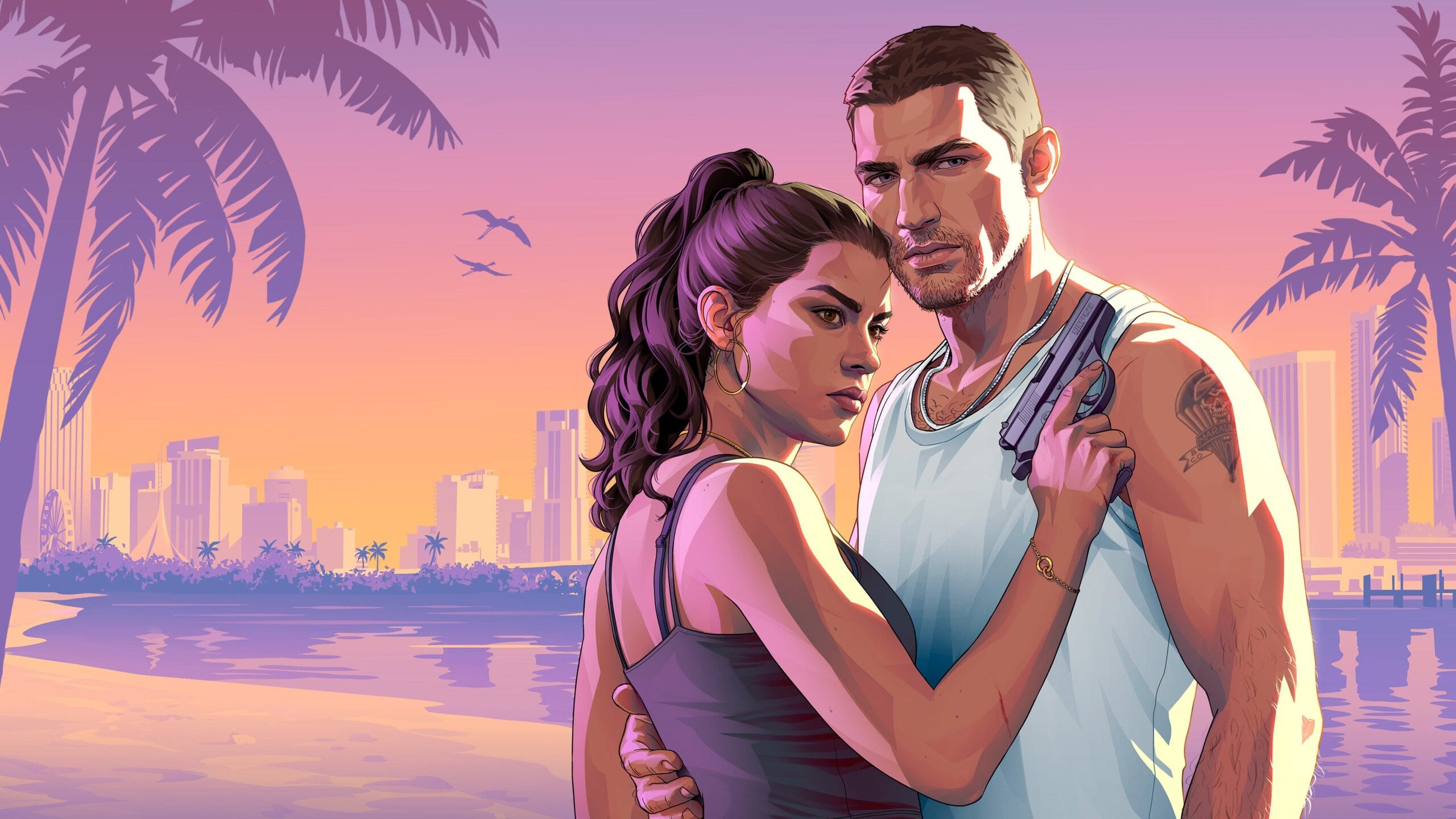
The world broke the internet once again this morning. This time, it was Rockstar Games. Finally, they unveiled the cover art to Grand Theft Auto VI. Along with that thirty-second trailer they dropped at the same time, the site completely disappeared into an even more elaborate update. As you scroll down the landing page you get a glimpse of a dynamic, animated sunset photo of Vice City. Container ships cutting across the water. Helicopters hovering. A deluge of cars on the freeway below. It all looks so incredibly real.
The usual frantic digging immediately began through the photos for hidden Easter eggs. That, however, hides a much more heated battle that’s happening not across the globe, but deep within the chambers of the United States Patent and Trademark Office. Backing Rockstar is the company Take-Two Interactive, which obviously holds rights over the franchise. And it appears Take-Two has initiated a silent, brutal legal war against anyone even thinking of piggy-backing off the name. As you can probably see from the cover art, there’s a good portion of the game that revolves around that specific fictionalization of Miami. It’s no wonder that the company has dispatched an army of lawyers working nonstop to keep the wolves at bay ahead of the game’s release date in November.
Knocking Vice City Subs to the Ground
You don’t have to look far to see who’s on the receiving end of this legal crusade. Just a few months back in February of 2026, a little-known business called DT Global Investment Holdings LLC went in to file what seemed like an innocent trademark on something as trivial as sandwiches. They called the establishment: Vice City Subs.
It’s one of those names you hear down in Miami. They nickname the area, the Magic City. While it’s clearly referencing the Miami moniker, in their minds there was probably no harm, no foul. Take-Two Interactive obviously had other plans. It hit Vice City Subs with what essentially amounted to a monumental filing. They brought mountains of legal evidence to the Trademark Trial and Appeal Board and argued fiercely that having the public associate the iconic moniker with a sandwich eatery was a clear and profound public confusion. After all, Vice City has become a brand that generates billions. So yes, you have this massive corporation filing the equivalent of a cease and desist on a sandwich joint because it dared to associate the bright, neon city name with something other than a Rockstar Video Game.
The Rationale Behind Take Two’s Aggression
But why should the gaming publisher care about some little restaurant slinging a quick bite? Believe it or not, the answer ties into how the legal world of intellectual property works. The system is pretty much unforgiving, and if you’re not actively defending your trademarks, then the government essentially assumes you don’t need them and can start assigning those names to other parties.
Need Help With Your PhD or LLM Thesis?
Explore our thesis and dissertation writing support services for PhD and LLM students. Get subject-specific academic assistance for your research project.
Explore Our Services →Rockstar’s next GTA isn’t simply another game – it’s likely going to be a cultural phenomenon and a top-grossing entertainment venture of all time. Pre-orders, expected June 25th, could see a figure of billions exchanged. Look at Lucia and Jason in the new art, with the visual cues that screams “Miami vibe”-a flamingo in the background, the speedy boat, new construction-all tied to Vice City. By allowing another company, say a restaurant chain or a clothing company, to use the name, it opens the door for a flood of knockoff Merchandise on Amazon or a street corner, maybe even some unauthorized movies or books. Even in small legal fights like these, Take-Two establishes a formidable legal protection zone long before players ever step foot in a digital Miami.
How Fictional Brands Get Real Protection
The stakes only get higher once you dig into how this game actually functions in terms of mocking real-world brands. Rockstar is known for playfully making fun of established companies-even creating faux clothing lines or snack brands within the game’s universe. It often occurs that these invented names catch on and enthusiasts try to register them in the actual world. This update of the Rockstar website itself is peppered with digitally plastered advertisements spanning the Vice City freeway; every one is a protected piece of intellectual property. What if a business wiz notices a fun fictional drink advertised in the game’s artwork and then attempts to legally claim that name in the real world?
This forces Take-Two to constantly scour trademark records and fend off anyone attempting to claim trademarks for terms like “Los Santos” or even distinctive in-game fonts. It’s an endless game of whack-a-mole. Essentially, millions are spent by the parent company just to maintain control over made-up names for virtual spaces.
The Bill is in: Defending the Fake Miami.
This situation actually illustrates an unusual dynamic between digital culture and reality’s laws. That original Vice City trademark was initially established nearly two decades ago. Back then, the patent focused mostly on computer software and rudimentary entertainment services. Now, of course, video gaming is on a whole new level-with continuous updates, virtual economies, and real-world merchandising tied to in-game events. The legal scaffolding required to secure the IP for a game of this magnitude is immense. When millions of viewers feast their eyes on the new, bubbly pink art today, they are likely seeing Lucia and Jason plotting