Being subjected to a court order is a bizarre form of punishment for law students. Five years of college, hundreds of heavy books, and study for the most challenging tests in the nation. After that, the entire game alters due to one rule.
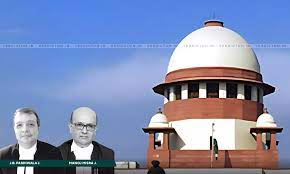
The Supreme Court of India did it again! They sent another big curve ball to thousands of young college graduates who aspired to become judges. On 22nd May, the bench headed by Chief Justice Surya Kant, along with Justices Joymalya Bagchi and Vipul M. Pancholi, set the clock back. They also extended the application timelines for the entry-level judicial service exam throughout the country. The downside is that there’s no new date. There is no restriction on the extension.
At first glance it does sound as a relief. The longer the time allotted for application, the more time for preparation. In practice, it leaves thousands of candidates in a huge nerve-wracking impasse. The blame for the whole confusion goes back to the controversial three-year experience rule for lawyers. The Supreme Court is still struggling to determine whether it’s in the best interests of fresh law graduates to take the civil judge exams in the first place.
Going Back to the Old Ways
You have to go back one year to understand the mess we are in. In May 2025, the Supreme Court gave its ruling in the All India Judges Association case. That decision sent a shiver down the spine of judicial recruitment. The court ruled that it was essential to have a minimum of three years of active practice as an advocate for one to become a Civil Judge in the Junior Division.
It was a complete about-face. For more than 20 years, there was a tradition for fresh law graduates to enter the universities straight to sit for the Judicial Services examination. This freedom has been granted by a decision which was taken in 2002 based on Shetty Commission Report, which essentially said that if a person is selected and now trained rigorously, then he makes a good judge. However, the 2025 decision changed all that. The court suddenly felt that the judges of the trial court should be more mature in court than they are in reality.
Panic broke out in law schools as soon as that ruling was made. Students who have been memorizing bare acts for the tests for a number of years were informed that they were now not eligible for the tests. They would first have to acquire a black coat and locate a senior lawyer and then grind in the local courts for 36 months.
The Money Problem and Real World Struggles.
There was a strong and swift opposition. The main problem with the three year tenure is money. The cost of attending a National Law University or private law college is extremely high. The tuition fee varies from INR 6,00,000 to INR 25,00,000 per five years. Students leave school with a load of education debt.
Litigation isn’t a place that’s known for paying young lawyers much. The majority of fresh advocates only earn enough to pay for their own travel and food. It is quite an undertaking to expect a 23-year-old who is heavily in debt to sustain herself in a local court house for three years on a meager allowance. Soon the argument focused upon exclusion. Some critics of the rule noted that only wealthy families would be able to support their candidates during this interim period.
There was also a significant concern regarding female candidates with the rule. Many young women stated that they had to make a choice between pursuing their careers and family demands because of the compulsory three-year waiting period. For folks that don’t have the means to place their lives on hold, judicial services becomes a much less attractive choice during the vacuum period.
A judicial challenge to the Mandate in court.
Immediately petitions began to come in. Various groups filed appeals against this 2025 decision with the Supreme Court. The Bhumika Trust put in a big effort. They had brought a writ petition in the court on behalf of the scores of disabled candidates, seeking to get the court’s exemption from the strict three-year criterion.
Other advocates submitted review petitions contesting the court’s failure to address the harsh realities of legal education today. This is a much more intense clinical education, court visits and internships are required, and law students are expected to do a lot of work in court. The petitioners contended that empirical evidence alone does not reflect the notion that fresh graduates are bad judges. They noted that many top judicial officers in the past two decades have been graduates of college.
The Supreme Court heard the sound of noise. Chief Justice Surya kant earlier flagged his concerns in public in February this year. He said it is definitely helpful to have had some time on the bench, but it’s important for the court to see the effect on young talent. You could tell he was asking himself how a new rule could be implemented without denying the judiciary of sharp and meritorious students who may just be working in corporate law firms.
A State of Total Paralysis
All these difficulties led to the Supreme Court seeking the opinions of all High Courts and State Public Service Commissions. They sought the opinion of the authorities in the various States on the question of the three-year rule. Meanwhile, the court had to get rid of the exams that had been scheduled.
They first extended deadlines till late April. Then they pushed them once again. The recent May directive merely extends the closing dates for applications for an additional period, until further order. Hence, no fresh recruitment advertisement for the entry level jobs can be with a cut-off date before the final verdict of the court on the matter.
This implies that the state judges exams are more or less permanently suspended. States that had exams planned on the go are on a waiting list, like Bihar. The lower judiciary recruitment process is deadlocked.
No Clear Answers for the Aspirants
So, a Delhi or Patna law graduate is presently uncertain about what to do next in the library. They don’t know whether it’s worth their while to continue studying for a test that may not occur for a long time. They don’t realize whether they should pack up and go find a job at a trial court to begin ticking off the three years.