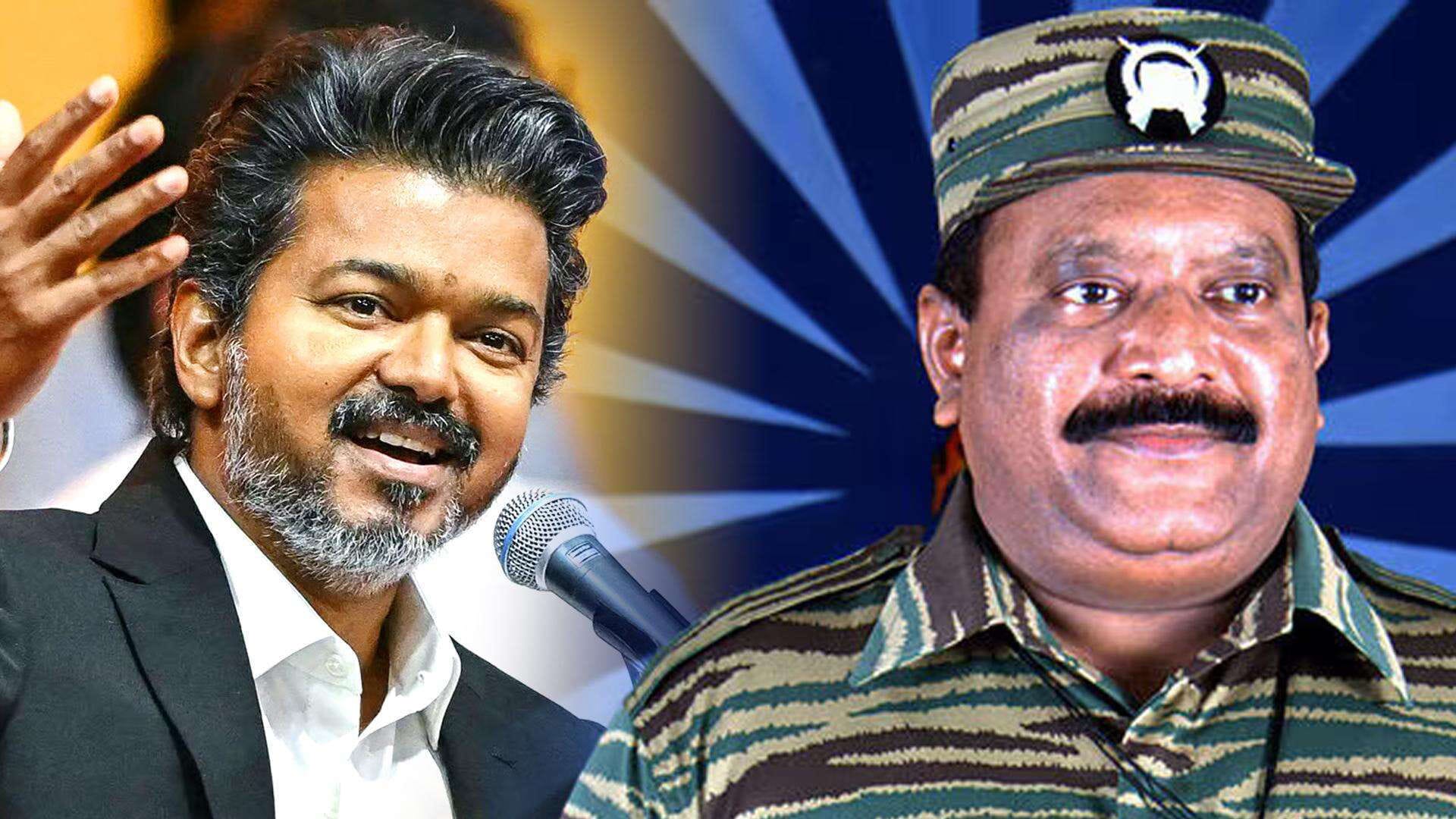
Tamil Nadu Chief Minister C. Joseph Vijay has set off a huge nation-wide political and legal debate. He posted a message on his official account on X on May 18, commemorating the Mullivaikkal Remembrance Day. He spoke about being burdened with the pain of Mullivaikkal in his heart and the promise to stand in solidarity with the Tamil people throughout the world. It wasn’t specifically mentioned in the post that the Liberation Tigers of Tamil Eelam, or LTTE, were involved. However, the reference was very clear in the timing and the geographical reference.
On May 18, 2009, the unabated Sri Lankan civil war finally ended in the coastal village of Mullivaikkal.It was the same day in 2009, the exact date when the decades long Sri Lankan civil war finally came to an end in the coastal village of Mullivaikkal. It happened where the Sri Lankan military shot and killed the absolute chief and founder of the LTTE, Velupillai Prabhakaran. That historical fact made it an easy target for the opposition. BJP leaders lashed out at the Chief Minister for his constitutional violation and alleged that he has been glorifying the name of the dead chief of a banned terrorist group openly. The political furor erupted immediately, and lawyers had to seriously consider India’s anti-terrorism laws to determine whether a social media post such as this is a violation of anything in the statutes.
The Unlawful Activities Prevention Act Threshold
The main thrust of the legal argument is around just one single act – the Unlawful Activities Prevention Act, or UAPA as everybody knows it. The Indian government had already placed an embargo on the LTTE in 1992. It occurred immediately after the murder of the previous Sri Lankan Prime Minister Rajiv Gandhi in Sriperumbudur in 1991. Investigators had named Prabhakaran as the prime accused in that suicide bombing conspiracy. This ban has been renewed by the Home Ministry every few years and is clearly classified as an “unlawful and terrorist” organisation endangering the ‘sovereignty and territorial integrity of India’.
The UAPA makes it an offence to be a member of a banned outfit or participate in its illegal activities (Sections 10 & 13). May get a person one to seven years in jail. However the law becomes rather complicated when applied to a mere word, speech or memorandum.
You need to review previous landmark cases to see how courts have dealt with such situations. The Supreme Court of India has drawn a very sharp line between advocacy and actual incitement, several times. In the landmark judgment of Arup Bhuyan vs. State of Assam, the apex court had ruled that only by expressing sympathy towards the cause or ideology of a banned organization does one become a criminal under the UAPA. In order to be considered a “major terrorist act” it is necessary to have convincing evidence that the individual actually invited people to arm themselves against the state or incited violence.
Free speech versus public order
Attorneys and advocates for freedom of expression say the remembrance of victims of the Mullivaikkal tragedy should be a human rights matter, rather than one of terror. Several estimates from the United Nations have been released in recent years, with estimates of between 40,000 and 70,000 Tamil civilians being killed during the final, brutal, phase of the Sri Lankan military offensive in 2009. The diaspora and various political parties around the world in Tamil Nadu see May 18 as a day of mourning of innocent lives lost and not a day of celebration of the armed militancy of the LTTE.
Article 19(1) of the Constitution provides all citizens the right to freedom of speech and expression. This right is well safeguarded. But there is an exception to this, stated in Article 19(2), which permits reasonable restrictions on the freedom. They can do so when the speech poses a threat to public order, decency, morality or the sovereignty and integrity of India.
The legal issue here is whether Chief Minister Vijay’s words go beyond that reasonable limit of restriction. Legal experts note that he specifically refrained from praising the LTTE military strategy and from asking for the revival of the armed struggle for Tamil Eelam in his post. His only concern was with the rights of the Tamils in foreign countries. The language remained within the realm of general emotional sympathy, so that any investigative agency would find it extremely difficult to sustain a UAPA case based on it, criminal law experts say.
The Regional Alliances are a deeply complicated phenomenon.
The legal battle cannot be separated from the naked political figures in the Legislative Assembly of Tamil Nadu. The Tamilaga Vettri Kazhagam (VVK), whose leader is the party leader Vijay, is in minority government in Chennai. Through tight post-election coalition, they succeeded in grabbing power.Through forming a tight post-election coalition they successfully got hold of power. His government depends on external support from the lobbyists of the region, such as the Viduthalai Chiruthaigal Katchi, on its bench in the treasury.
VCK/Other fringe regional organisations have a long, open history of being pro Tamil Eelam. They organise public memorial functions with large posters of Prabhakaran being displayed in no uncertain terms regularly. Local police authorities have sometimes filed cases under Indian Penal Code Section 153A for activities that are critical of those groups or that spread “enmity” or “disruption of public tranquility” by local activists. However those local cases rarely hold up when they do make it to the High Court level.
The Congress party has been the target of virulent criticism by the BJP on this issue. They are asking the central Congress leadership why it is not coming out in support of its political allies in the state when they are celebrating the memory of the assassin of Rajiv Gandhi. The Congress is in a very difficult position, between history and the present day’s coalition politics in the region. So far, this discussion is merely talk. There is no formal police complaint filed against the Chief Minister and the law does not seem to have been designed with any care to fall just short of the harsh Indian anti-terror laws.