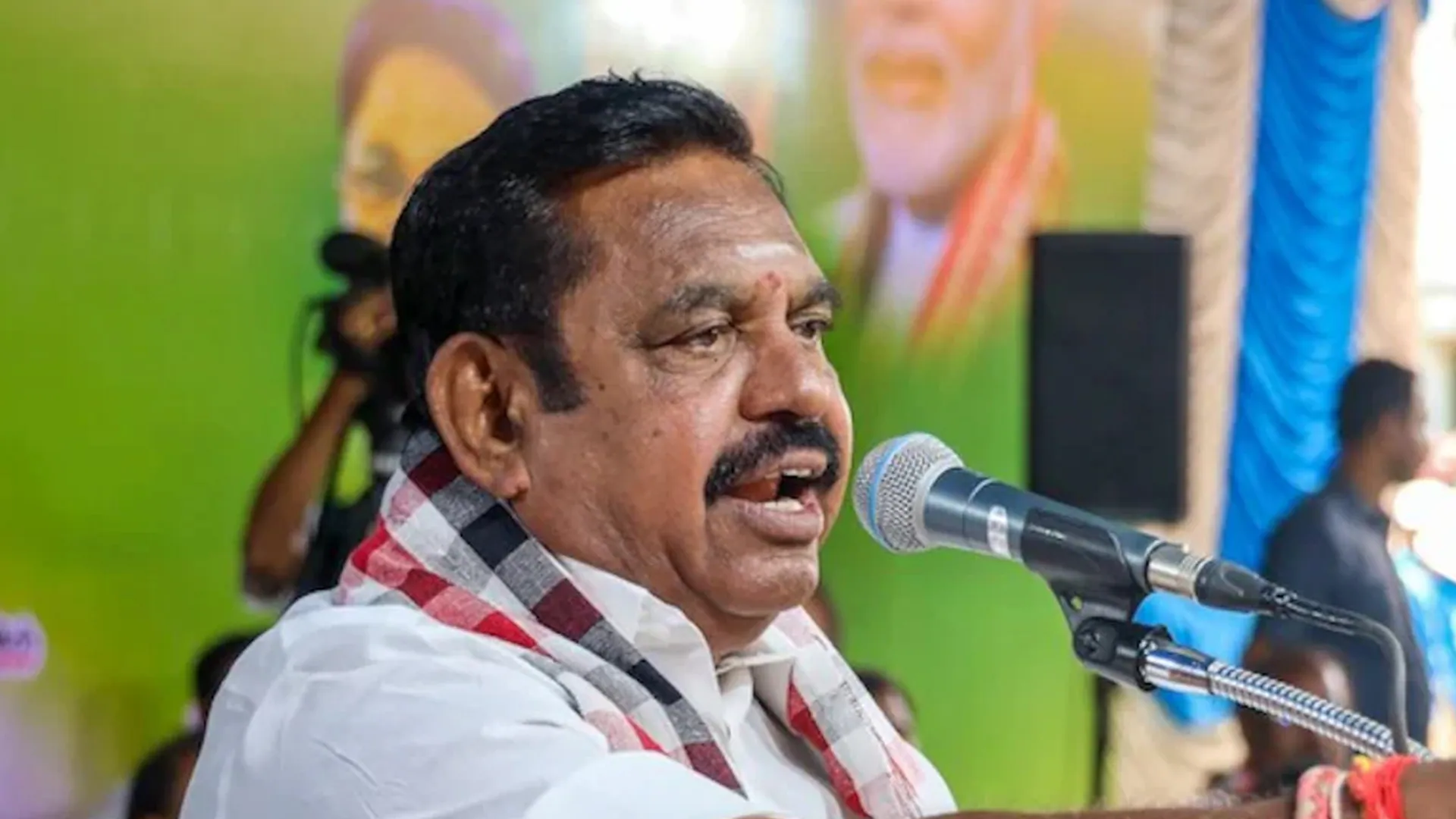
It’s surreal to see a political behemoth ripping itself apart on the floor of a legislative assembly, in real time. It doesn’t happen with a quiet, proper press release. It happens when the lights are red, when people shout and when the voting button starts to click. It was an almost split-half performance of the All India Anna Dravida Munnetra Kazhagam (AIADMK) on Wednesday. The real show in a trustee type vote that was meant to test the government of Chief Minister C. Joseph Vijay’s youthful Tamilaga Vettri Kazhagam (TVK) was on the opposition bench. Twenty-five AIADMK MLAs, including the party’s heavyweights S.P. Velumani and C.Ve. Shanmugam, openly defied party chief Edappadi K. Palaniswami and voted for the government. Twenty-two remained loyal to EPS and voted against it
The immediate political reaction was inevitable. Palaniswami with his organizational sword took off Shanmugam, Velumani and the other rebels from their party posts and replaced them with loyalists. Party posts are merely housekeeping in-house. The actual contest—the one that could greatly impact Dravidian politics forever—has now moved from the assembly floor to the murky, expansive halls of the Constitution’s Tenth Schedule.
Welcome to the Anti Defection Law!
The law was initially enacted in 1985 to end the ‘Aaya Ram, Gaya Ram’ politics of that time when legislators changed their allegiances for cabinet posts and monetary benefits. In a nutshell, if you are elected on a party ticket and break the party’s official House line, you are stripped of your seat. However, the law has developed and over the decades has become a mathematical puzzle. Currently, the rebel AIADMK camp is in a very tricky equation.
Need Help With Your PhD or LLM Thesis?
Explore our thesis and dissertation writing support services for PhD and LLM students. Get subject-specific academic assistance for your research project.
Explore Our Services →To evade mass disqualification under the anti-defection provisions, a breakaway faction needs to prove that at least two-thirds of the legislature party has agreed to “merge” with another party. The AIADMK has 30 MLAs. About, or approximately, 32 of 47 is 2 thirds. There are presently 25 Shanmugam and Velumani
They are short. In the strictest sense of the word, of course, EPS has the ace. His camp has already indicated it will seek to disqualify the 25 rebels who have violated the whip from the Speaker’s office, J.C.D. Prabhakar. Moreover, there is a body of recent Supreme Court law on his side. The verdict of the Shiv Sena essentially made it clear that the whip is determined by the “political party” (outside the assembly) and not by the “legislature party” (the MLAs). The AIADMK’s appointed whip is, of course, the closest anyone in the court will get to recognising one who will run the show on the AIADMK’s general council and their organisational framework if the latter is indeed the one to hold sway as is widely believed.
Who can deny, however, that the theory of the constitution and the reality of the assembly don’t go hand in hand in the Indian political arena.
That’s where the Speaker is most influential—and most looked upon—in the crisis. Speakers should be neutral umpires. In reality, they are political hacks who seldom forget the party which appointed them to the chair. Now Speaker Prabhakar is left with a pile of inevitable disqualification petitions. Has no constitutional time limit on his actions. He would sit on the petitions for months and allow the rebel MLAs to function in an unnatural way and keep the Vijay government afloat. The move effectively buys the TVK administration a bigger majority without the need to make any formal moves to merge
The lack of success of the rebel camp is becoming apparent. It’s not that Shanmugam and Velumani fell into a trap. They are well-versed in the intricacies of power politics that have ruffled the AIADMK since the death of J. Jayalalithaa several years ago. They probably realize that they are in no position to split the numbers down the road. Their approach appears to be purely ‘time passing’ – waiting for the inertia of the establishment and political patronage to see them through until the next election cycle when they hope to bag another seven MLAs from the EPS fold.
But there’s a great danger involved. The rebels are playing with fire by lending their support to Vijay, who is a fairly new and an assertively rising name in the Tamil political arena. The fundamental ethos of the AIADMK is to be the main alternative to the DMK. So, at least in part, has EPS said, with some justification, that it is degrading the party’s history to put it under the domination of a newcomer. If the rebel side is eventually disqualified and has to go head-to-head in by-elections, they won’t be running under the mighty two-leaves symbol. They’ll be asking voters to re-elect them as defectors.
It has left Tamil Nadu in an awkward limbo. A thick fog is being created by the Anti-Defection Law, the very law meant to bring clarity. Not only has it not ended horse trading, it has merely concentrated it and made it a “club” for those who can afford to pay a lot of money to lawyers and have a friendly Speaker on their side. The fate of these 25 MLAs will reveal whether the Tenth Schedule retains its punch, or whether it’s a formality that has been mastered by enterprising candidates.