A Wednesday in the Supreme Court
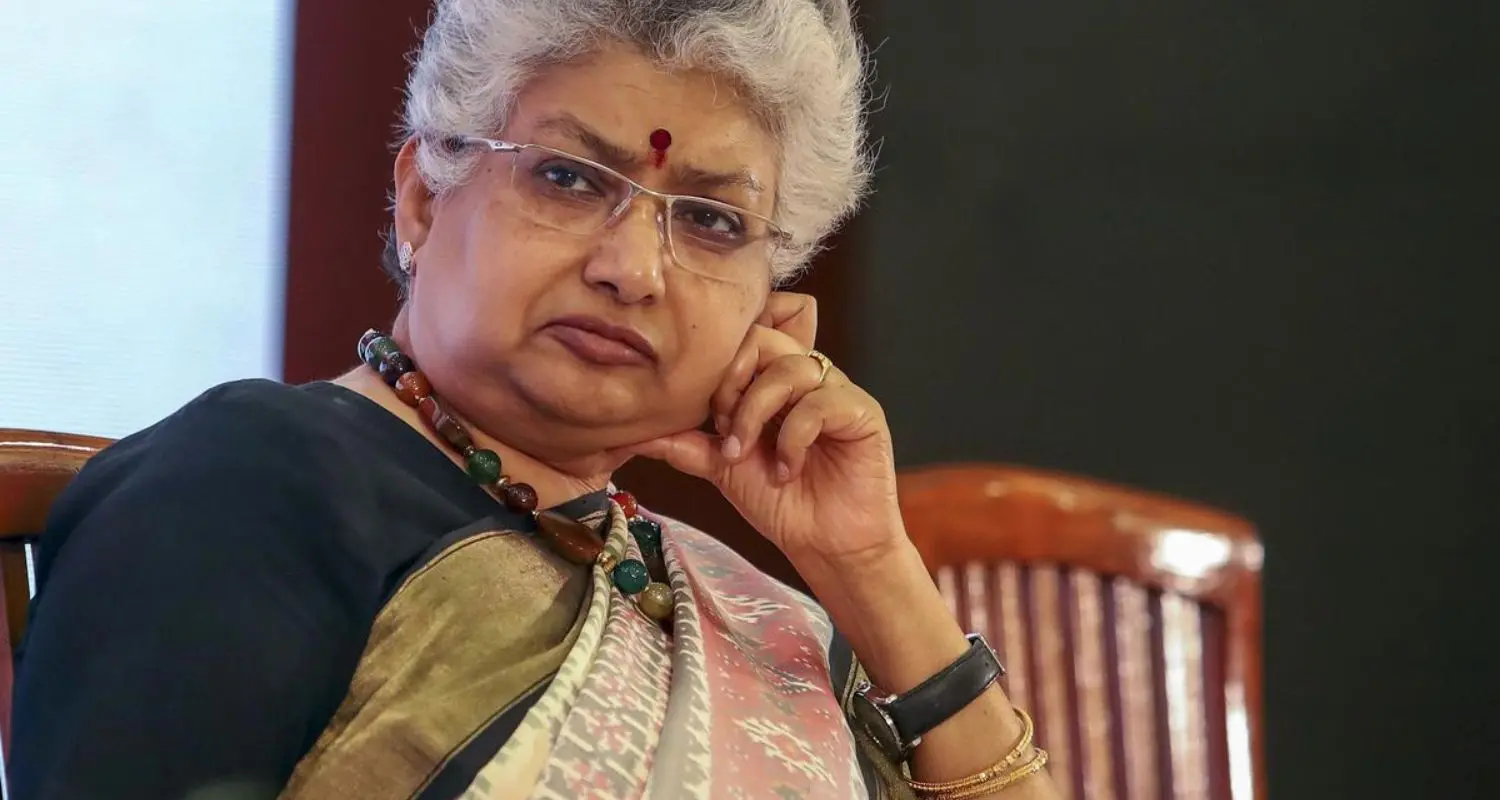
It was just an ordinary Wednesday in the Supreme Court of India. It buzzed with arguments on one of the hottest religious issues in India. The Supreme Court was hearing the review petitions on the Sabarimala temple. In the midst of this heated hearing, Justice B.V. Nagarathna dropped a bombshell. She went on to talk about the age-old restrictions on women entering the hill shrine
According to Justice Nagarathna, a large number of women devotees of Lord Ayyappa voluntarily refrain from visiting the shrine. She said that “true devotees” that are women between the ages of 10 and 50 follow this restraint. The judge said they abstain from making the pilgrimage until after they turn 50. The judge’s statement set off a flurry of debates in the media and legal community.
Understanding the Sabarimala Tradition
To understand the court’s reasoning, let’s take a brief look at the Sabarimala temple. It is located high in the hills of Pathanamthitta, Kerala. It is dedicated to Lord Ayyappa. Traditional devotees believe the deity to be a ‘Naishtika Brahmachari’ or a lifelong celibate. This unique attribute of the God has resulted in women of child-bearing age being banned from the temple
Girls and women aged 10 to 50 are the ones who are not allowed. For many years, this was not a social practice but a court-imposed law. In 1991, the Kerala High Court even upheld the practice. At the time, the court said that the ban was “in harmony with ancient customs”. Between 1991 and 2018, the law on banning women in this age group was enforced.
Need Help With Your PhD or LLM Thesis?
Explore our thesis and dissertation writing support services for PhD and LLM students. Get subject-specific academic assistance for your research project.
Explore Our Services →Supreme Court and the Clash of Rights
Jump ahead to today’s Supreme Court proceedings. The court is re-examining the issue. In the recent hearing, Senior Advocate Indira Jaising took the stand against the ban. Jaising represents two women who managed to enter the temple after the Supreme Court ban was lifted in 2018. She passionately defended the right of a woman to worship individually.
Jaising argued that the rights of individuals under Article 25(1) of the Constitution should be more important than the rights of a religious denomination. She said barring women from entering a sacred space is exclusionary. Jaising said that such practices are based on archaic notions of purity. She said that excluding women suggests they will desecrate the area.
That’s when Justice Nagarathna intervened. She urged the senior advocate not to consider it only in terms of defilement. The judge said that the restriction is often a part of the philosophy of the god rather than demeaning to women. She asked, “Can I profess as a devotee if I accept only those parts of the belief system that I agree with?”
Voluntary Restraint Over External Force
And so it came to the topic of voluntary restraint. Justice Nagarathna pointed out that many purity practices are voluntarily followed by people. She said families would stay away from others after births or deaths. The judge pointed out that many women in Kerala who are devotees of Lord Ayyappa choose not to go to the shrine for the 40 years of their lives.
Jaising said many women do tell the court that they will happily wait until they are 50. But she stressed that the court needs to hear from the women who wish to visit the shrine. She told the court women seeking to pray at the temple are not doing anything illegal. Jaising’s argument is that while it is okay for women to respect the custom voluntarily, it is not okay to ban all women.
But Justice Nagarathna emphasised the role of religion. She observed that it’s a complex issue to take on customs that have been followed for hundreds of years. Practices that have been performed for centuries can become an integral part of the belief. You can’t just dismiss it overnight and destabilise that tradition.
The Danger of Hollowing Out Religion
The judge said something else during this discussion. She said the court must be extremely careful about reforming religious practices. Justice Nagarathna explained that the court cannot be used for the “annihilation of religion”. She said that if they went too far in the name of social reform, they might end up “annihilating religion”.
The Constitution in Article 25(2)(b) authorises the state to legislate for social reform. But the judge reminded the court that this is only a power, not a licence to destroy religion. She acknowledged that whenever a court intervenes in a matter of religion, it’s got to be within limits. If they don’t, the right to freedom of religion under the Constitution begins to become a sham.
Other judges on the bench and Chief Justice of India Surya Kant appeared to agree. Some judges noted that how a devotee chooses to pray to God is highly private. They said it is a very difficult task for a court to examine a devotee’s method of worship through the prism of a judicial microscope. According to one judge, your faith just cannot be tested in a court of law.
Remembering the 2018 Landmark Ruling
To get to the reason why we are back, we need to go back to September 2018. A five-member Constitution Bench delivered a shocking verdict. In a 4-1 verdict, the Supreme Court lifted the age-old prohibition. It ruled barring women from Sabarimala was a breach of their right to religious freedom. It was a big deal that triggered widespread debates.
The 2018 verdict essentially stated that faith cannot be gender discriminated. It said that the followers of Lord Ayyappa don’t constitute a separate branch of the religion. So, they couldn’t assert any special rights against women. Then, the only voice of dissent was that of Justice Indu Malhotra, who said the courts should not interfere with entrenched faith
The Scope of the Current Hearings
The 2018 case prompted a slew of review petitions. Supporters of the temple challenged the Court’s ruling. In November 2019, the Supreme Court felt it would need more judges to consider this case. They didn’t just ask about Sabarimala but also asked big questions about freedom of religion to a nine-judge bench.
The question is now for this bench to look at a much wider issue. It’s not just the hills of Kerala anymore. They are hearing arguments around Muslim women entering mosques. They are considering the religious rights of Parsi women who marry outside the community. They are also hearing about the Dawoodi Bohra’s excommunication.
Anarchy in a Place of Worship
The court also spoke about the governance of religious places while dealing with the issue of freedom of religion. Justice Ahsanuddin Amanullah said that the right to run a religious place doesn’t mean that there should be no anarchy. He said that every dargah or temple must have a system. There has to be an order of worship to follow and an authority to regulate affairs.
But the judges added it needs to be done according to the Constitution. Just because the temple management board makes some rules, that do not mean they can discriminate. They agreed it is a delicate balance. There needs to be rules to maintain order, but they cannot infringe upon people’s rights.
The Court’s Future
The case is continuing day by day. Many leading lawyers are representing all major religious groups. Eminent lawyers such as N.K. Kaul, Shyam Divan and Arvind Datar are saying that ancient faith-based customs should not be taken to court. They are convinced these principles of conscience are not justiciable.
The nine judges are hearing all sides of the story. They are considering individual rights as well as communal traditions. When Justice Nagarathna talks about devotees voluntarily waiting until they are 50, it brings a personal dimension to the discussion. At this stage, the files are not closed, the lawyers are still arguing and the case is in the Supreme Court.