One relentless litigant may soon have his doors to the Supreme Court slammed in his face. On Monday, April 20, 2026, Chief Justice Surya Kant and Justice Joymalya Bagchi lost their temper. They were at the expense of a man who took no for an answer. The bench passed a scathing criticism on Pinakpani Mohanty. They cautioned him that he was walking on a thin thread. A single slip and he would be barred altogether to come to the apex court
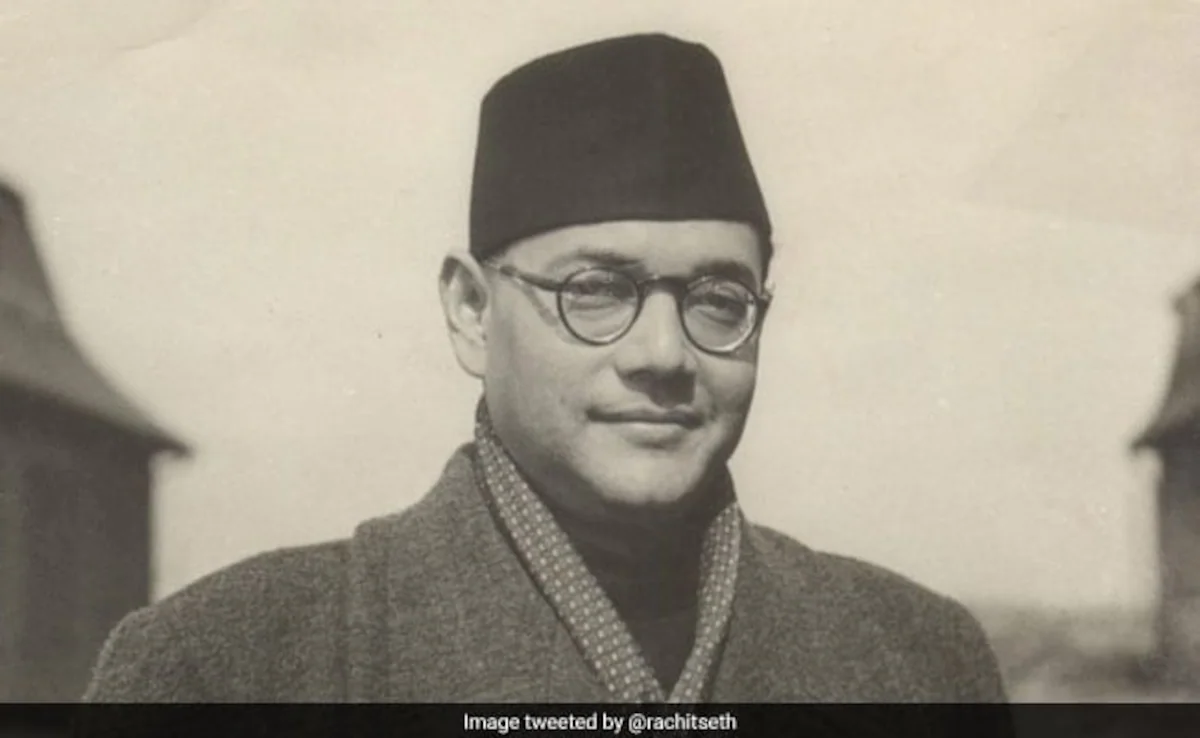
Mohanty had entered in the court with a Public Interest Litigation. He desired the judiciary to intervene in the past and re-write the official version of the history of the country. This was not a normal legal tussle about property or basic rights. The petitioner requested the judges to formally recognize Netaji Subhas Chandra Bose, as the National Son of India
. The seat was quite unimpressed. Chief Justice Kant told Mohanty in no uncertain terms that his frequent attempts to present exactly the same plea were pushing the boundaries of judicial forbearance. The possibility that the Supreme Court would impose a physical ban was seldom so carelessly thrown around, and it underscored the extent to which the judges were getting irritated with this particular case.
Demands of the Petition: Decoding.
The historical coverage of the paperwork Mohanty was filing was sweeping. He virtually requested the judiciary to order a fresh approach to the freedom struggle. He desired a legal statement that indicated that the Indian National Army under the leadership of Netaji was the main unit that won the independence against British colonialism in 1947. In his petition, he said the credit was given to the revolutionists who did not believe in peaceful resistance. He opposed the common principle of non-violence that was propagated by Mahatma Gandhi.
Need Help With Your PhD or LLM Thesis?
Explore our thesis and dissertation writing support services for PhD and LLM students. Get subject-specific academic assistance for your research project.
Explore Our Services →The demands did not end with titles and historical credit. Mohanty proposed a new national calendar. He petitioned the court to compel the government to declare the January 23, the birthday of Netaji, as a significant national day. He was insisting on the same status on October 21 the foundation day of the Azad Hind Fauj. His request went as far as to acknowledge the birth place of Netaji in Cuttack to turn it into a national museum.
One more layer of the plea was devoted to Neera Arya. She can be referred to as the first woman spy of the Indian National Army. Mohanty requested the Supreme Court to legally accept her as a National Daughter of the country. He desired that her birth anniversary on the 5th of March be made a national day. To complete his demands, he demanded the government to declassify an actual truth report. Now, he said, this secret report would tell the true causes of the British evacuation of the subcontinent, namely the military mutinies in the Indian Navy, Air Force, and Army of 1946 and 1947.
A History of Repeat Litigation.
This was an angry bench based on the track record of the petitioner. The judges called him an incorrigible litigant. Mohanty had already presented almost the same arguments to the Supreme Court. Records indicated that similar petition was dismissed in the past by the benches in 2024. Although it had been expressly pointed out that the court was not the place where this battle was to be fought, he did not withdraw his older petition, but came back with an equal amount of demands repackaged
The trial was soon a tense one. The Chief Justice knew Mohanty and he was called to order. He questioned the petitioner how come he was submitting the same paperwork every year like an annual exercise. Mohanty attempted to defend himself using Hindi. He insisted that it was different this time around. The judges did not go with it.
They insisted on the creation of the document. Mohanty evaded answering the question when questioned about who actually prepared the legal paperwork. He said there was this mysterious Mukherjee sir. This indeterminate reply made the bench still more irritated. The Chief Justice threatened him with leaving the courtroom, or he would pay a large sum of money. The judges considered the whole exercise to be a big publicity stunt. They believed that Mohanty was attempting to speak to the world through the highest court in the land and this constituted a waste of the precious judicial time that would have been better utilized in a real legal complaint.
Re-Drawing the Judicial Boundaries.
The dismissal of the plea was formalized by the final order made by the bench. It also erected a huge legal roadblock on the petitioner. The judges ordered the Supreme Court registry to cease hearing any subsequent writ petitions or Public Interest Litigations of Mohanty. They, in effect, denied him access to the PIL system
The fundamental jurisprudence of the dismissal was uninformed and hard. The Supreme Court made it clear that the judges have no power to resolve past disputes. They have no jurisdiction to exercise judicial power so as to establish the subtleties of the freedom struggle. As Chief Justice Kant and Justice Bagchi made it clear, the sacrifice and leadership of Netaji are highly respected, but a courtroom is not the place where one can bestow historical titles or edit books on history.
The bench indicated that such things should be left to the government or other historical officials. They cited past decisions in which the court had declined to interfere in Netaji affairs, including an unsuccessful application in 2022 to declare his birthday a national holiday, and a petition over the return of his remains in Japan. The word of the supreme court was unconditional. The battle against historical disagreements should be conducted in political and scholarly spheres, rather than abusing the judicial system.