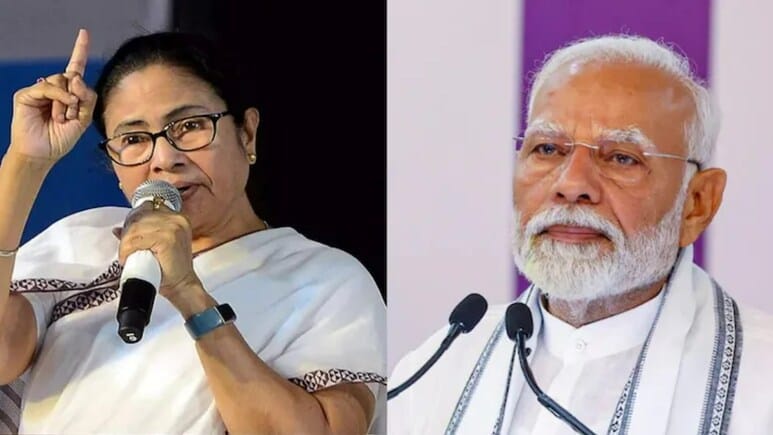
The recent tempers between the West Bengal Chief Minister, Mamata Banerjee and the Prime Minister, Narendra Modi has once again plunged the shady scene of political oratory into the limelight. Mamata Banerjee retaliated after the Prime Minister had given a speech to the country in which he accused the opposition of betraying the women of Bengal. She referred to his speech as cowardly, hypocritical and fork-tongued. Such biting, stinging words have given rise to a debate that is more a play of political politics than it is of the letter of the law. It is now raising questions whether such violent language is too far to criminal defamation in the new Bharatiya Nyaya Sanhita (BNS)
https://www.thequint.com/opinion/mamata-banerjee-women-voters-bengal-elections-modi-bill-defeated
Defamation Law.
In the existing legal framework in India, namely, Section 356 of the Bharatiya Nyaya Sanhita, defamation is characterized as an imputation made or published about a person and is an intent to harm his or her reputation, or a knowledge of such harm. This includes verbal and written content, signs or even visible forms. In case an individual is convicted, he or she may be sentenced to simple imprisonment of up to two years and/or fined or both.
To officially be considered defamation, a statement must go beyond being offensive or upsetting to feelings. It has to be an imputation which in fact diminishes the moral or intellectual character of an individual in the socially judged opinion. It must hurt their reputation in a manner that will influence the perception of other people towards them- whether it is their character, their caste, their profession or their creditworthiness. The legislation attempts to guard the right to reputation, which the judiciary has acknowledged to be an indispensable aspect of the right to life in the Constitution. But the law does not ignore the fact that the reputation should not be given the right to entirely suppress the free speech
Challenge of Political Speech
The fact is that Indian politics never were smooth. Slanders, personal attacks, and brutal criticisms are the types of weapons frequently present in the arsenal of electoral. When political rivals engage in barb-trading, most of the time they are in a public field where voters are their ultimate judges. Courts have traditionally been reluctant to intrude into the normal rough and tumble of politics, understanding that politicians are supposed to possess a harder skin
By calling the Prime Minister a coward or a hypocrite, Banerjee is giving a political judgment on his actions and what he says publicly. Whether this amounts to defamation will largely be determined by whether these words are regarded as being an act of hyperbole – an exaggerated, rhetorical criticism – or a particular, false statement designed to destroy a reputation. In most cases, the courts are seeking good faith and the interest of the people. When a leader is critiquing the policy or official action of another leader, he or she is usually given some leeway. The exceptions in the law safeguard fair criticism of the public officials, as long as the criticism is done in good faith as to their official duties.
The Public Figure Standard.
The intent of the words is one of the greatest challenges in any possible defamation case involving high-profile persons. Defamation law is not a weapon to shut down dissent or to penalize someone because he or she holds another political opinion. In case all the violent statements in a campaign speech were regarded as criminal defamation, the democratic process would come to a stop.
Lawyers usually insist that ideally defamation must be a civil issue- a means by which an individual may seek redress over a hurt to their reputation and not throw their opponent in jail. Such disputes are often criticized of using criminal law that is disproportionate. Additionally, to be counted as defamation, the statement in question, most of the times, must be a statement of fact that is false, as opposed to an expression of opinion. When a person calls another hypocritical, he or she is just making a subjective statement. It is a statement of their character or their regularity but it is not a fact that can be easily established as true or false in a court of law.
The Free Speech and Dignity dilemma.
The dilemma on the right to a clean reputation and the right to free speech is the crux of this matter. Though the BNS gives the framework to penalize the malicious falsehoods, it has provisions to protect the legitimate speech. Political opposition is not supposed to be criminalized by the law. And had it been the case, we would probably be witnessing thousands of criminal cases by the politicians against each other in each election cycle and by doing so, would have turned the legal system into a means of settling scores.
The remarks in this particular spat were done during a high-stakes election season. Both the Chief Minister and the Prime Minister are personalities that are in the limelight and they hold offices of great authority. Their words are weighty, but they have undergone a high degree of public scrutiny as well. The question of whether these particular words have stepped over the line to the territory of the illegal or not is an issue that must be viewed with a close, and probably quite protracted, legal examination of the intent, the context and the actual effects on the reputation of the Prime Minister. These words are, at this point, what they have always been in Indian politics aggressive rhetoric in an attempt to win the imagination of the electorate and not a foundation on which to base a criminal prosecution.
The controversy of this incident is a reminder of the fact that the political rhetoric in India tends to test the limits of the legal norms, and we always have to reconsider the borderline between the legitimate political rhetoric and the harm that can be taken.
To understand a little more of how the new legal regime categorizes these types of conflicts, you can check out this explainer on Section 356 of the BNS. This video clearly explains the meaning and the implications of criminal defamation in the Bharatiya Nyaya Sanhita.
http://googleusercontent.com/youtube_content/0