Bharatiy
Introduction
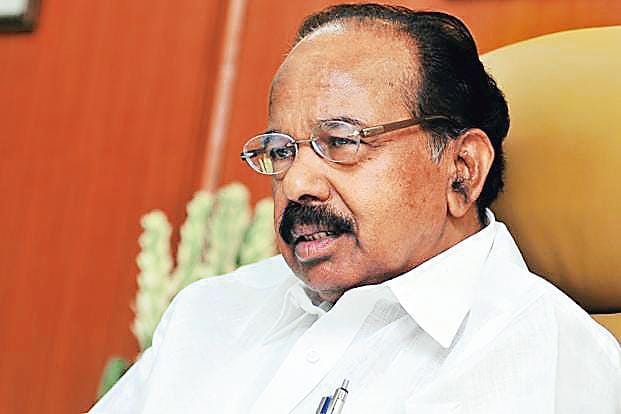
A notable addition to the Indian legal literature has just been released with the publication of a major work on ancient Indian jurisprudence Bharatiya Nyaya Shastra by M. Veerappa Moily. The book debuted at O. P. Jindal Global University, and this was a significant step toward reviving and appreciating the rich legal traditions of India.
Background of the Author
Dr. Veerappa Moily is a renowned political figure, former Union Minister and an admirable legal theorist. He has made contributions in the area of governance, law and public policy over the years.
His recent project is a result of years of research and is designed to re-establish the links between Indian legal thought of the modern era and the ancient one.
Bharatiya Nyaya Shastra.–About the Shastra of the Nyaya school.
Bharatiya Nyaya Shastra discusses the principles of law and justice that were formed in ancient India. The treatise is based on classical writings, philosophical and historical practices that influenced the Indian concept of justice.
The book tries to give a systematic explanation of the conceptualisation of law in ancient India beyond colonial understanding and contemporary structures.
Need Help With Your PhD or LLM Thesis?
Explore our thesis and dissertation writing support services for PhD and LLM students. Get subject-specific academic assistance for your research project.
Explore Our Services →Purpose of the Work
The main goal of the book is to restore the indigenous legal knowledge and introduce it into the modern discourse. Western jurisprudence has dominated Indian legal education over the decades.
The work by Dr. Moily attempts to equalize this by pointing to the Indian contributions to legal philosophy, the ethics and the rule of law.
Introduction at the Jindal Global Law School.
The book was officially released in Jindal Global Law School, one of the top educational institutions of law in India. Legal scholars, academicians and students were all present in the event.
This introduction offered a chance to discourse about the significance of incorporating traditional knowledge with contemporary legal systems.
Themes of the Treatise.
Classical theories of Justice.
The book looks at the way ancient Indian philosophers viewed justice not as only a legal notion but as a moral and social ideal. Justice was also closely associated with dharma, which dictated the behavior of individuals and the society.
Role of Dharma
Dharma, which is translated as duty or righteousness is the basis of ancient Indian jurisprudence. It regulated interpersonal relations, government, and conflict management.
The treatise expounds on how dharma served as a guide to both rulers and citizens.
Laws and Government.
The book also covers the manner in which the legal system operated in ancient India such as kings, councils and local assemblies.
It emphasises that the methods of dispute resolution were decentralised and community-based, and thus showed multi-level existence of justice.
The Foundations of Law, Ethical.
The ethics and moral responsibility were stressed in ancient Indian jurisprudence, unlike the modern law where the emphasis is usually made on rules and enforcement.
The treatise demonstrates the inseparability of law and values, including fairness, compassion and duty.
Applicability in the Contemporary times.
The launch of Bharatiya Nyaya Shastra comes at a time when there is increasing interest in decolonising legal education in India.
Many researchers believe that it is possible to gain new insights into the modern legal issues by understanding the indigenous legal traditions.
The work of Dr. Moily is a contribution to this movement as it presents an elaborate history of the Indian legal tradition.
Academic and Legal Impact.
The book is likely to be a significant addition to the collection of students, researchers, and law practitioners. It can have an impact on law school curricula and promote the study of Indian jurisprudence.
It also opens the way to the comparative study of ancient Indian legal principles and the contemporary legal systems.
Broader Significance
The treatise transcends academic interest. It is a cultural and intellectual endeavor to recover India past in the context of law.
The book can ensure that ancient legal thought is not lost or undervalued by recording it, which otherwise might have been.
Challenges and Criticism
Although the rejuvenation of ancient jurisprudence is generally celebrated, there are experts who advise against blindly following historical concepts.
These ideas should be examined within the framework of contemporary constitutional principles equality, liberty and human rights.
The issue is to combine tradition and modernity in the equilibrium way.
Introduction of Bharatiya Nyaya Shastra by Dr. Veerappa Moily in Jindal Global law school is a significant move towards accepting the rich legal tradition of India. The treatise does not only reconsider ancient ideas of justice but also challenges the modern scholars to reconsider the principles of law in India.
The works in question are a reminder that the Indian jurisprudence has deep origins that can be used to gain valuable insights in the future, as the legal community continues to evolve.
Keywords
Veerappa Moily, Bharatiya Nyaya Shastra, ancient Indian law, Indian jurisprudence, dharma concept, legal philosophy India, Jindal Global Law School, Indian legal education, indigenous law, Indian legal history