Introduction
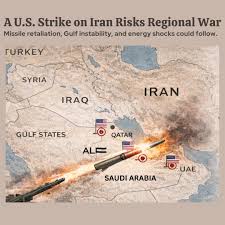
The current conflict between the United States and Iran has again cast serious doubts on the effectiveness of the United Nations (UN). Although its main mandate is to ensure international peace and security the UN has not been able to avert escalation. This failure was not caused by a single event, but it is a symptom of profound structural flaws in the organisation, particularly veto power in the Security Council.
The United Nations role.
The UN and the Security Council in particular have the role of preventing wars, keeping peace as well as sanctioning collective action by the UN Charter.
The Security Council has the authority to impose sanctions and grant authorisation to engage in military intervention and make binding decisions to deal with threats to peace under Chapter VII of the UN Charter.
But, in reality, political realities often constrain these powers.
Need Help With Your PhD or LLM Thesis?
Explore our thesis and dissertation writing support services for PhD and LLM students. Get subject-specific academic assistance for your research project.
Explore Our Services →Weakness of the Security Council Organization.
The greatest weakness of the UN is the organization of the Security Council. It has five permanent members United States, United Kingdom, France, Russia, and China and ten non-permanent members.
Article 27 of the UN Charter gives the five permanent members the power to veto a substantive resolution.
This implies that a resolution can be vetoed by just one member despite the fact that 14 out of the 15 members support the same resolution.
Such composition and construction usually causes stalemate in occasions of great wars. ([The Grand Review][1])
Veto Power and Geopolitical Interests.
Veto power is a decisive barrier in situations of conflict among major powers or their allies. Vetoes are used to safeguard the strategic interests of countries instead of supporting world peace.
To illustrate, the events that occurred recently indicate that the efforts to adopt resolutions connected to the Strait of Hormuz proved unsuccessful due to the interference of the permanent members such as Russia and China through veto. ([Anadolu Agency][2])
On the same note, in the past the United States has exercised veto power during conflicts that involved its allies, whereas Russia and China have done the same in other regions.
Such partisanship of veto delegitimizes the UN.
Paralysis in Decision-Making
The outcome of veto politics is paralysis of institutions. The UN is often unable to take decisive action even in instances where conflict escalation is evident.
It has been reported that in most of the major conflicts around the globe, the majority of the vetoes have been clustered to a few politically sensitive areas, and thus no meaningful action can be taken ([Oxfam International][3].
This was a form of paralysis that was seen in the US-Iran war where there was no effective diplomacy and no formidable concerted action was formed.
Lack of Enforcement Power
The other weakness is that the UN lacks its own military force. It uses the member states to enforce its decisions.
Although resolutions are being made, implementation is subject to goodwill of the mighty nations. In case of any involvement of major powers in the conflict, it can hardly be enforced.
Consequently, the UN frequently restricts itself to declarations, threats and requests to restraint instead of taking decisive action ([Independent United Nations Watch][4]).
Rival Discourses of Self-Defence.
Both the United States and Iran have defended their actions by the Article 51 of the UN Charter that provides self-defence.
This poses a legal ambiguity and complicates the ability of the UN to take a definite stand. When each party is asserting it to be legal, the Security Council is divided along political lines.
Outdated Structure of the UN
UN was formed during the aftermath of the World War II and it represented the power distribution during that period. But the world politics has transformed a lot.
The modern day conflicts are characterized by new power relations, regional alliances and non-state actors. The UN structure, however, has not changed much and thus it is not as efficient in contemporary conflicts. ([South China Morning Post][5])
Diplomatic Limitations
Recent news indicates that even peace negotiations between the US and Iran have been unsuccessful because of an atmosphere of mistrust and opposing demands, further restricting the role of the UN as a mediator. (The Washington Post)
UN diplomacy alone cannot prevent wars unless there is cooperation between the parties involved.
The inability of the United Nations to prevent the war between the US and Iran brings to the fore deep structural issues, particularly the power of veto, the inability to enforce it, and the outmoded institutional structure. Though the UN continues playing a crucial role in the international arena, its capacity to uphold peace is gradually being limited by geopolitical factors. Such failures are bound to recur in future conflicts unless significant reforms are implemented.
Keywords
Failure of the United Nations, US war against Iran, the power of the UNSC veto, UN Charter Article 27, international peace security, world governance crisis, UN reform, veto politics, weakness of the Security Council, international law.
[1]: https://www.grand-review.com/article/un-security-council-reform-veto-power-pakistans-global-role-mn78sjla?utm_source=chatgpt.com “UN Security Council Reform: Veto Power and Pakistans Global.
[2]: https://www.aa.com.tr/en/us-israel-iran-war/-don-t-repeat-mistakes-china-tells-un-security-council-after-vetoing-strait-of-hormuz-resolution/3896689?utm_source=chatgpt.com “Don’t repeat mistakes, China tells UN
[3]: https://www.Oxfam.org/en/press-releases/un-security-council-casts-nearly-all-vetoes-last-decade-syria-palestine-and-ukraine?utm-source=chatgpt.com “UN Security Council casts nearly all vetoes last decade on Syria, Palestine and UKraine robs opportunities to peace
[4]: https://www.iunwatch.org/the-uns-empty-warnings-why-diplomacy-fails-to-stop-israel-iran-hostilities/?utm_source=chatgpt.com The UNs Empty Warnings: Why Diplomacy Fails To Stop Israel-Iran Hostilities
[5]: https://www.scmp.com/opinion/world-opinion/article/3320148/un-weakness-over-ukraine-war-iran-israel-conflict-shows-need-reform?utm_source=chatgpt.com “Opinion | UN weakness over Ukraine war, Iran-Israel conflict shows-need-reform | South