Introduction
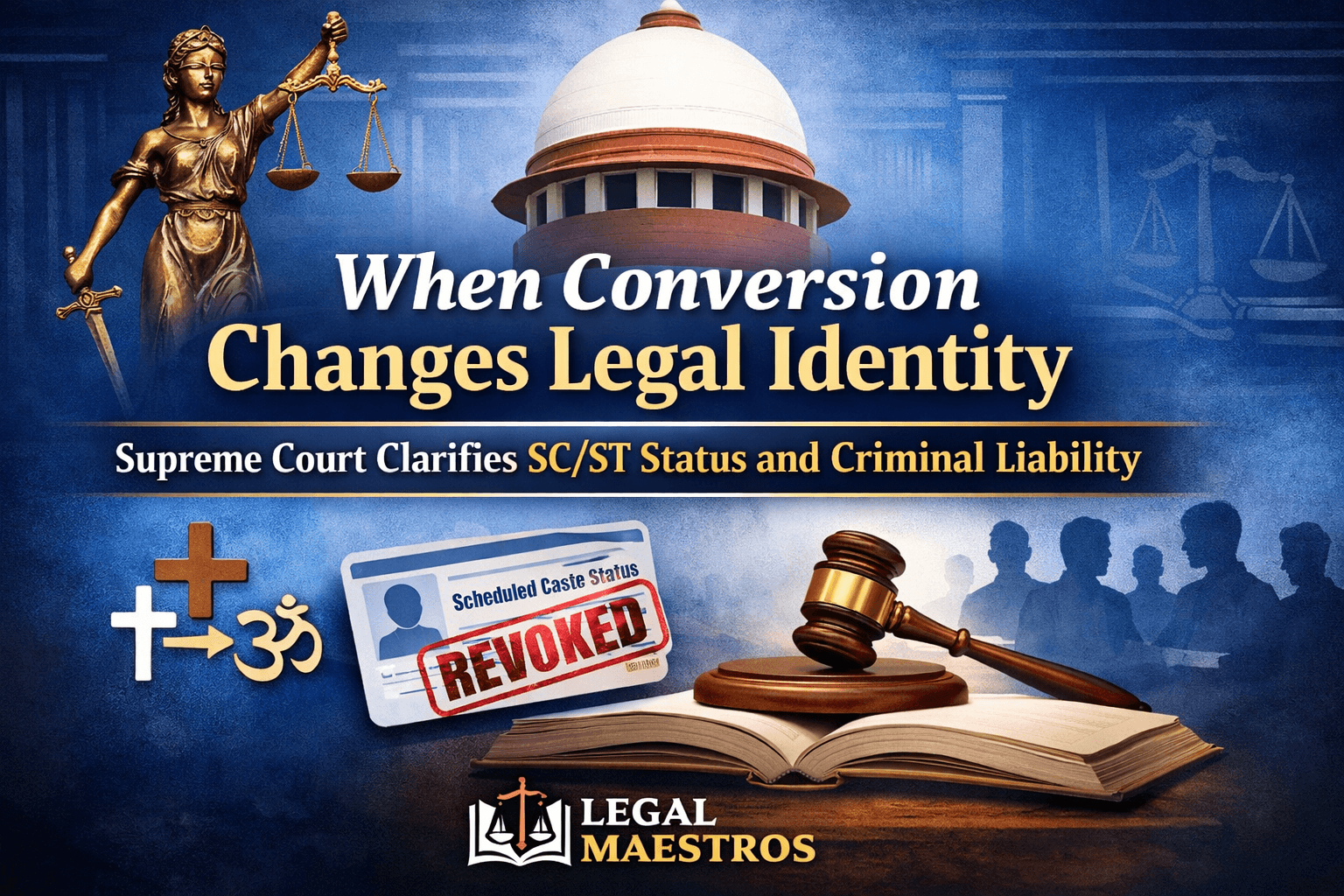
The Supreme Court of India made a judgment in Chinthada Anand vs State of Andhra Pradesh & Others. The Court looked into a question: Can a person who converts to Christianity still claim protection under the SC/ST Act?
This case involved allegations of assault and caste-based abuse. It also clarified how religion impacts Scheduled Caste status under law.
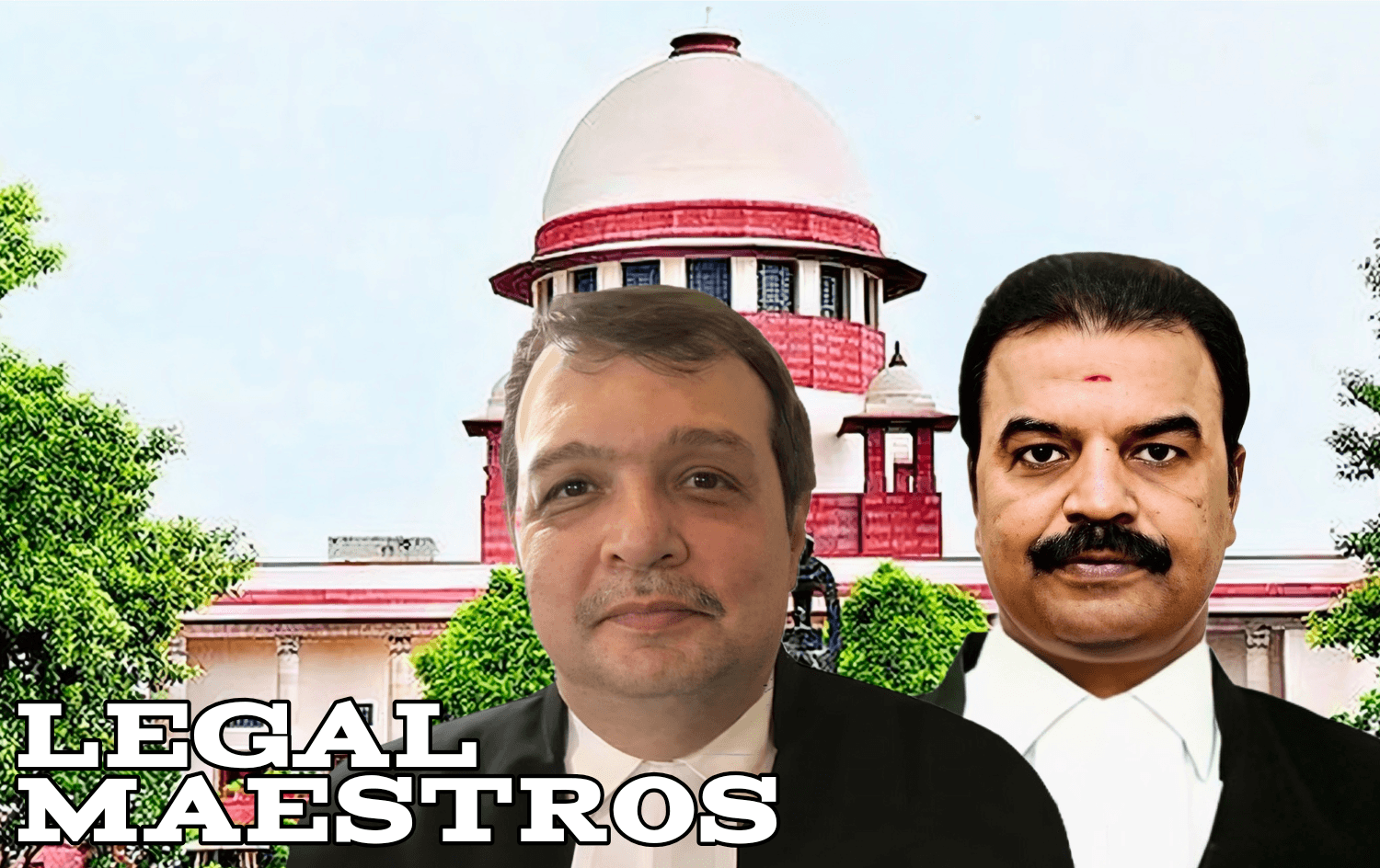
The judgment was delivered by Justice Prashant Kumar Mishra and Justice Manmohan.
Background of the Case
The appellant, Chinthada Anand belonged to the Madiga community* which is a Scheduled Caste. He worked as a Pastor. Conducted Sunday prayer meetings in his village.
He said he faced harassment and threats due to his activities. He alleged two incidents:
Need Help With Your PhD or LLM Thesis?
Explore our thesis and dissertation writing support services for PhD and LLM students. Get subject-specific academic assistance for your research project.
Explore Our Services →- The first incident took place on 3 January 2021 when he was assaulted and abused using caste-based slurs.
- The second incident occurred on 24 January 2021 when he was allegedly stopped, beaten and threatened by a group of people.
Based on his complaint an FIR was registered under the SC/ST Act. The Indian Penal Code (IPC).
Proceedings Before the High Court
The accused approached the High Court to quash the case.
The High Court quashed the proceedings on two grounds:
- First it held that the appellant, being a practicing Christian and a Pastor could not claim Caste status.
- Second it found that the evidence regarding assault and intimidation was weak and inconsistent.
The appellant approached the Supreme Court against this decision.
Key Legal Issue Before the Supreme Court
The central question was: Whether a person who has converted to Christianity can still claim protection under the SC/ST Act based on caste by birth.
This issue required interpretation of provisions and the Constitution (Scheduled Castes) Order, 1950.
Understanding the Law on Scheduled Castes
The Court examined Articles 341 and 342 of the Constitution.
A crucial provision is Clause 3 of the Constitution (Scheduled Castes) Order, 1950 which states:
A person cannot be treated as a Scheduled Caste if they profess a religion than Hinduism, Sikhism or Buddhism.
The Court emphasized that “profess” means openly declaring and practicing a religion.
Impact of Religious Conversion
The Court observed:
Caste may originate by birth but legal recognition of Scheduled Caste status depends on religion as per the Presidential Order.
The appellant:
- Was openly practicing Christianity
- Had been working as a Pastor for over ten years
- Was conducting Christian religious activities
These facts showed that he professed Christianity publicly.
Court’s Reasoning on SC/ST Status
The Supreme Court held that:
Once a person converts to Christianity they lose their Scheduled Caste status in the eyes of law.
This is because Christianity is not included in the recognized religions under the 1950 Order.
The Court rejected the argument that caste identity continues after conversion.
Reconversion and Exception
The Court discussed whether a person can regain SC status.
It held that reconversion is possible if:
- The person originally belonged to a Caste
- There is proof of reconversion
- The community accepts the person back
The appellant failed to prove any reconversion.
Validity of SC/ST Act Charges
Since the appellant was no longer legally recognised as a Scheduled Caste the Court held:
He could not invoke the SC/ST Act.
All charges under the SC/ST Act automatically failed.
Analysis of IPC Charges
The Court examined offences under the IPC.
It found:
- No strong supporting evidence from witnesses
- Inconsistent statements
- No clear role attributed to the accused
The Court held that continuing the case would be abuse of the process of law.
Final Judgment
The Supreme Court upheld the High Court’s decision. Dismissed the appeal.
It concluded that:
- The appellant could not claim protection under the SC/ST Act after converting to Christianity
- The criminal case lacked evidence even under IPC provisions
The quashing of proceedings against the accused was valid.
Significance of the Judgment
This judgment establishes that:
- Scheduled Caste status is not about birth but also about religion as defined by law
- Conversion to Christianity results in loss of SC status for purposes
- SC/ST Act protections cannot be claimed without fulfilling constitutional requirements
The ruling brings clarity in cases involving religion, caste identity and criminal law.
Conclusion
The Supreme Court’s decision highlights a constitutional principle:
Legal identity under the SC/ST framework is strictly governed by the Constitution and Presidential Orders.
While caste may continue socially its legal recognition depends on constitutional conditions.
This judgment reinforces that criminal law protections under statutes, like the SC/ST Act must be applied carefully.