Law Notes

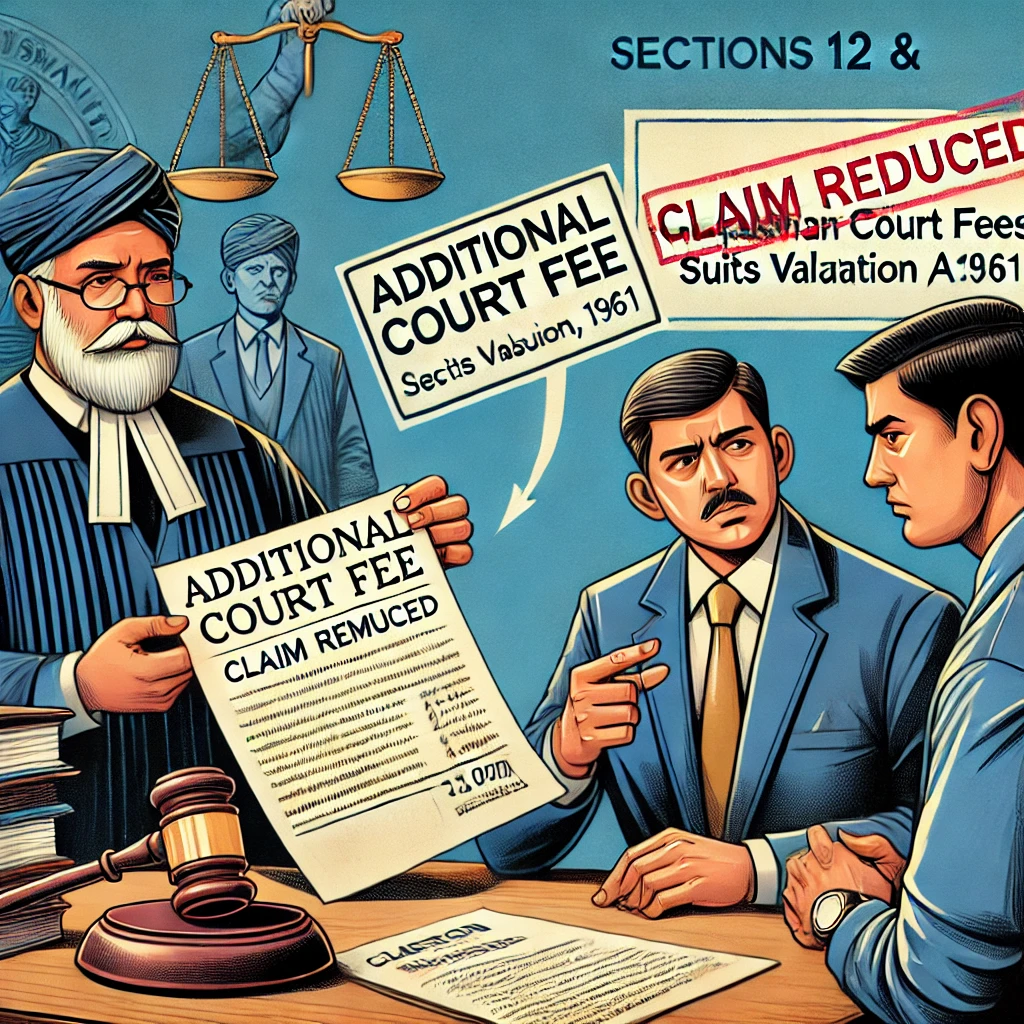
Additional Court Fees and Claim Relinquishment: Sections 12 & 13 of The Rajasthan Court Fees and Suits Valuation Act, 1961

The Rajasthan Court Fees and Suits Valuation Act, 1961, in Sections 12 and 13 controls extra court charges and abandonment of claims in lawsuits. Section 12 permits the courts to add supplementary charges in case the original payment proves to be less than required so as to correspond to the true valuation of the suit. Section 13 supports claimants in abandoning portions of their claims with resultant fee modification that is commensurate to the diminished claim amount. These provisions maintain accurate fee assessment, deter undervaluation schemes, and ensure rightful state revenue from court fees, upholding fairness and integrity in the judicial process.

Law Notes

Understanding Court Fees in Rajasthan: Sections 9 & 10 of The Rajasthan Court Fees and Suits Valuation Act, 1961

This abstract analyzes Sections 9 and 10 of the Rajasthan Court Fees and Suits Valuation Act, 1961, relating to court fee determination in Rajasthan. Section 9 deals with documents coming within more than one fee description and provides for the highest fee where it applies, with special over general descriptions having priority. Section 10 requires plaintiffs to provide a comprehensive statement of the subject-matter of the suit and value for market-value-based fees, guaranteeing proper fee evaluation. Such provisions simplify judicial procedures, improve transparency, and make fee computation standardized.

Law Notes

Key Provisions of the Rajasthan Court Fees and Suits Valuation Act, 1961 : Section 4 and 5

Rajasthan Court Fees and Suits Valuation Act, 1961 regulates fees in Rajasthan courts to ensure sound suit valuation and adequate fee schemes. Court fees are divided into fixed fees and ad valorem fees based on case type and suit value. Exemptions and concessions have also been provided under the Act to benefit the economically weaker segments. Payment may be made in the form of stamp papers as well as through online transactions. It is important that litigants and legal practitioners understand these provisions to follow court procedures efficaciously. The Act is significantly responsible for simplifying court procedures while ensuring fiscal responsibility within the judiciary.