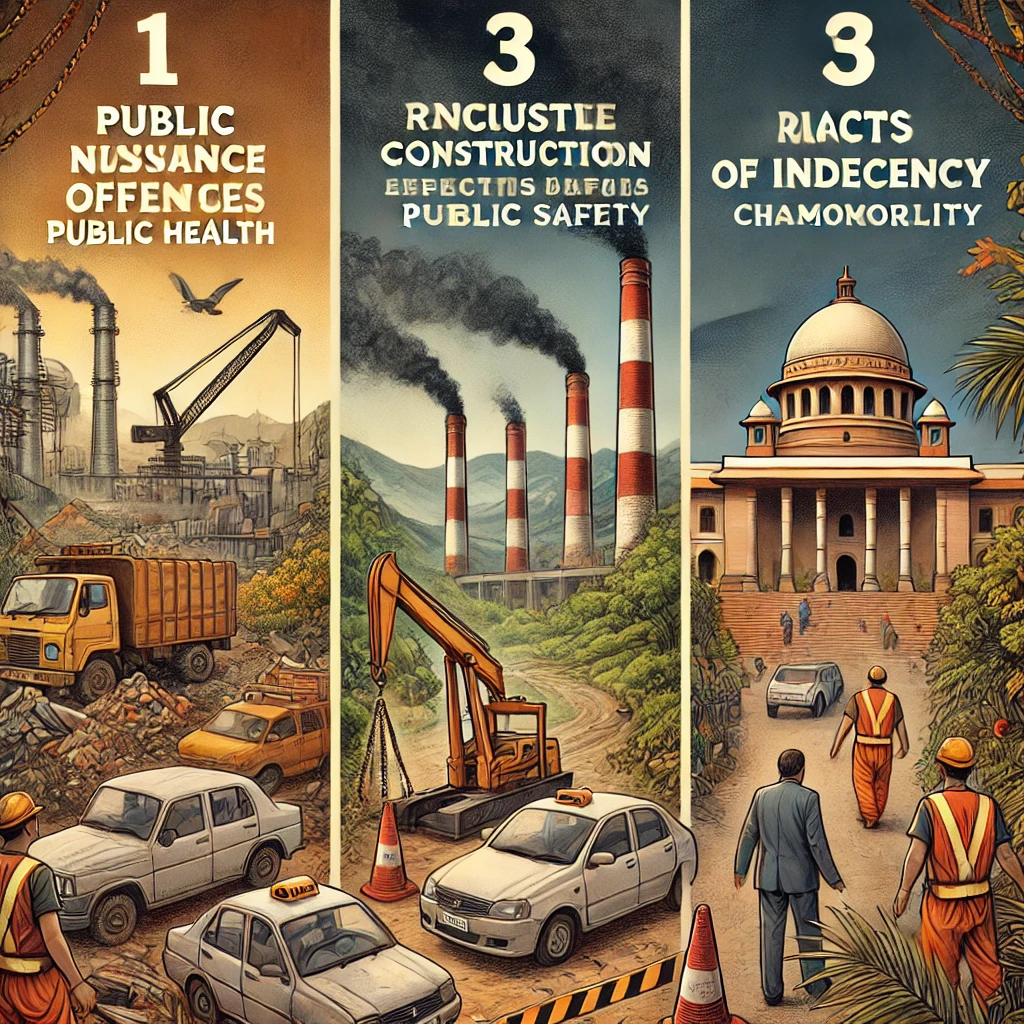
Public Nuisance Offenses in Bharatiya Nyaya Sanhita, 2023: Public Health, Safety, and Morality
The Bharatiya Nyaya Sanhita (BNS), 2023, which came into effect on 1st July, 2024, supersedes the Indian Penal Code, dealing with public nuisance crimes under Chapter XV. Sections 268-295 describe actions affecting public health, security, and morality, including the propagation of infectious diseases (Section 271), contamination of water (Section 277), and obscene behaviour (Section 296). Punishments range from fines to imprisonment, depending upon the gravity, with Section 292 prescribing up to ₹1,000 for general public nuisances. This model updates legal responses to prioritize public welfare and moral decency and to add community service for minor offenses, in sync with the needs of modern society.
