CRIMINAL LAW

Understanding the Offences of Offering and Accepting Gratification for Concealing Crime Under Bharatiya Nyaya Sanhita, 2023

This manual analyses offences under providing and accepting gratification to hide crimes under the Bharatiya Nyaya Sanhita (BNS), 2023, in lieu of the Indian Penal Code, 1860. Sections 250 and 251 deal with accepting and providing rewards, respectively, to hide offenders, intended to prevent corruption and uphold justice. Punishment involves imprisonment and fines, equivalent to the crime’s gravity. This discussion points to the scope, purpose, and enforcement issues of the provisions within India’s revised criminal justice system, highlighting their importance in advancing transparency and accountability.

CRIMINAL LAW

Understanding Section 250 of the Bharatiya Nyaya Sanhita, 2023: Taking Gifts to Screen an Offender

This discussion explores Section 250 of the Bharatiya Nyaya Sanhita (BNS), 2023, repealing the Indian Penal Code, 1860, dealing with the offence of receiving gifts to cover up culprits. Section 250 criminalizes people who accept bribes to cover up offenders, seeking to ensure justice and curb corruption. Sentences involve jail and fines, graded according to the seriousness of the offence. This research examines the provision’s purpose, extent, and procedural implications in India’s reformed criminal justice system, highlighting its contribution to accountability and integrity.

CRIMINAL LAW

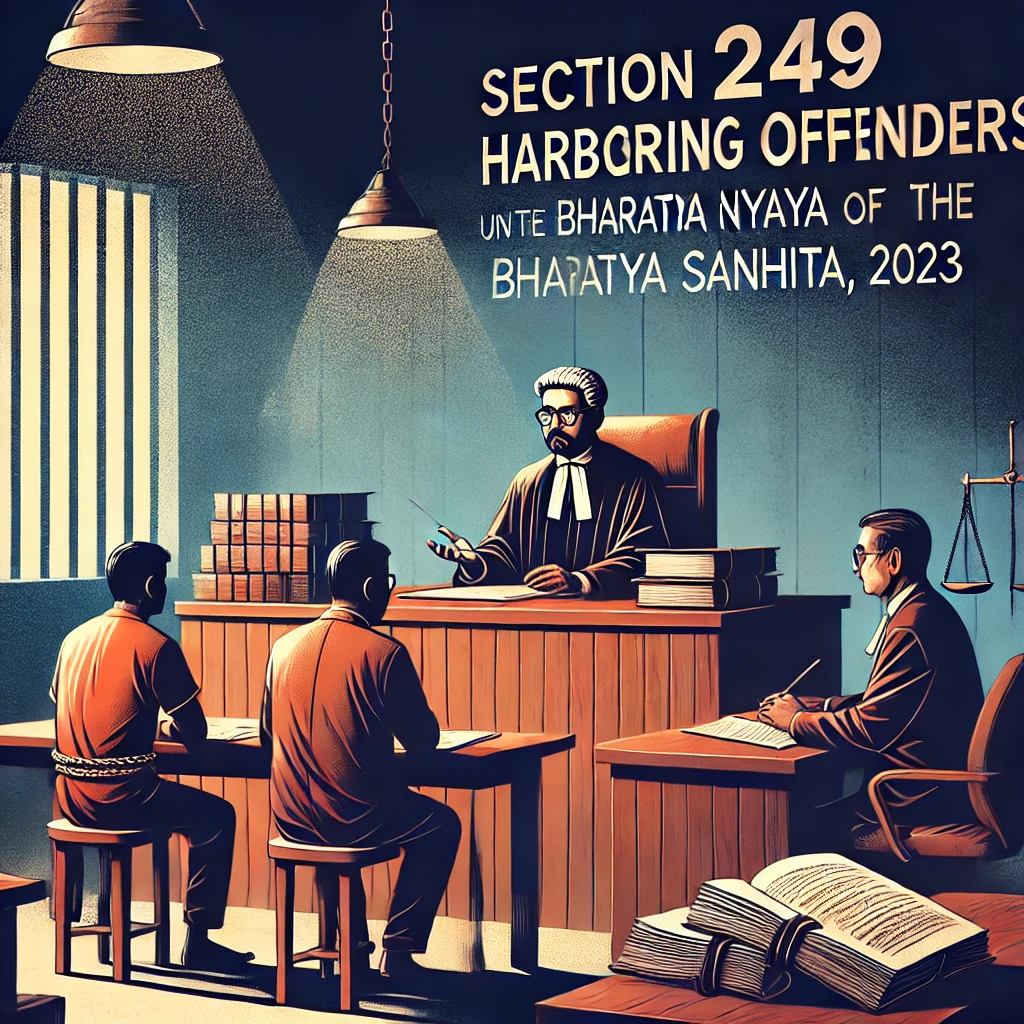
Punishment for Harboring Offenders under Section 249 of the Bharatiya Nyaya Sanhita, 2023

This research analyzes punishment for sheltering criminals under Section 249 of the Bharatiya Nyaya Sanhita (BNS), 2023, replacing the Indian Penal Code, 1860. Section 249 punishes willful sheltering of persons who have committed offenses, with the objective of preventing crime complicity. Punishments range from imprisonment to fines depending on the gravity of the harbored offense, subject to exceptions in case of non-willful acts. This discussion examines the scope, purpose, and compatibility of the provision with India’s contemporary criminal justice system, throwing light on its ramifications for the police and accountability.