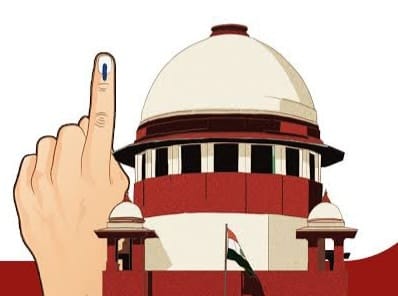
Right to Vote Not a Fundamental Right, But a Statutory Right: Supreme Court Reiterates
Introduction The Supreme Court of India has again elaborated a legal principle which is very crucial, which is the right…
Keeping Pace with Legal Change
Introduction The Supreme Court of India has again elaborated a legal principle which is very crucial, which is the right…
The Supreme Court is hearing an important legal issue which is pressed out because of the arrest of Pankaj Bansal by the Enforcement Directorate (ED). Karnataka states that the ED is only liable to give reasons for its arrest in written form prospectively as held by the Supreme Court in Pankaj Bansal v. Military of India. This might influence many current probes that are going on under the Prevention of Money Laundering Act (PMLA).
To this extent the Supreme Court observed that a plaintiff relying on Order IX Rule 4 CPC is entitled to file a fresh suit after a restoration plea is dismissed, and such dismissal does not create res judicata. This ruling affirms problems with procedural rights in civil lawsuits.
The applicability of Section 307 of the Indian Penal Code was clarified by the Supreme Court in the case of State of Himachal Pradesh vs. Shamsher Singh. The court ruled that the case does not need a grave harm in order to show intent to murder. Following the reversal of the High Court’s acquittal, the Court reinstated the conviction for attempted murder that was handed down by the trial court.
The Bharatiya Nagarik Suraksha Sanhita, 2023 (BNSS) brings sophisticated provisions regarding criminal procedure in India. Section 238 deals with the consequences of errors in charges, which says that errors or omissions in setting out offenses or particulars are immaterial unless they mislead the accused and result in a failure of justice. Section 237 requires words in charges to be construed according to the legal meanings under the law applicable thereto, with the intention of making it clear and consistent. These chapters endeavor to harmonize procedural exactitude with justice, modifying the paradigm of the revoked CrPC, 1973, to the demands of contemporary judicial times without compromising accused right