Current Legal Update

Are Fantasy Sports Platforms Like Dream11 Under Gambling Laws in India?

The legal position of fantasy sports in India is still ambiguous because of differing state laws and interpretations of gambling laws. Courts have consistently held that fantasy sports are a game of skill and not gambling, yet a few states still ban them. The absence of a single national law makes it uncertain for players and businesses in this sector.

Notwithstanding court challenges, fantasy sports sites have continued to be successful owing to their increased popularity, financial impact, and legal support from several courts. The Indian government is likely to institute a regulatory structure in the near future to provide clarity and assure consumer protection but enable the business to develop. In the meantime, fantasy sports are technically still in a grey area legally in some states and users should remain cognizant of the regulations in force within their locality prior to using these services.

Current Legal Update

The Rise of Bulldozer Justice in India: Legal Analysis, Supreme Court Rulings, and Constitutional Concerns

Bulldozer justice has caught on in India because of its instant effect and powerful political statement. Its deployment, however, is problematic with serious legal and ethical implications in terms of due process and constitutional rights. Again and again, the Supreme Court has held that demolitions must not be applied as a mode of punishment and must adhere to proper legal formalities. While the call for rapid action against criminals is understandable, it should not be at the expense of core legal principles. Guaranteeing fair trials, bolstering the judiciary, and upholding the rule of law are important to avoid the abuse of power and ensure justice for all citizens.

CRIMINAL LAW

“Ensuring Safety in Medicine: Bharatiya Nyaya Sanhita 2023 on Drug Adulteration and Mislabeling

The Bharatiya Nyaya Sanhita (BNS), 2023, from July 1, 2024, enhances protection against drug adulteration and misbranding to maintain medicinal safety in India. Adulterating drugs with intent to cause harm under Section 274 carries a maximum of 7 years’ imprisonment, while selling misbranded or spurious drugs under Section 275 is dealt with similarly. Substituting provisions of the Indian Penal Code, these sections aim at acts endangering public health with a focus on deterrence by imposing severe punishment. The BNS is aligned with the Drugs and Cosmetics Act, augmenting accountability within the pharmaceutical industry and safeguarding consumers against dangerous medical products.

CRIMINAL LAW

Should Judges Be Exempt from Airport Security Checks?

The issue of exempting judges from airport screening depends on weighing judicial dignity against public safety. Those in favor posit that judges, being constitutional officials, are entitled to privileges similar to diplomats, in respect for their dignified position and avoiding inconvenience. Critics respond that security is not open to debate in terms of equality before the law and potential misuse or impersonation. In India, there is no express exemption in terms of aviation security regulations, although discretionary courtesies are occasionally given. International practices differ, with some countries offering exemptions. The problem highlights institutional respect versus uniform security measures, necessitating a sophisticated policy response.

CRIMINAL LAW

Penalty for Harbouring Robbers or Dacoits: Section 254 of Bharatiya Nyaya Sanhita, 2023

The Bharatiya Nyaya Sanhita, 2023, Section 254, enacts punishment for sheltering robbers or dacoits with the intention of discouraging the encouragement of such criminals. It mandates severe imprisonment for seven years with a fine on any person knowingly harbouring persons intending or having committed robbery or dacoity with the intention of assisting their offence or protecting them from punishment. The legislation comes into play regardless of where the offence is committed, be it in or out of India, except in the case of spouses. This provision bolsters India’s criminal justice system in place of the Indian Penal Code and calls for tighter enforcement of organized crime. Keywords: Bharatiya Nyaya Sanhita, Section 254, harbouring, robbers, dacoits, penalty, imprisonment, criminal justice, India, organized crime.

CRIMINAL LAW

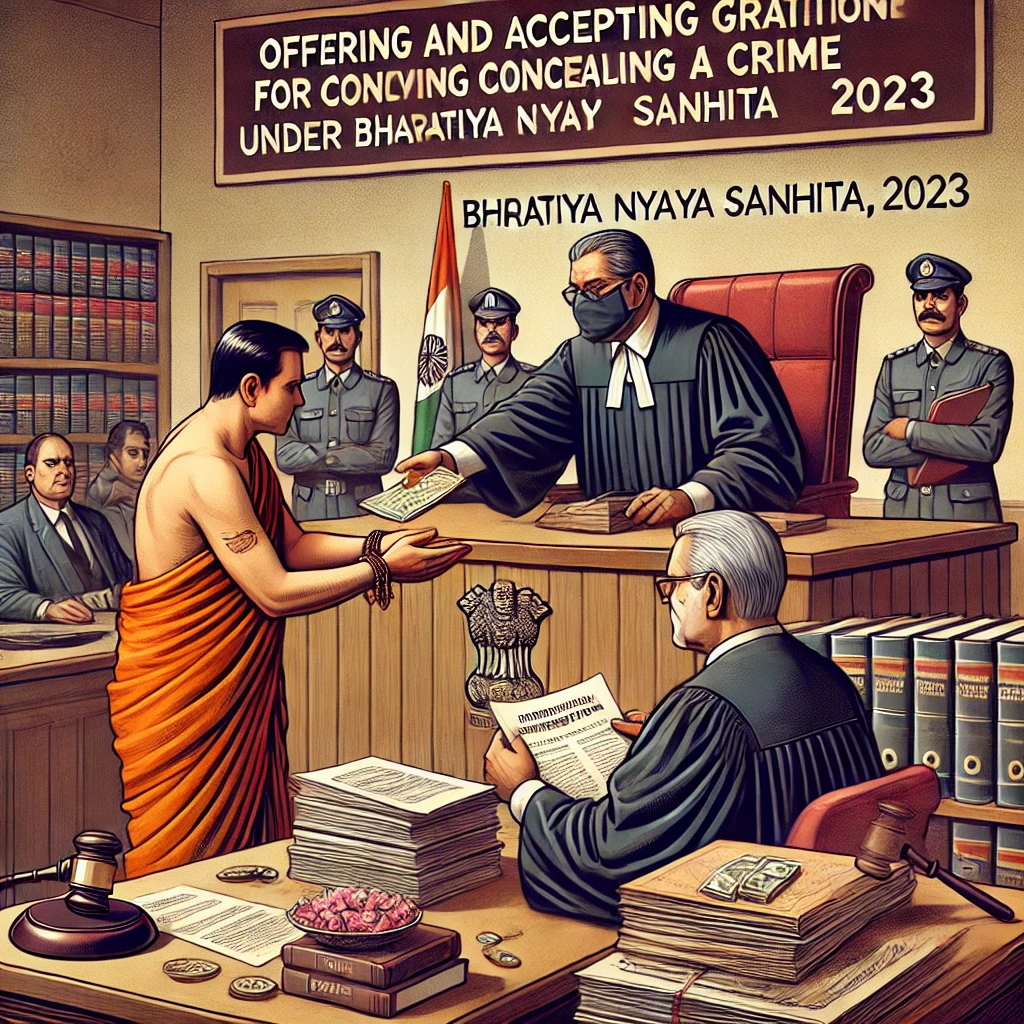
Understanding the Offences of Offering and Accepting Gratification for Concealing Crime Under Bharatiya Nyaya Sanhita, 2023

This manual analyses offences under providing and accepting gratification to hide crimes under the Bharatiya Nyaya Sanhita (BNS), 2023, in lieu of the Indian Penal Code, 1860. Sections 250 and 251 deal with accepting and providing rewards, respectively, to hide offenders, intended to prevent corruption and uphold justice. Punishment involves imprisonment and fines, equivalent to the crime’s gravity. This discussion points to the scope, purpose, and enforcement issues of the provisions within India’s revised criminal justice system, highlighting their importance in advancing transparency and accountability.

CRIMINAL LAW

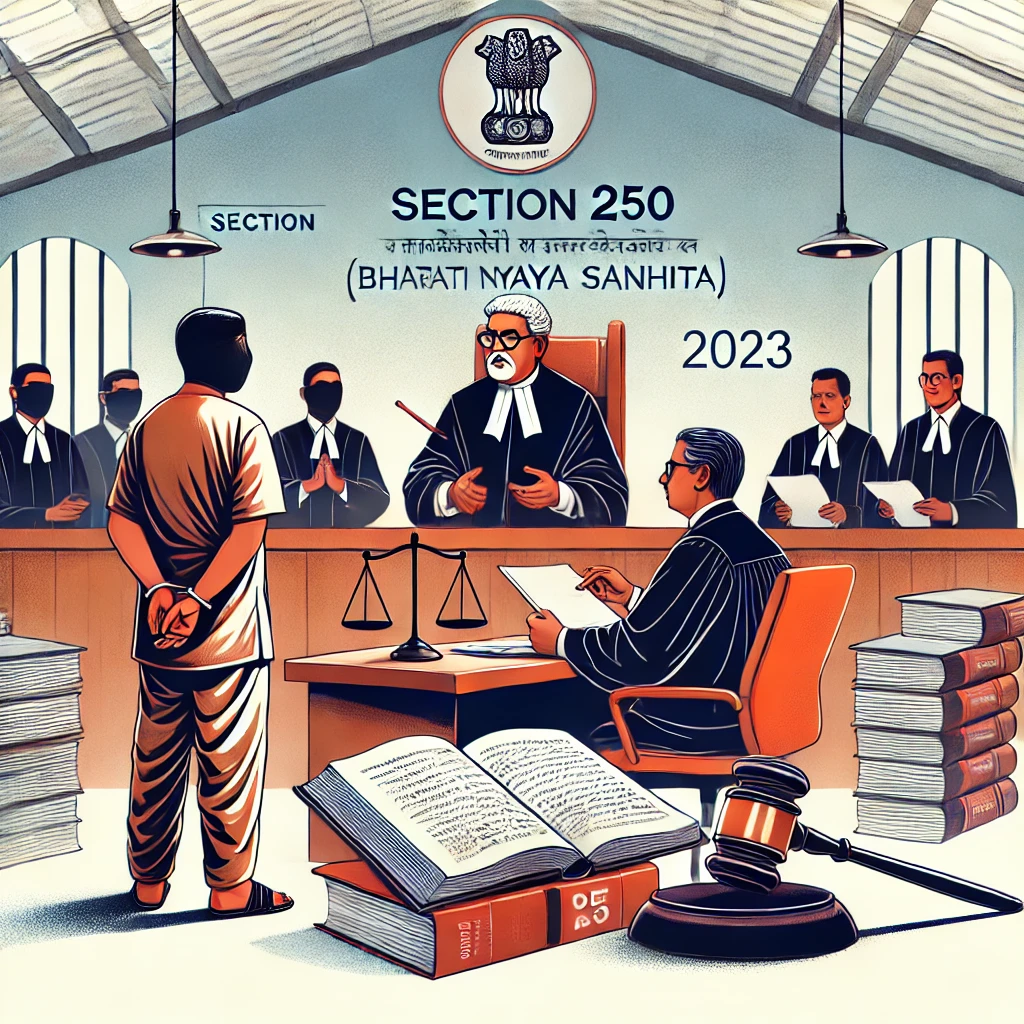
Understanding Section 250 of the Bharatiya Nyaya Sanhita, 2023: Taking Gifts to Screen an Offender

This discussion explores Section 250 of the Bharatiya Nyaya Sanhita (BNS), 2023, repealing the Indian Penal Code, 1860, dealing with the offence of receiving gifts to cover up culprits. Section 250 criminalizes people who accept bribes to cover up offenders, seeking to ensure justice and curb corruption. Sentences involve jail and fines, graded according to the seriousness of the offence. This research examines the provision’s purpose, extent, and procedural implications in India’s reformed criminal justice system, highlighting its contribution to accountability and integrity.