Current Legal Update

India’s Suspension of Indus Waters Treaty: Legal Ramifications Under International Law and VCLT Article 62

India’s decision to suspend the Indus Waters Treaty raises complex questions under international law. By invoking a security rationale, New Delhi effectively halted agreed water flows and data sharing with Pakistan. Under the Vienna Convention’s Article 62, unilateral suspension for a “fundamental change of circumstances” is narrowly permitted, yet terrorism concerns lie outside a water‐sharing pact’s core. международное право also allows proportionate countermeasures for wrongful acts, but they must be reversible and target restoration of compliance. India’s move risks breaching binding treaty obligations, exposing it to legal claims for reparations and undermining a model of transboundary water cooperation. The dispute will test the interplay between security imperatives, state responsibility, and treaty stability in South Asia.


India’s decision to suspend the Indus Waters Treaty raises complex questions under international law. By invoking a security rationale, New Delhi effectively halted agreed water flows and data sharing with Pakistan. Under the Vienna Convention’s Article 62, unilateral suspension for a “fundamental change of circumstances” is narrowly permitted, yet terrorism concerns lie outside a water‐sharing pact’s core. международное право also allows proportionate countermeasures for wrongful acts, but they must be reversible and target restoration of compliance. India’s move risks breaching binding treaty obligations, exposing it to legal claims for reparations and undermining a model of transboundary water cooperation. The dispute will test the interplay between security imperatives, state responsibility, and treaty stability in South Asia.
India’s decision to suspend the Indus Waters Treaty raises complex questions under international law. By invoking a security rationale, New Delhi effectively halted agreed water flows and data sharing with Pakistan. Under the Vienna Convention’s Article 62, unilateral suspension for a “fundamental change of circumstances” is narrowly permitted, yet terrorism concerns lie outside a water‐sharing pact’s core. международное право also allows proportionate countermeasures for wrongful acts, but they must be reversible and target restoration of compliance. India’s move risks breaching binding treaty obligations, exposing it to legal claims for reparations and undermining a model of transboundary water cooperation. The dispute will test the interplay between security imperatives, state responsibility, and treaty stability in South Asia.

Current Legal Update

Aamir Khan’s Sitaare Zameen Par to Courtrooms: Constitutional Analysis of Key Disability Rights Rulings in India

The journey that India has taken in terms of disability rights has been extraordinary, beginning with the compassionate depiction of dyslexia in Taare Zameen Par and ending with the harsh directions of the Supreme Court. A sturdy framework has been established as a result of constitutional provisions of equality and dignity, which have been strengthened by the Rights of Persons with Disabilities Act of 2016, as well as a number of progressive rulings. The desire of the judiciary to bring about genuine change is demonstrated by landmark cases such as Rajive Raturi, Vikash Kumar, and Chief Commissioner for Persons with Disabilities. As India continues to make progress, the combination of law, policy, and public will will continue to be essential in order to guarantee that every individual with a disability is able to participate in society in an equal and complete manner.

Current Legal Update

GTA 6 and Public Morality: Examining India’s Obscenity Laws in the Context of Digital Gaming

The excitement around GTA 6 highlights the broader question of how India’s obscenity laws apply to interactive digital media. While Section 292 IPC and Section 67 IT Act establish a foundation, they were not drafted with video games in mind. Landmark decisions have shifted the legal test from the rigid Hicklin standard to a community-based approach, allowing for more nuanced judgments. Yet, the absence of clear rules for digital gaming means that enforcement remains uncertain. To safeguard both societal values and freedom of expression, India needs a tailored regulatory mechanism for video games. Such a mechanism would address the unique challenges of interactivity, global distribution, and evolving community standards, ensuring that the law remains relevant in the digital age.

Current Legal Update

Legal Hurdles for Startups in India: Navigating GST, Trademark, and Patent Laws

Legal challenges are a necessary part of the startup process in India. From GST compliance complexities to the intricate process of obtaining trademarks and patents, new companies are confronted with numerous challenges on the way to becoming successful. The legal requirements though are not obstacles but are instead integral parts of a strong business structure that protects innovations and promotes trust among consumers and investors. By knowing the legal landscape, getting professional guidance, and using technology, startups are able to overcome these challenges successfully. A proactive legal compliance strategy can turn future challenges into chances for growth and differentiation. With the Indian startup ecosystem still evolving, the ability to balance innovation with legal accountability will continue to be a determining factor in achieving long-term success.

Current Legal Update

List of AI Legal Tools For Drafting and Research for Advocates in India

The advent of AI legal tools for research and drafting is a major milestone in the development of the legal profession in India. These tools are changing the way advocates work, offering increased efficiency, improved accuracy, and better access to vast amounts of legal information. While challenges such as data availability, resistance to change, and privacy concerns still exist, the overall trend indicates that AI will play an increasingly important role in the future of legal practice. As more law firms embrace these technologies and legal education includes digital competence, lawyers will be well-positioned to meet the needs of contemporary legal practice. The path to a more technology-influenced legal career is already under way, and the effects of AI legal tools are already having a positive impact on the quality and speed of legal services in India.

Current Legal Update

Legal Impact of South Korea’s Martial Law: Can Similar Measures Be Applied in India?

Overall, the legal legacy of martial law in South Korea provides a cautionary example of the dangers of concentrated power and the erosion of civil liberties in times of crisis. Although martial law in South Korea was invoked as an emergency measure, its long-term consequences for the legal and political systems remind us of the dangers of circumventing democratic institutions. India, having a robust constitutional structure and entrenched democratic institutions, is not likely to follow similar steps. India’s legal system, with a focus on judicial checks and protection of individual rights, offers a strong check on any possible misuse of power during emergencies. Though India has its own challenges to face, which sometimes necessitate unorthodox approaches, the experience of the two countries’ history and that of its own prevents the nation from losing sight of the need to preserve the sensitive balance between freedom and security. The experiences of both countries highlight the need to uphold democratic values, even at times of crisis, and provide lessons for guaranteeing that freedom suppressions at times of crisis are not permitted to turn out to be lasting features of government.

Current Legal Update

Yashwant Varma Case: How the In-House Inquiry Process Works Against Sitting High Court Judges in India

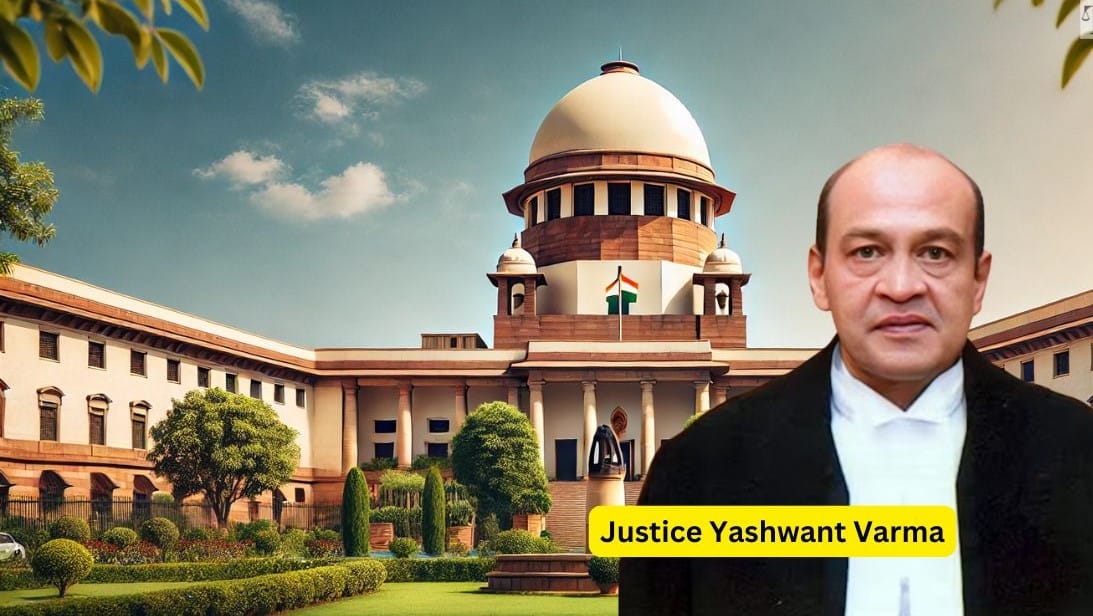
The Justice Yashwant Varma case has again raised questions about the in-house inquiry process and its shortcomings. Though the process is intended to preserve judicial integrity, questions regarding transparency and accountability still persist. The judiciary has to balance independence and accountability for misconduct by judges. Enhancing the system with improved guidelines and disclosure of inquiry findings to the public may assist in enhancing public faith in the justice system. The Justice Varma case is a reminder that the integrity of the judiciary is predicated on the ability of the judiciary to tackle allegations against members of the judiciary.

Current Legal Update

Challenges Faced by First-Generation Advocates in India: Low Pay, Long Hours, and Clerical Work Struggles

The path of a first-generation activist in India is fraught with obstacles, ranging from economic difficulties and long work hours to a lack of mentorship and access to meaningful legal work. Each of these challenges necessitates a multifaceted solution, involving the introduction of equitable compensation policies, the creation of formalized mentorship programs, and an attitudinal shift towards acknowledging and enabling the efforts of junior attorneys. By creating an atmosphere that recognizes and encourages talent regardless of family background, the legal profession can move towards greater inclusiveness and equity. 

Current Legal Update

How to Avail Free Legal Services at Legal Services Authority in India

India’s Legal Services Authorities are dedicated to making justice accessible to everyone, irrespective of their economic status. Through free legal aid, representation, and counseling, they enable individuals to defend their rights and access the judicial system. Either through offline, online portals, or programs like Tele-Law, individuals can access these facilities with ease. The use of paralegal volunteers further reinforces such a system through raising awareness and enabling individuals to pursue justice.  Legal assistance is no longer a privilege, but a right enjoyed by each eligible citizen due to these actions.

Current Legal Update

Can Restaurants in India Legally Compel You to Pay Service Charges?

The problem of service charges at Indian restaurants exists in a confused space between legal guidelines, industry practices, and the rights of consumers. Though restaurants have the prerogative to add service charges, they need to ensure openness and get implicit permission from patrons by making clear disclosures in advance. Consumers, for their part, need to be alert and exercise their rights to inquire and contest any hidden charges. As this issue remains ongoing, it highlights the necessity of proper communication and mutual understanding between hospitality service providers and customers.