Supreme Court

Free Speech vs Defamation: SC Quashes Builder’s Complaint – Justice K.V. Viswanathan in Shahed Kamal Case

The defamation charges against homeowners who were demonstrating against a builder were dismissed by the Supreme Court of India, which affirmed the homebuyers’ fundamental right to peaceful dissent in accordance with Article 19(1)(a). The verdict sheds light on important problems in defamation law, particularly the Ninth Exception to Section 499 of the Indian Penal Code.

CRIMINAL LAW

Section 19 of the Bharatiya Nyaya Sanhita, 2023: Actions Taken to Prevent Greater Harm

Section 19 of the Bharatiya Nyaya Sanhita, 2023 is a significant balance between preserving public order and acknowledging the necessity of firm action in emergency cases. It gives citizens the assurance that if they act in good faith to prevent a greater harm, even if their actions could inadvertently lead to some harm, they will not be held criminally responsible. This legal protection promotes quick and effective actions during emergencies, ultimately conserving life and property while ensuring justice.

CRIMINAL LAW

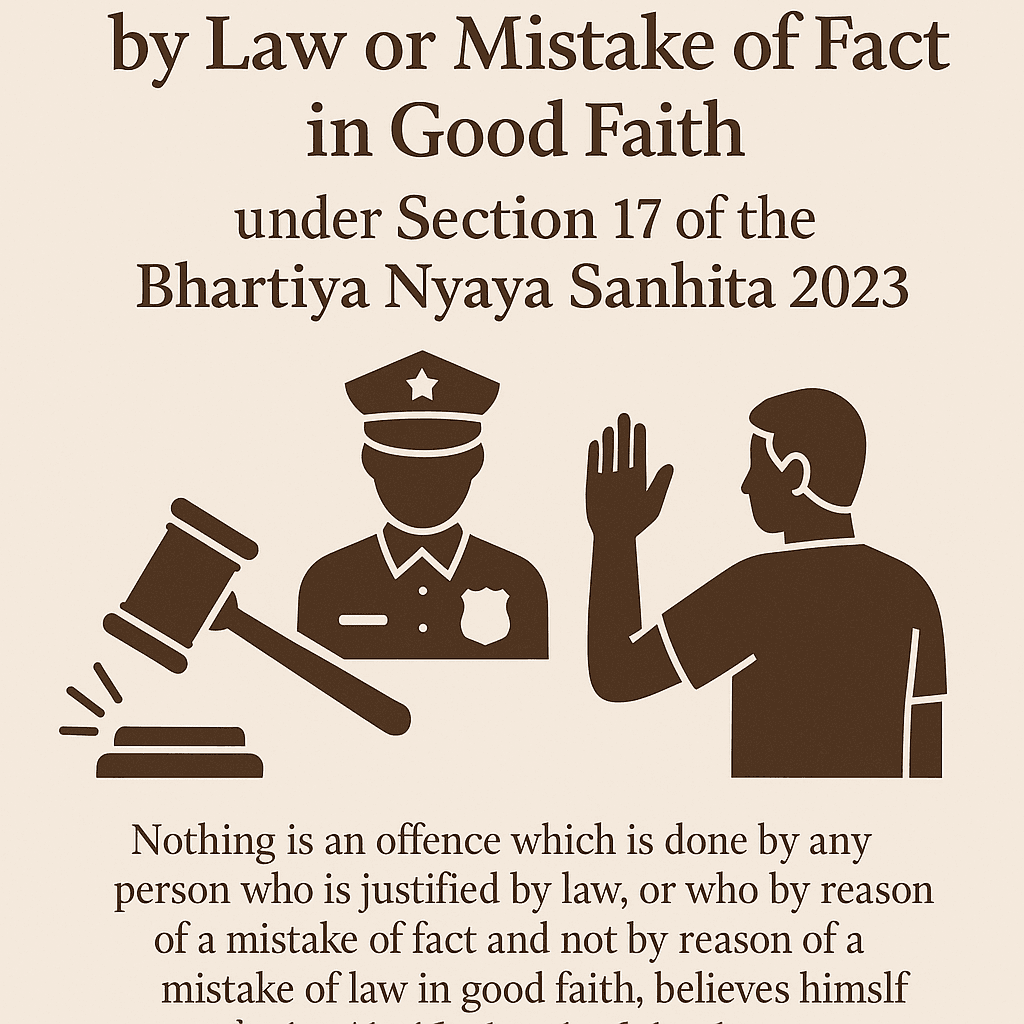
Protection for Actions Justified by Law or Mistake of Fact in Good Faith under Section 17 of the Bhartiya Nyaya Sanhita 2023

Section 17 of the Bhartiya Nyaya Sanhita 2023 makes sure that no one is unjustly punished who acts in pursuance of justification in law or in good faith in reasonable mistake of fact. It safeguards law enforcement officers, security officers, and common citizens who might get caught off guard in circumstances under which they have to make quick decisions based on information available to them. But this protection does not extend to individuals who act with negligence or abuse the law for self-interest. By balancing legal protection and responsibility, this provision ensures that fairness prevails in the justice system.

CRIMINAL LAW

Section 16 of Bhartiya Nyaya Sanhita 2023 No Offense for Acts Done in Good Faith Under Court Orders

The Bhartiya Nyaya Sanhita 2023 provision protects individuals who act according to court orders in good faith. It acknowledges that there can be judicial errors but ensures that individuals who only implement decisions are not unjustly penalized. This provision is essential for ensuring that there is trust in the judicial system and that legal orders are obeyed as long as they are lawful without fear of facing legal repercussions. But it further stresses that this protection is only extended when the individual actually believes in the authority of the court and does not intend to do ill.