Criminal Law Happenings in March 2026: Important Decisions from Supreme Court and High Courts
The month of March 2026 saw a lot of things happen in the area of criminal law in India. The…
Keeping Pace with Legal Change
The month of March 2026 saw a lot of things happen in the area of criminal law in India. The…
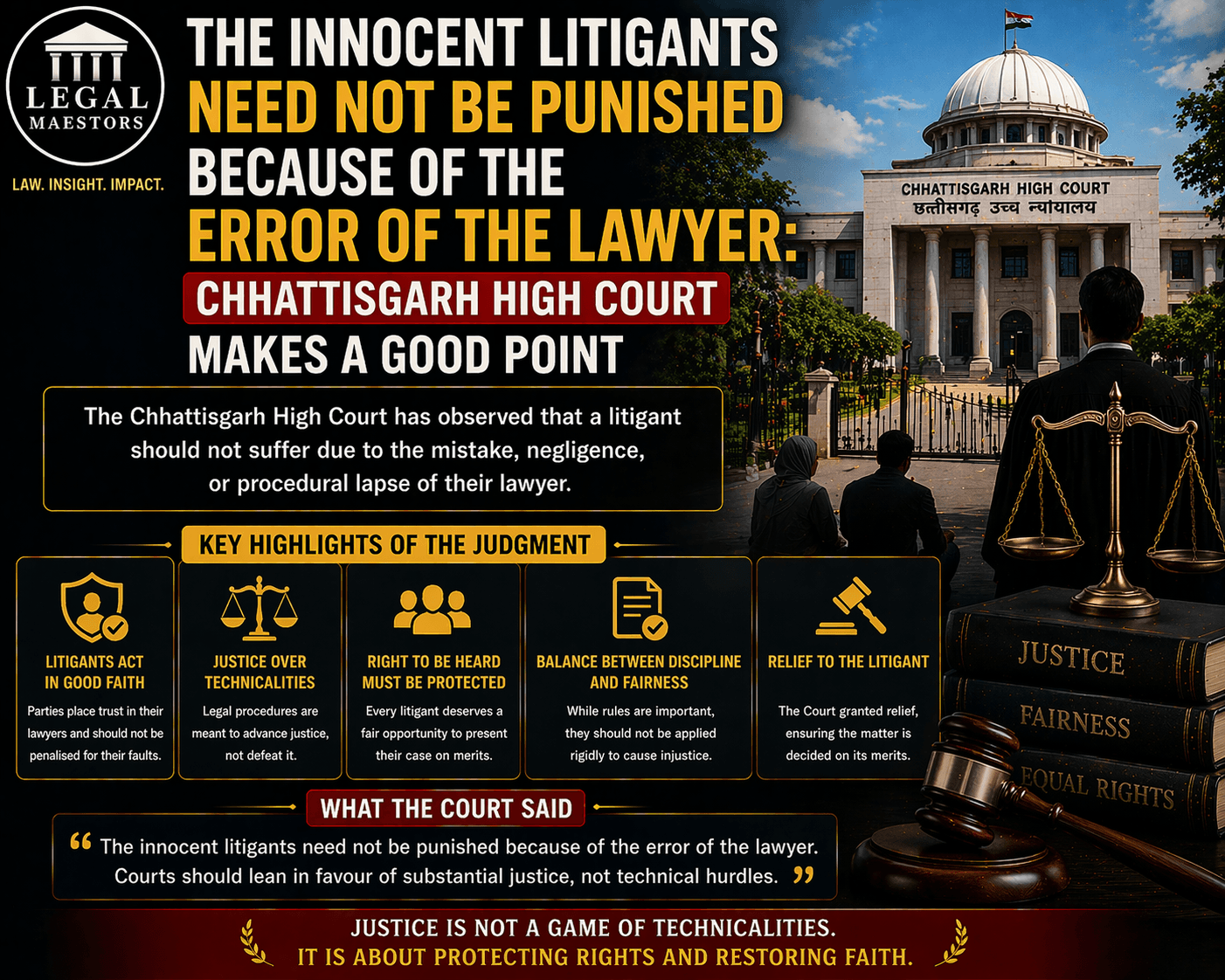
Introduction The Chhattisgarh High Court made a significant and humane ruling that a litigant is not to suffer due to…
Delhi High Court is in the midst of a big legal controversy, whether the Central Government can actually exercise its…
The case in question is of traumatizing nature as the Supreme Court of India recently declared a case that was…
What the Case Actually Is Satyakey Ashok Savarkar, his family, and another individual who made the decision that he would…
In this paper, the author will discuss the recent court order on Satyaki Savarkar vs. Rahul Gandhi is making an argument based on the inherent right against self-incrimination portrayed in the Article 20(3) of the Indian Constitution. It brings out the refusal of the court to force the accused to tender incriminating documents prior to trial, the onus of proof where it rests upon the complainant and the presumption of innocence.
In Aejaz Ahmad Sheikh v., the Supreme Court held that, The case State of Uttar Pradesh was a case on the basis of which it was held that failure of putting the vital prosecution evidence to the accused u/s 313 CrPC resulted in prejudice and trial invalidated, and as a result, the acquittal was upheld on the basis of serious allegations like multiple murders.
In the case of Ankit Mishra v. State of Madhya Pradesh, the Supreme Court supported the decision of the High Court to give anticipatory bail to a man who had committed many offenses. With a focus on judicial discretion in accordance with Section 438 of the Criminal Procedure Code, the ruling investigates the legal criteria for granting or canceling bail.
In a landmark ruling, the Supreme Court of India acquitted appellants in a corruption case pending for over 40 years, citing procedural lapses and the appellants’ juvenility at the time of the alleged offense. The Court found the prosecution failed to prove the demand and acceptance of bribes beyond reasonable doubt, compounded by flawed investigative procedures. Additionally, the appellants’ claim of being juveniles under the Juvenile Justice Act was upheld, rendering their convictions unsustainable. This decision underscores the importance of procedural integrity and juvenile protections in corruption trials, ensuring justice aligns with legal standards.
The Supreme Court’s 2025 ruling in Ravinder Singh Sidhu vs. State of Punjab (2025 INSC 727) establishes principles for clubbing multi-state FIRs, enhancing judicial efficiency. Addressing multiple FIRs filed across states for related offenses, the Court emphasized consolidating cases to prevent procedural abuse and ensure fairness, as seen in Sidhu’s case involving Punjab and Haryana. The verdict aligns with Article 21’s right to a fair trial, streamlining investigations while safeguarding defendants’ rights. It sets a precedent for handling cross-jurisdictional disputes, reducing redundancy.