CRIMINAL LAW

Section 13 Stringent Measures for Previous Convictions in Bhartiya Nyaya Sanhita 2023

In short, the strengthened punishment clause in the Bhartiya Nyaya Sanhita 2023 is intended to prevent repeat serious crimes by punishing those who have convictions much more severely. By increasing the penalty for offenders who persist in their crimes, the law hopes to make the legal system stand firm against ongoing criminality. This is new-age thinking that is likely to increase public faith in the legal system and make society safer for all.

Further information from other legal analyses and news accounts highlight the significance of this action in having a deterrent impact. The focus on tough treatment for recidivists is a demonstration of the changing needs of society and the ongoing efforts of legislators to enhance public safety and justice.

CRIMINAL LAW

Section 11 and 12 Bharatiya Nyaya Sanhita 2023 Provisions and Limits on Solitary Confinement

Sections 11 and 12 of the Bharatiya Nyaya Sanhita, 2023, offer a systemic approach to the application of solitary confinement. The law ensures that solitary confinement shall be imposed only for short durations and with proper intervals, so as not to cause unnecessary suffering. By controlling how and when solitary confinement is to be applied, these provisions demonstrate commitment to upholding fairness and humanity in the criminal justice system.

CRIMINAL LAW

Understanding Sections 9 and 10 of the Bhartiya Nyaya Sanhita, 2023

Sections 9 and 10 of the Bhartiya Nyaya Sanhita, 2023, provide that punishments should be just and proportionate. Section 9 avoids excessive punishment for offenses which are part of a single offense, so that an individual is punished for the composite offense and not for every component part. It also makes a distinction between offenses which are connected and offenses which are separate to provide fair sentencing. Section 10 offers relief against uncertainty so that an accused person is penalized for the lowest offense in situations of doubt. Such provisions secure justice by inhibiting harsh and unjust punishments, affirming that sentencing should be reasonable and well-balanced.

CRIMINAL LAW

Legal Consequences of Providing False Information: An Overview of Section 212 of Bharatiya Nyaya Sanhita, 2023

The Bharatiya Nyaya Sanhita, 2023 (BNS), which replaces the Indian Penal Code of 1860, introduces Section 212. This section outlines penalties for providing false information to public servants with the intent to mislead or cause harm. Offenders may face imprisonment for up to one year, a fine, or both, specifically targeting actions that obstruct justice or administrative functions. Additional sections, such as Section 211 (false charges) and Section 229 (personation), further promote accountability and discourage the misuse of legal processes. The BNS enhances the legal framework against deceit, aligning it with modern justice requirements.

CRIMINAL LAW

Understanding Public Safety and Responsibility under the Bharatiya Nyaya Sanhita, 2023: Provisions on Handling Dangerous Substances

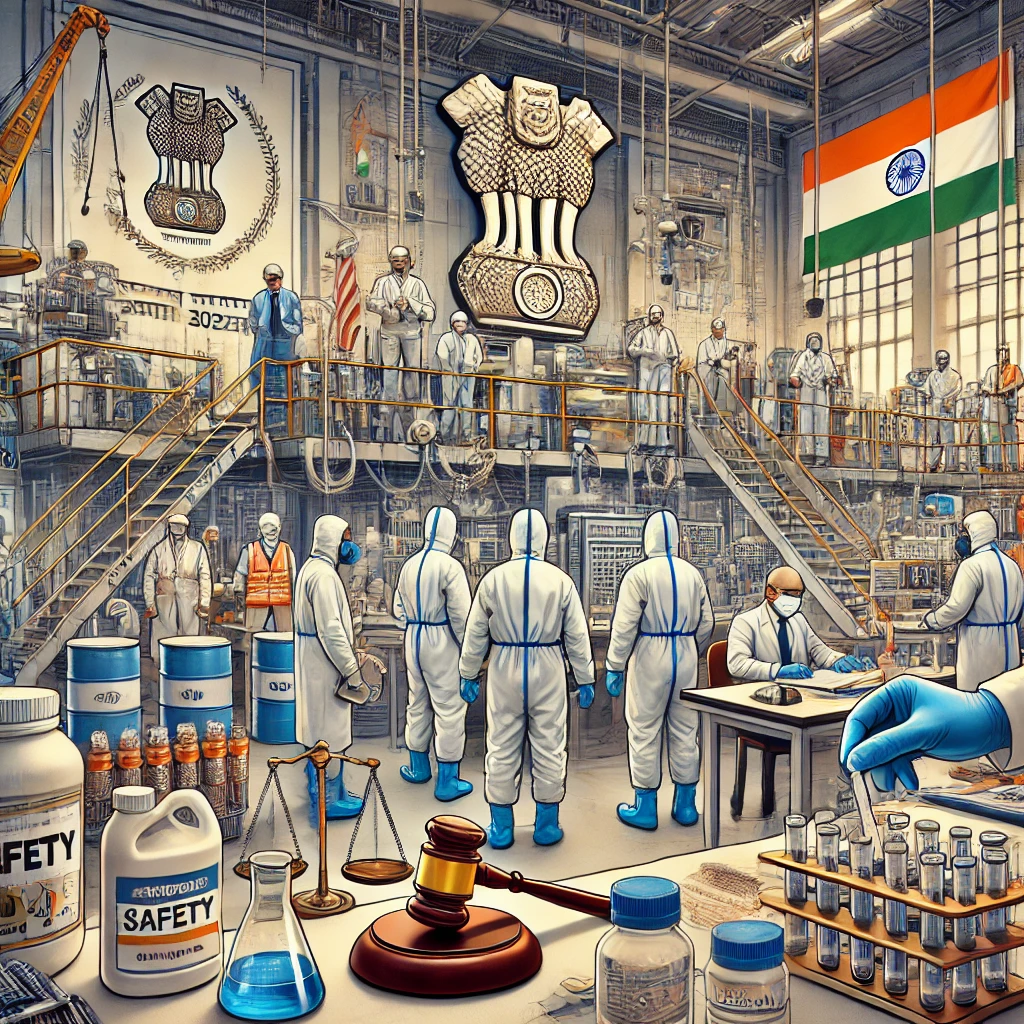
The Bharatiya Nyaya Sanhita (BNS), 2023, presents revised provisions to increase public safety through the regulation of hazardous substances in India. Replacing the Indian Penal Code, it focuses on responsibility and accountability, with stricter punishments for negligence or actions threatening public welfare. Section 285, for example, focuses on acts leading to danger or obstruction in public places, with penalties up to ₹5,000. New crimes, such as terrorism and organized crime, are a modernized vision of safety. This abstract examines these provisions and how they work to create a safer society.

CRIMINAL LAW

Understanding the Bharatiya Nyaya Sanhita, 2023: Provisions on Public Safety and Negligence

The Bharatiya Nyaya Sanhita (BNS), 2023, coming into force on July 1, 2024, redefines the laws of public safety and negligence in India, superseding the Indian Penal Code. Chapter VI deals with acts of negligence causing risk to life, with Section 113 prescribing up to 5 years’ imprisonment for rash or negligent acts resulting in death, and Section 281 dealing with negligent use of fire or explosives. Stressing accountability, the BNS introduces minor offense community service alongside maintaining rigorous punishment for egregious violations. Such provisions are meant to promote greater public safety by discouraging laxity and responsible conduct in varied situations.

CRIMINAL LAW

“Ensuring Safety in Medicine: Bharatiya Nyaya Sanhita 2023 on Drug Adulteration and Mislabeling

The Bharatiya Nyaya Sanhita (BNS), 2023, from July 1, 2024, enhances protection against drug adulteration and misbranding to maintain medicinal safety in India. Adulterating drugs with intent to cause harm under Section 274 carries a maximum of 7 years’ imprisonment, while selling misbranded or spurious drugs under Section 275 is dealt with similarly. Substituting provisions of the Indian Penal Code, these sections aim at acts endangering public health with a focus on deterrence by imposing severe punishment. The BNS is aligned with the Drugs and Cosmetics Act, augmenting accountability within the pharmaceutical industry and safeguarding consumers against dangerous medical products.

CRIMINAL LAW

Public Nuisance Offenses in Bharatiya Nyaya Sanhita, 2023: Public Health, Safety, and Morality

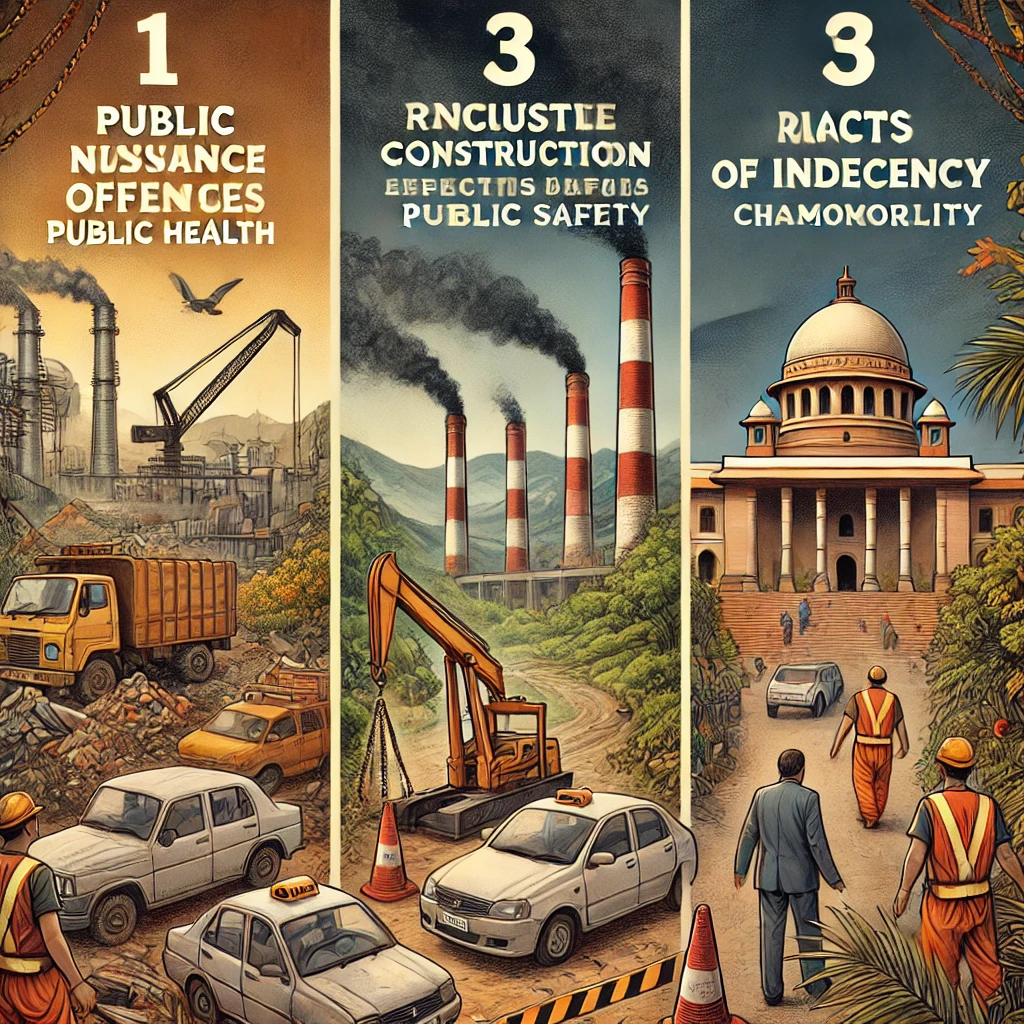
The Bharatiya Nyaya Sanhita (BNS), 2023, which came into effect on 1st July, 2024, supersedes the Indian Penal Code, dealing with public nuisance crimes under Chapter XV. Sections 268-295 describe actions affecting public health, security, and morality, including the propagation of infectious diseases (Section 271), contamination of water (Section 277), and obscene behaviour (Section 296). Punishments range from fines to imprisonment, depending upon the gravity, with Section 292 prescribing up to ₹1,000 for general public nuisances. This model updates legal responses to prioritize public welfare and moral decency and to add community service for minor offenses, in sync with the needs of modern society.