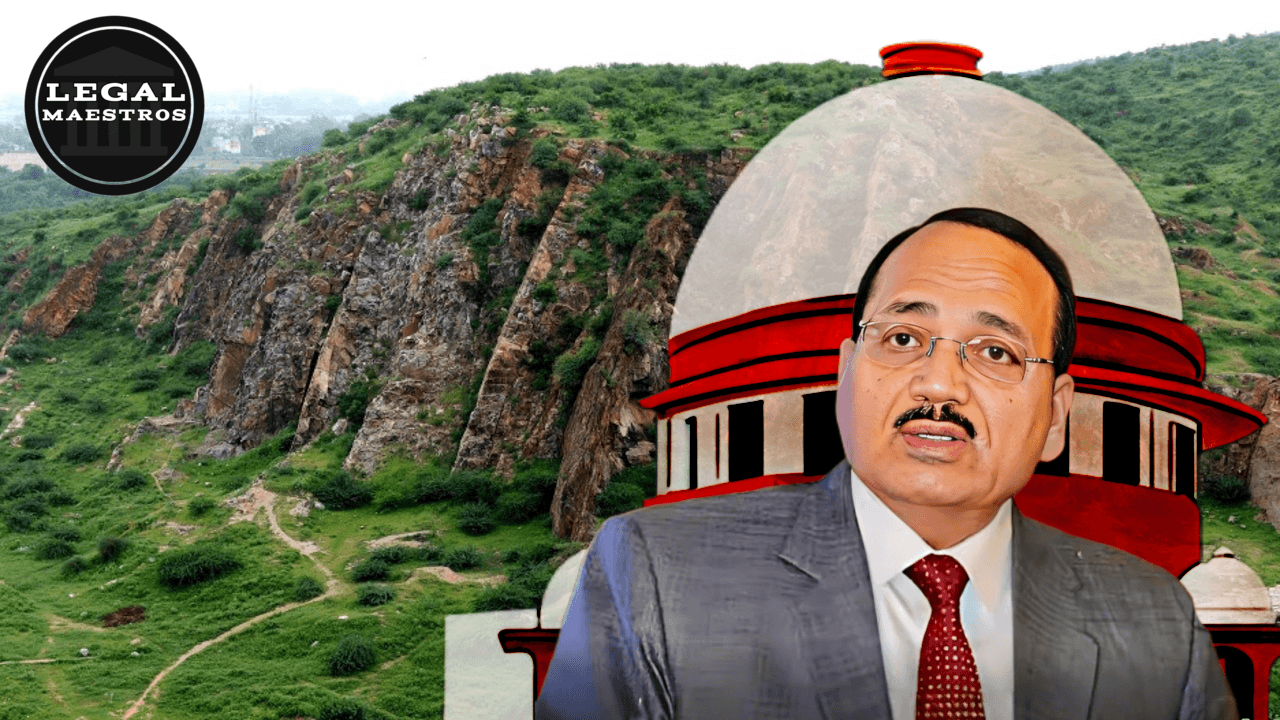
Justice Surya Kant Aravali
It is a major turn around in the judiciary as the current Chief Justice of India, Surya Kant, has indicated an extreme change in approach in one of the recent environmental decisions of the Supreme Court. The highest court will form a three judge panel to revisit its ruling on the definition and preservation of the Aravali Hills, which has attracted legal and environmental criticism in many states.
For advertisement on our platform, do call at +91 6377460764 or email us at contact@thephilox.com.
For any queries or to publish an article or post or advertisement on our platform, do call at +91 6377460764 or email us at contact@legalmaestros.com.
What Triggered the Review
The previous decision of the Supreme Court in late November 2025 established the requirements to determine the Aravali Hills and Ranges to offer environmental protection and initiated measures to the sustainable mining planning in the area. This definition has however been criticized to be deficient of environmental protection and in its use of a height-based 100-metre standard to define a hill, which negates potentially important ecological zones. The critics, amongst them environmental litigation advocates, said that the criteria can undermine protection of certain sections of the ecologically sensitive landscape.

This is the Judicial Scrutiny and Petition of Reconsideration.
A plea was then filed to Chief Justice, Surya Kant, to re-hear the decision in regard to these issues. The petition stressed that even though the first judgment was a good move in ensuring sustainable mining practices, it might unintentionally reduce the legal safeguards of significant parts of the Aravali ecosystem. The call sought a clarification or a review in order to have the environmental conservation sound and legally strong.
LawChakra
What the Three-Judge Bench Might have done.
Through the formation of a new court consisting of three judges, the Supreme Court hopes to revisit some of the major considerations of its previous order:
Reviewing the legal and environmental definition of the Aravali Hills.
Evaluation of the implications of the height based test and other criteria that were employed in the original decision.
The provision of environmental protections is in line with scientific and ecological factors other than topographic parameters.
This is perceived to be a move to strike a balance between legal accuracy and environmental policy objectives to avoid litigation and confusion by the people in the future.
Widening Scope of the Aravali Case.
Aravali Range cuts across a number of states such as Rajasthan, Haryana, Gujarat and the Delhi National Capital Region. It has implications on the ecological wellbeing of groundwater recharge, soil maintenance, and air quality throughout north-west India. Over the decades, courts have been struggling to conserve this landscape and yet at the same time control mining and development activity. The renewed interest of the Supreme Court through Chief Justice Surya Kant points to the continued significance of the judicial need to balance the interest of the environment and the economy.
What Comes Next
The Supreme Court at this point has not yet decided on the final makeup of the three judge panel and the time frame of hearing. The trends in the case and the environment law scholars and legal critics are likely to monitor the case with interest as they believe that the case might not only affect the case of Aravali, but also the environmental jurisprudence in India.