









Current Legal Update

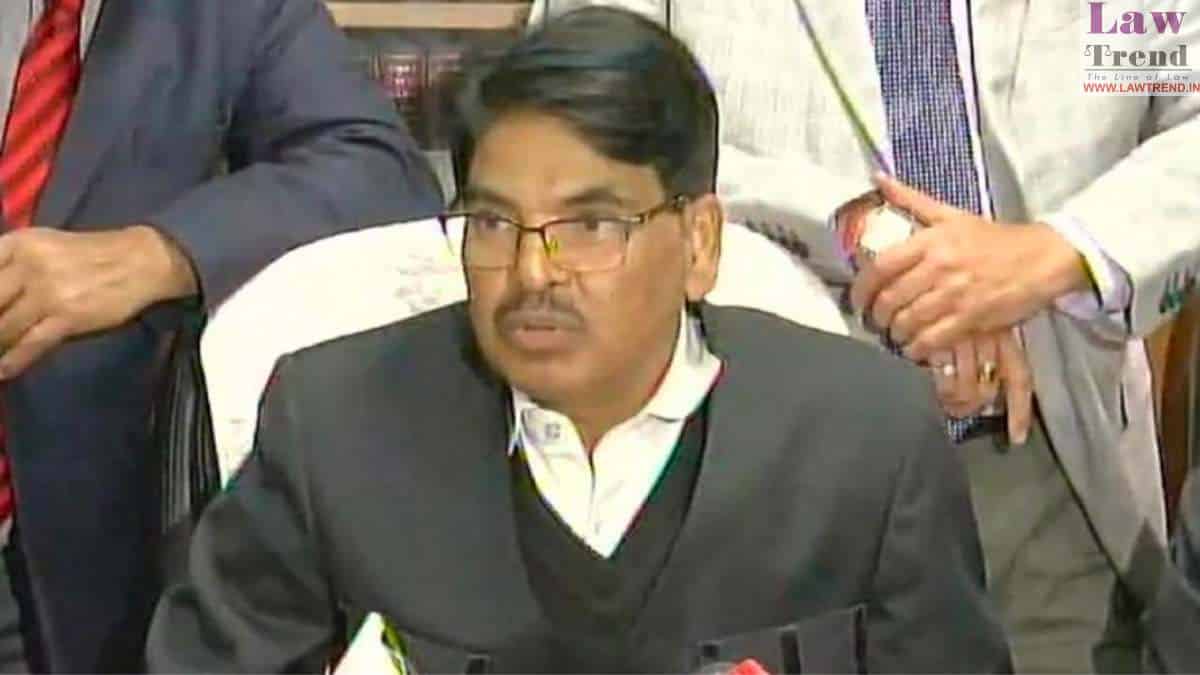
BCI Chairman Manan Mishra’s Plea to CJI Gavai: Barriers Faced by First-Generation Advocates in Litigation

First-generation advocates often find themselves at a disadvantage when it comes to securing courtroom assignments. In many high courts and the Supreme Court, case rosters are influenced by informal relationships and long-established networks. Senior advocates and prominent law firms receive priority, while new entrants struggle to gain visibility. Without invitations to argue important matters, these lawyers miss critical opportunities to build reputations, hone advocacy skills, and attract clients.

The absence of transparent criteria for assigning cases exacerbates this imbalance. Clerks and court officers frequently rely on personal discretion rather than a merit-based process, and clients default to familiar names even when fresh talent is available. This perpetuates a cycle where first-generation advocates remain on the periphery, unable to demonstrate their capabilities on high-stakes platforms. As a result, the profession loses out on diverse perspectives, and justice delivery risks becoming insular and less responsive to the needs of a varied populace.


Current Legal Update

J&K Police’s PSA Crackdown in Srinagar: Constitutional Analysis of Public Safety Act’s Role in Mass Detentions Post-Pahalgam Attack

The Public Safety Act empowers senior executive officers to order preventive detention in the name of “public order” or “security of the State.” Under Section 8, a Divisional Commissioner or District Magistrate may detain any person for up to two years if they believe that individual’s activities could disturb peace or incite violence. Detention orders must outline the grounds for arrest within ten days, although Section 13 permits withholding of sensitive details deemed against public interest. Critics argue that such broad discretion enables arbitrary use of power, eroding trust in the legal system.

Once a detention is ordered, Section 16 mandates that an Advisory Board—comprised of members appointed by the State Government—review the case within four weeks. However, detainees are denied access to legal counsel during these proceedings, and the Board’s recommendations are non-binding. Section 22 further shields officials from legal liability for actions taken “in good faith” under the Act. Together, these provisions create a framework where procedural safeguards exist in theory but often falter in practice, leaving detainees with limited recourse to challenge prolonged preventive detention.

Current Legal Update

Intensifying Heatwaves in Rajasthan: Constitutional Analysis of India’s Environmental Laws and Climate Adaptation Gaps

The state of Rajasthan has emerged as a climate hotspot, with heatwaves intensifying both in frequency and severity over the past decade. Temperatures exceeding 45°C have become alarmingly common, placing immense pressure on public health systems, water resources, and vulnerable communities. Despite the gravity of the crisis, India’s environmental legal framework has struggled to evolve from a conservation-centric approach to one that adequately addresses climate adaptation and resilience.

At the constitutional level, Article 21—the right to life—has been interpreted by Indian courts to include the right to a clean and healthy environment. Yet, in practice, the application of this right in the context of climate-induced disasters remains limited and inconsistent. While Article 48A of the Directive Principles of State Policy calls for the protection and improvement of the environment, and Article 51A(g) places a duty on citizens to safeguard natural resources, there is a notable absence of enforceable mechanisms that translate these provisions into meaningful climate action, especially at the state level.

This gap is particularly evident in Rajasthan, where legal mandates and disaster management policies remain fragmented and reactive rather than preventive or adaptive. State action has often been guided by short-term relief measures rather than long-term climate resilience planning. Moreover, the lack of climate-specific legislation results in an over-reliance on generic environmental laws and judicial activism, which, while valuable, cannot substitute for a coherent statutory framework.

This excerpt lays the groundwork for a deeper analysis of how constitutional principles and environmental statutes can and must evolve to meet the unprecedented challenges posed by climate change in India’s most vulnerable regions.

Current Legal Update

Turkish Aviation Firm Celebi Sued Adani & Modi Govt After Centre Revokes Clearance

As a result of the Indian government revoking its security certification, Celebi Airport Services India, a ground handling firm with Turkish origins that operates at numerous major airports in India, has begun legal procedures against the Indian government. At a number of important airports, including Delhi and Mumbai, Celebi’s operations have been terminated as a result of the revocation, which was based on concerns over national security. It is Celebi’s contention that the decision made by the government is not transparent and does not follow due procedure. He further argues that this decision undermines the confidence of investors and thousands of employment. The complexity of foreign investments in India’s sensitive infrastructure sectors in the midst of geopolitical tensions is highlighted by this court dispute.

Current Legal Update

Waqf Act 2025 Stay: Unpacking the Supreme Court’s Interim Relief on Non-Muslim Appointments and Property Denotification  

Waqf Act 2025 analysis, Waqf Act 2025 amendments explained, Waqf Act 2025 interim relief, Waqf Act 2025 Supreme Court stay, Waqf Act 2025 non-Muslim appointments, Waqf Act 2025 property denotification, Waqf Act 2025 constitutional challenge, Waqf Act 2025 legal impact, Waqf Act 2025 community reaction, Waqf Act 2025 government response, Waqf Act 2025 religious autonomy, Waqf Act 2025 management reform, Waqf Act 2025 transparent governance, Waqf Act 2025 user provision removal, Waqf Act 2025 district collectors powers, Waqf Act 2025 historic sites, Waqf Act 2025 minority rights, Waqf Act 2025 petition hearing, Waqf Act 2025 May 20 hearing, Waqf Act 2025 administrative changes, Waqf Act 2025 trust lands, Waqf Act 2025 legal stay order, Waqf Act 2025 registration requirement, Waqf Act 2025 challenges, Waqf Act 2025 future outlook

Current Legal Update

Lawyer Files Lawsuit Against Gucci Over Faulty Shoes, Seeks ₹1 Crore for Emotional Distress  

A legal representative from India has initiated legal action against the luxury fashion company Gucci, asserting that he had mental distress as a result of a pair of shoes that were defective. He is requesting a sum of one crore in damages. This case draws attention to the responsibility of high-end businesses in maintaining the quality of their products as well as the rights of consumers to seek compensation for emotional suffering caused by defective products. In addition to this, it sheds light on the legal channels opened up in India for the purpose of redressing such complaints.

Current Legal Update

Unilateral Cancellation of MoUs with Turkey and Azerbaijan: Constitutional and International Legal Implications   

This article examines the constitutional and international legal issues that would result from a state unilaterally terminating Memoranda of Understanding (MoUs) with Turkey and Azerbaijan. The sudden termination of a memorandum of understanding (MoU) can have far-reaching implications, both domestically and globally, despite the fact that it is commonly considered to be a non-binding agreement. This article investigates the ways in which such cancellations may pose a threat to constitutional frameworks, especially the roles that the executive branch and the legislative play in matters pertaining to international relations. It also takes into account the way in which international law evaluates the legality and enforceability of memorandums of understanding, as well as the potential diplomatic repercussions. By doing this research, the goal is to shed light on the political realities and legal norms that are associated with the unilateral termination of international accords.