March 16, 1993. The atmosphere in Kolkata was thick with fear and anticipation. Days before, the financial capital of Mumbai had been shaken to its core by a string of coordinated bombings.
The nation held its breath, braced for more violence, and then Bowbazar exploded.
Not just a bomb, but a veritable armory of explosives detonated within two residential buildings in a crowded locality, killing 69 people (some reports say 70) and injuring over a hundred others. The devastation was immense, and the perpetrators were local. It was the bomb cache of Md Rashid Khan, a locally prominent don, that had ripped apart the neighborhood. Investigators concluded that Khan had armed himself to prevent communal violence in the aftermath of the Babri Masjid demolition of 1992, but his decision to amass such a dangerous stockpile resulted in tragedy.
Years in the Slammer, then a Push for Freedom
Khan was arrested in March 1993 and has been in prison ever since, a stretch of about 33 years. He faced the harshest possible laws, with a designated TADA court sentencing him to life imprisonment in August 2001 under the Indian Penal Code, Explosives Act, and the Terrorist and Disruptive Activities Prevention Act (TADA). His appeal to the Calcutta High Court and subsequent to the Supreme Court were unsuccessful, and he seemed to have reached the end of his legal rope.
However, with age caught up to him – Khan is now reportedly around 77 years old – and a serious decline in his health, coupled with exemplary conduct within the prison (rated “very good” by authorities), his legal team renewed efforts for his early release, arguing he had “paid his debt to society.”
Thirty-three years is an awfully long time to spend behind bars, and the argument for clemency based on his age, health, and good behavior gained traction.
A significant development occurred on June 5 of this year when a single judge at the Delhi High Court considered Khan’s plea and granted him immediate release. The court’s decision was heavily influenced by the principles of “reformative justice,” which emphasizes the rehabilitative aspects of punishment rather than solely punitive ones. The judge highlighted Khan’s unprecedented length of incarceration, his spotless conduct in prison, and a history of surrendering after parole.
The court reasoned that holding an extremely ill and old individual, with no possibility of re-offending, would serve no further purpose in terms of crime deterrence.
Furthermore, a co-accused in the same Bowbazar blast case, Pannalal Jaiswara, had been granted remission and released in 2014. Khan’s legal team seized upon this, arguing for similar treatment. The Delhi High Court concurred, declaring that at his age, the likelihood of Khan committing another crime was “nil.”
Bengal’s Outrage and Supreme Court’s Intervention
The West Bengal government reacted with fury. Immediately, they approached the Supreme Court, arguing fiercely against the Delhi High Court’s decision. The state government contended that the sheer magnitude and heinousness of the Bowbazar blasts warranted an exception to the reformative principle.
It was emphasized that previous pleas for Khan’s premature release had been repeatedly rejected by the State Sentence Review Board.
The Additional Solicitor General, SV Raju, representing West Bengal, implored the Supreme Court to remember the horrific toll of the blasts-almost 70 lives lost and hundreds injured in a single night. He accused the Delhi High Court of trivializing a crime of “terrorism” by applying principles intended for ordinary offenses, arguing that Khan was not just an accessory but the mastermind behind the entire operation, directly responsible for the bloodshed.
Supreme Court Puts a Halt to Freedom
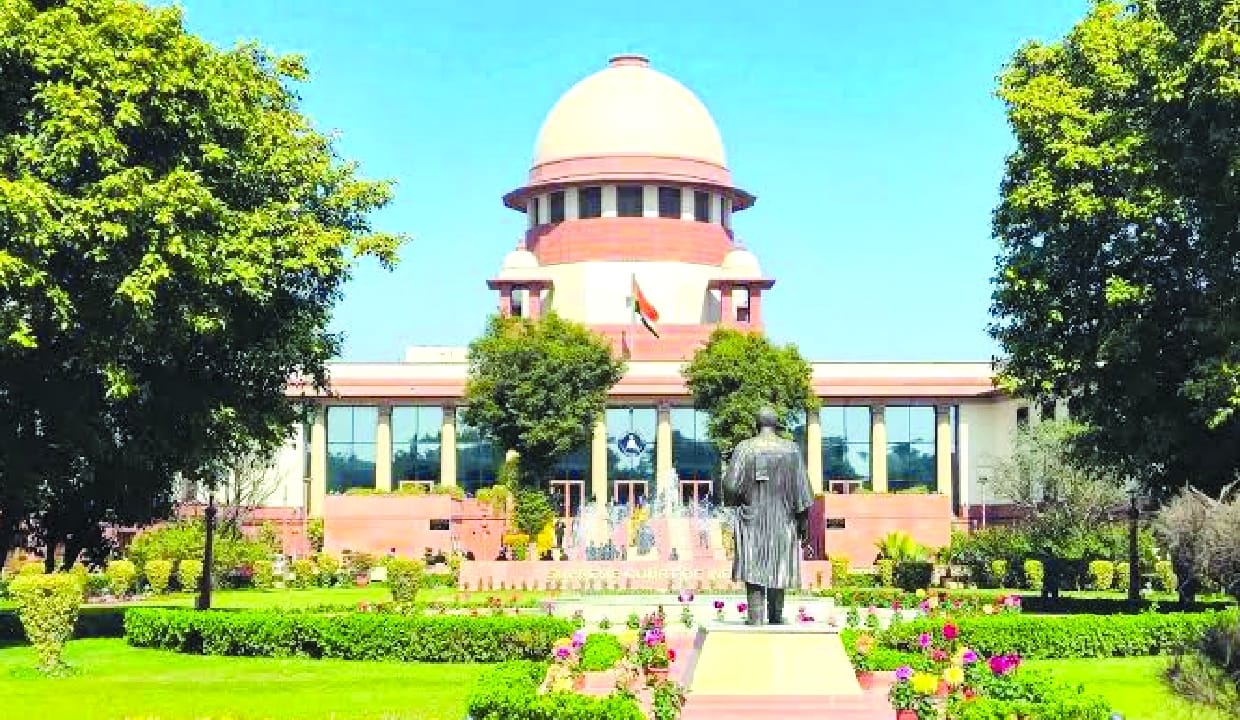
This escalated to the recent Supreme Court hearing where a bench of Justices PK Mishra and Sanjeev Sachdeva took up the state’s plea. Despite Khan’s lawyer, MR Shamshad, presenting medical records and highlighting Khan’s 33-year good conduct, the justices were unimpressed with the comparison to the co-accused who was released. They forcefully stated that the roles in the crime were vastly different, and Khan was the “mastermind,” involved in what they described as “almost a terrorist act.”
The court acknowledged Khan’s ill health and advanced age but declared that a functioning mind remained the primary factor.
The judges pointed out the danger of allowing a convict’s role in a massacre of this scale to be equated with someone else’s. The Supreme Court promptly issued a formal notice to Khan, seeking his response within four weeks, and effectively stayed the Delhi High Court’s release order. The judges explained that allowing him to go free pending the appeal would render the state’s entire case moot. The case is scheduled for further hearing in late July.