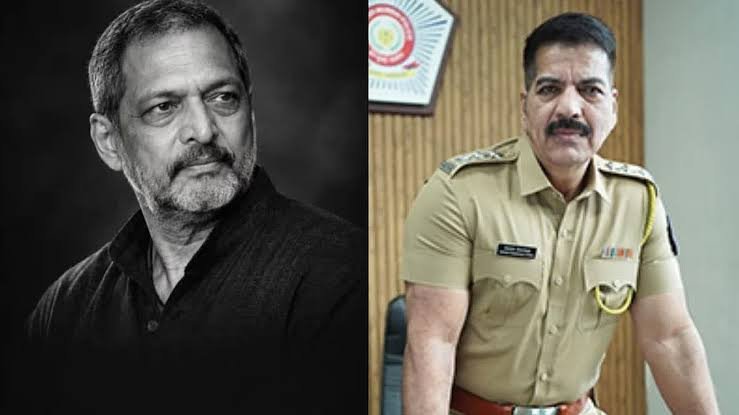
Sadhu Agashe, a memorable police figure from Nana Patekar
Nana Patekar is one of the few actors who even attempted to give a serious audition to the role of a police officer, in the Hindi film industry. He played Inspector Sadhu Agashe in Ab Tak Chhappan, which was one of the most memorable police roles to ever emerge from Hindi cinema. It was released in 2004, and was directed by Shimit Amin.
Sadhu Agashe’s character was inspired by the life and career of former Mumbai Police officer Daya Nayak, one of Mumbai’s most famous encounter specialists. The film was based on real incidents involving Mumbai’s encounter units while also fictionalising the story of the officer and his career.
The Real Police Officer Behind the Character
Daya Nayak was a pivotal real-world pointer that Sadhu Agashe had. “You take this encounter specialist, Daya Nayak, who was then a sub inspector in the Mumbai Police. That was how the character played by Patekar was not just completely imaginary, it was for this specific period of Mumbai police history,” he explained.
The link between the actor and the actor that inspired the role has remained intact for years after the film. The day Patekar died on October 8, 2026, Nayak remembered the actor and also the bond between the man the actor played to life and the actor who played a version of him on-screen.
Encounter Policing and the Question of the Law
Legal therns: Ab tak chhappan becomes more relevant: From a legal perspective, what is very interesting about the film is its depiction of police confrontations. The film shows an officer in an area where investigation, criminal intel, and the use of force collide head-on.
Under Indian law, a police officer does not have a right to kill someone by merely suspecting that that person is a criminal. If the police is to act, then it must act within a set of stringent legal limits of the law. The right to life under Article 21 is key here.
This distinction is significant because the depiction of encounter policing can in some cases imply instantaneous justice. Arrest, investigation, charge and trial continue to be at the core of serious criminal justice in our lawful system, even when suspicion of a police officer does not exist.
Why Sadhu Agashe Was Different From the Average Police Officer
What was refreshing about Patekar’s acting was that Sadhu Agashe was never depicted as an unbeatable police force hero. In the film, he was a part of the police force and was also under inquiries from his seniors about the extent he went. The film hence put the officer in a strange position of the demand for crime control and the institution itself.
Patekar’s minimalistic acting style further contributed to building up the character. Instead of the conventional reliance on action scenes, the movie relied more on his measured body language and delivery of lines to portray Agashe as an officer used to tough decisions. Modern-day retellings still list the role as Patekar’s iconic performance.
The transition from a Reel Police Officer to a Real World Legacy
Patekar subsequently played Law Enforcement personnel again in the film The Attacks of 26/11, this time as Joint Commissioner Rakesh Maria. So Patekar has played a few roles connected to policing, crime, and the Establishments. But Sadhu Agashe has a special place, because the character is directly connected to the real Mumbai world of Contact Police.
That constant debate around Ab Tak Chhappan further illustrates the role cinema can play in shaping society’s knowledge of police work. The actor’s role transformed a fictional portrayal of a police officer based on a real police officer into a trope that stayed in the cultural vernacular. But the reality is more nuanced: Lethal force can only be deployed within constitutional limits, which remains ultimately a legal issue, to be decided on a case by case basis.