CEC Row Reignites the Right to Protest
The standoff between parties over the Election Commission’s Special Intensive Revision of electoral rolls has shifted from political manoeuvres to protests on the streets of Delhi and Bengaluru. The leaders of the Congress have taken to protesting on the streets with Rahul Gandhi and Priyanka Gandhi Vadra demanding the resignation of the Chief Election Commissioner Gyanesh Kumar. Both Gandhi leaders have been arrested by the Delhi Police while protests were carried on consecutive days. Police have also filed FIRs for allegedly obstructing and assaulting officials.
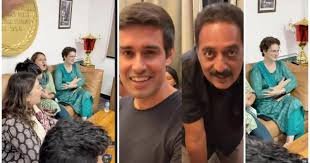
Protests extend outside parties The protest also extended outside of parties. In Bengaluru, DCF (Divisional Caste Forum) Cockroach Janta Party founder Abhijeet Dipke, You Tuber Dhruv Rathee and actor Prakash Raj joined in the protest at the Freedom Park against the SIR and called for the resignation of the CEC. Both Rathee and Prakash Raj spoke to protesters, as did the organisers, who called the demo to highlight the controversy around the revision.
This issue raise an interesting legal issue. Is there an absolute right to protest against government institutions and the authorities under the Constitution or can the police hold, constrain and/or arrest the protesters?
Article 19 Protects Peaceful Protest
But there is no provision in the Constitution regarding the right to protest separately. However, the right to protest as a right has not been directly given in the form of any clause called the “right to protest”.
Article 19(1)(a) deals with the right to free speech and expression and Article 19(1)(b) reads with right of peaceably assembly and association without arms. All the demonstrations, public meetings, marches and other peaceful demonstrations of political power have the constitutional place as guaranteed by these clauses. The Court has already held peaceful protest as an essential aspect of democratic participation.
But these rights are not conclusive. Article 19 allows for “reasonable restrictions” in certain situations, for example: “public order”. Thus, a citizen might have the constitutional right to oppose the Election Commission, the government or another state institution, but how and where they choose to do so may be guided by lawful authorities.
When Can Police Limit or Halt a Protest?
A piece of Indian legislation permits the authorities to restrict demonstrations public order, safety, obstruction or any other duly cognizable consideration. The Bharatiya Nagarik Suraksha Sanhita, 2023 additionally accommodates unique provisions to tackle such instant instances of public nuisance or perceived menace.
Section 163 of the BNSS enables an empowered Executive Magistrate to issue a written order prohibiting certain actions where such prevention is deemed necessary to prevent obstruction, endangering human life, safety, or public tranquillity, riot, or affray. The order can be directed against certain individuals, persons in a certain place, or the public at large.
So, the simple fact that a constitutional right to protest exists does not mean that there is necessarily a right to protest at all times or to hold a demonstration anywhere. The rule of law requires that the restriction on protest must themselves be subject to the constitution.
Public Roads and Government Buildings Are Not Always Open for Demonstrations
The Supreme Court has separated out the right to protest from the right to occupy any place of public use continuously and indefinitely. In the SPP case about protests at public places, the Court acknowledged the right to protest peacefully but has also stated the importance of balancing the rights of protesters and others using the public place.
This principle applies where a protest involves a roadblock, a demand to enter a “forbidden” premises, or a step to a road that the police authorities have fenced off.
The apex court has also reaffirmed that protest against law is a fundamental right protected under the Constitution and police excesses cannot be the rule of the day simply because an agitation is on. It has asked the authorities to strike a balance between public order and peaceful dissent.
In the light of what has been said this is certainly not the position of the law that police can stop any protest at any time, and the protesters cannot, on the other hand, have unlimited freedom to disregard restrictions that are duly made for public order and safety.
What About Detention of Protesters?
The detention of Rahul and Priyanka Gandhi and other opposition leaders only further complicated the issue legally. The police in Delhi said they detained them “for keeping the peace and public safety” whereas the protesters said they used their “democratic right” to protest.
The lawfulness of any one detention will be a question of fact, depending on all of the factors, such as the section upon which the police rely, whether there is a valid order or offence, the behaviour of the subject and the procedure followed.
The fact of an individual’s political status does not afford exemption from general criminal or criminal procedures legislation. Similarly, merely attending a peaceful demonstration does not exclude citizens from the protection of the constitution.
Where Does the Law Draw the Line?
The key legal difference is between peaceful protest and behaviour that allows a lawful restriction and criminal offence. Slogans, criticism of the Election Commission, calls for the resignation of a Constitutional authority or participating in a peaceful protest may be constitutionally protected expression and assembly.
It will depend upon the facts and the law of the land as to how the offence can be formulated when there is violence, obstruction, damage to property, assault on public servant, illegal entry into prohibited place or wilful disobedience to a lawful order. The recent FIRs against Rahul Gandhi and Priyanka Gandhi relate to allegations by the police and do not ipso facto amount to criminal guilt.
The CEC interference thus creates two constitutional rights which need to balance one another. The citizen’s right to challenge public institutions and air political grievances, and the state’s duty to provide public order and safeguard other peoples’ lives and rights.
A legal issue in each case thus arises not simply of protest in India, but instead, whether that specific protest “was encompassed within the zone of protection afforded by the rights of free assembly and expression, or subject, as the case may be, to state restrictions or police action based on legitimate law and constitutional reason.