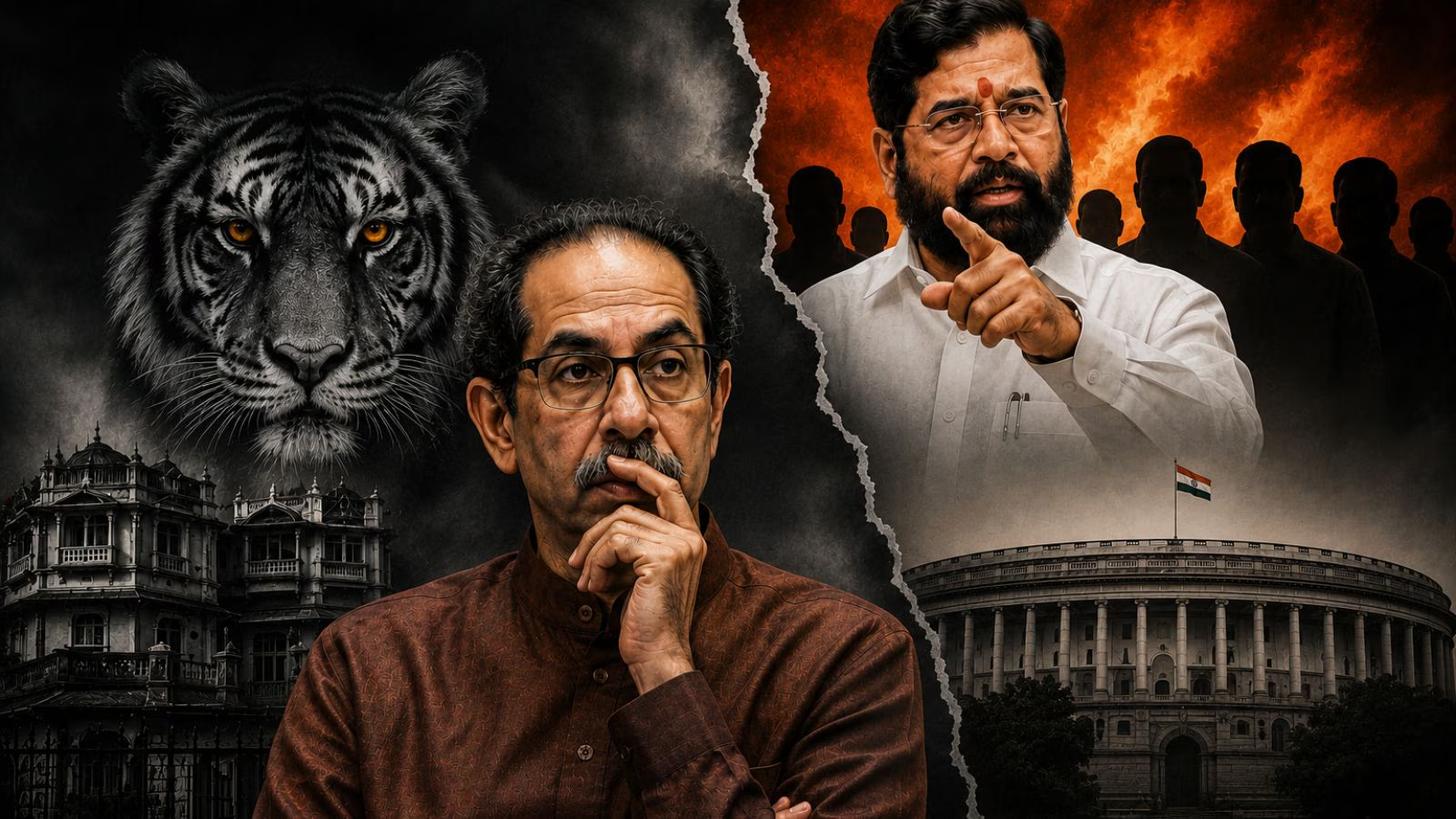
A specific, predator-like term is echoing through the halls of power in Mumbai and Delhi. They call it Operation Tiger, and Eknath Shinde’s camp is allegedly attempting a monumental parliamentary heist behind the back of Uddhav Thackeray. The ultimate goal is to strip Thackeray’s faction of its last vestiges of power in the Lok Sabha. There are nine MPs on their target list, but they don’t need all nine to jump ship; all they require is six. That single digit stands between a brilliant stroke of political genius and mass unemployment for the defectors.
The basis of this entire drama is the Tenth Schedule of the Constitution, known to you as the anti-defection law. It was implemented years ago to put an end to politicians’ tendency to treat their party affiliations like a turnstile. Its fundamental principle is extremely basic: if you’re elected under a certain party’s banner and then defect to another side, you’ll lose your position and return home to face an irate electorate. On paper, it sounds like a good idea, but the major, structurally embedded escape clause in the law is problematic.
The Two-Thirds Loophole
One or two politicians can’t leave without penalty. But if the bulk of the elected contingent leaves together, the law suddenly reclassifies their actions as an acceptable ‘merger’ or a legitimate split. This privilege only becomes accessible if two-thirds of the elected members join the opposite camp simultaneously. It’s here that the grim arithmetic of Operation Tiger becomes critical. Uddhav Thackeray currently has nine MPs in the Lok Sabha, two-thirds of whom equals six. If Shinde persuades six MPs to visit Speaker Om Birla’s chamber and submit a collective statement of support, the anti-defection law won’t apply, and the politicians will retain their positions and benefits. However, if only five attend, the whole scheme will collapse instantly, and all five will face immediate disqualification. It’s the difficulty in making six politicians, each with a substantial ego, work in perfect harmony that causes such visible chaos.
Charter Flights and Hotel Politics
The media is abuzz with sensational stories because the stakes are so high. Sanjay Raut is holding press conferences, openly accusing the ruling camp of placing fifty-crore-rupee bounties on MPs, with advanced payments already being made. He is tweeting about charter flights carrying hesitant MPs from Nanded to unseen locations in the dead of night. Whether or not the financial figures Raut is quoting are accurate, the panic felt at Matoshree is undeniable.
Thackeray is attempting to consolidate his power base before the monsoon session, and his camp is sending pre-emptive letters to the Speaker, begging him to recognize any dissenting factions only after hearing the original party leadership. They are issuing official party whips to compel MPs to attend all party meetings. A whip is a binding summons, and ignoring it could lead to disqualification proceedings before the member even officially defects. It’s a frantic game of legal whack-a-mole.
Need Help With Your PhD or LLM Thesis?
Explore our thesis and dissertation writing support services for PhD and LLM students. Get subject-specific academic assistance for your research project.
Explore Our Services →The Real Leverage
Why would any MP put their career at risk? It’s seldom about pure ideology. Consider the immense pressure that rumors suggest is being exerted. Take Omraje Nimbalkar, one of the MPs rumored to be considering a defection. He has been awaiting justice for over two decades for the murder of his father. The final verdict is scheduled to be delivered right in the midst of this political turmoil. Security within the ruling coalition is more appealing than the relative insecurity of sitting in opposition.
The Shinde faction is also allegedly offering huge public works contracts in the home constituencies of the targeted MPs. The reasoning is straightforward: remaining with a weakened opposition leader means no access to development funds, leading to unhappy constituents and a higher chance of losing re-election. The entire situation is also influenced by national objectives: the NDA wants a two-thirds majority in the Lok Sabha to pass controversial legislation, and after recently cracking the Trinamool Congress, they are looking for another weak point to exploit in the fragmented Shiv Sena.
The Waiting Game and the Speaker’s Gavel
The most difficult aspect of arranging a mass defection is the agonizing wait. While five MPs may be ready to sign, they must be kept hidden and content while the sixth is being persuaded. If one person backs out due to local pressure or a sudden change of heart, the entire operation will fall apart. This is why the Shinde camp is confidently proclaiming that the deal is in its “final stages” in the media, attempting to make hesitant MPs believe they are losing out on a once-in-a-lifetime opportunity.
Ultimately, the Tenth Schedule is not enforced by an impartial arbitrator; it is enforced by the Speaker. This is a well-kept secret: in Indian politics, Speakers are generally loyal members of the ruling coalition. Disqualification petitions against defectors joining the ruling party often disappear into administrative drawers for months or even years, and the courts are hesitant to intervene while the Speaker is “considering” them. Even if the arithmetic is not perfect, the rebels are assured of an institutional shield after crossing the floor.