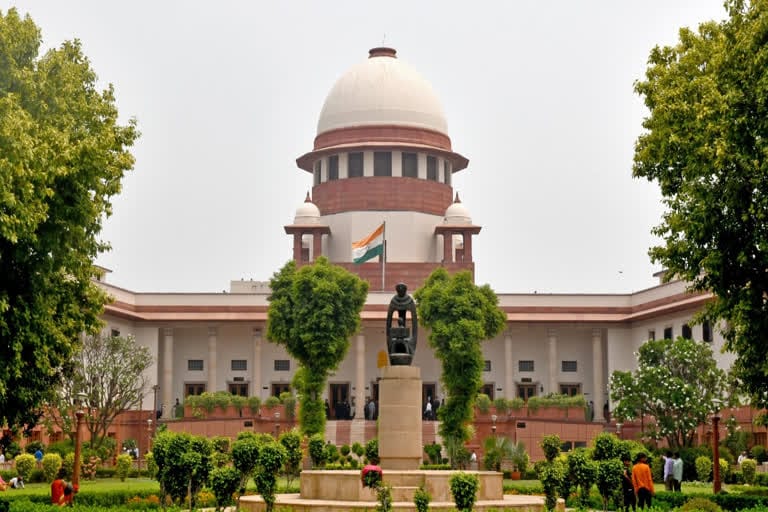
Supreme Court of India took a big step in the handling of sedition cases. It’s a very specific adjustment. Yet, it turns the reality of those who are in jail cells. A three-judge bench reviewed the blanket ban on sedition trials and charted a new course. Chief Justice of India, Surya Kant presided over the bench. He was sitting before Justice Joymalya Bagchi and Justice Vipul M. Pancholi. They concluded that trials and appeals in courts around the nation may go ahead with sedition charges. There’s really one big exception. It can only be done with the express consent of the accused. Upon objection by the accused, the trial can be conducted.
It’s because of May 2022. It was then that the colonial era sedition law was frozen in time by the Supreme Court. The law is Section 124A of the Indian Penal Code. It was effectively “frozen” by the court. They instructed police services to desist from registering new cases. They directed trial courts to desist from conducting cases that are still pending. The Union government had pledged to take a second look at the entire law. During this review, the court wished to make sure that citizens would not be prosecuted under a controversial law. The purpose of this intent was to protect the animals. It was intended to prevent the state from sending people to jail for criticizing it. The legal scene is complex, however. A blanket freeze on all court proceedings has huge collateral damage.
Seventeen Years Waiting For A Hearing
That collateral damage was manifested in the form of a man from Madhya Pradesh. His name is Kamran. He has been jailed for 17 years. The facts of his case require you to consider how the law is applied in practice. Back in February 2017, a sessions court convicted him. He was not only found guilty of sedition, he was also found guilty of treason. The charges were stacked against him by the police. He was charged under the Unlawful Activities Prevention Act. He was charged with violating the Arms Act. He also received Section 153A – promotion of enmity.
The trial court found him guilty and handed down a life sentence. Kamran did what any man would do if he looked at his life in prison. He appealed in a criminal appeal. The case of his was taken up by the Madhya Pradesh High Court, division bench, New Delhi. Then Supreme Court in its order of 2022 froze all sedition cases. The high court looked at Kamran’s file. One of his convictions was under Section 124A, thus there was a pause in his entire appeal. They put his paperwork aside. The safeguard that was intended to keep citizens from being overreached by the State turned out to be the very reason Kamran was incarcerated without a trial! He’s in a loop of procedures that never ends.
Giving The Choice To The Accused
Kamran’s lawyers filed a very specific complaint with the Supreme Court. The judges were told they were talking about Kamran’s desire to have his appeal heard. He didn’t mind one of the accusations of sedition. He had no problem with the high court considering the Section 124A conviction along with the weapons and terror charge. He just wanted to fight his life sentence. The situation in a cell waiting for the lawmakers in New Delhi to debate a colonial statue was not doing him any favours.
Need Help With Your PhD or LLM Thesis?
Explore our thesis and dissertation writing support services for PhD and LLM students. Get subject-specific academic assistance for your research project.
Explore Our Services →The bench listened. Chief Justice Surya Kant and the other two judges knew that the 2022 order had laid a “trap” for those who wanted to get appellate relief. They provided a statement in writing. While the lower courts have no legal impediment where an accused party does not object to the continuation of a trial or appeal before him under Section 124A, the court said. The local judges are allowed to review the facts. They have the discretion to make the decision on its own merits.
This decision puts power in a very targeted direction. It takes the 2022 freeze as a defense, rather than a prosecution tool. The state is still unable to compel a person to resume a sedition trial. The government prosecutors have no right to force an activist or a journalist to return to court over old tweets or speeches. The only condition is the consent of the accused. If not, the 2022 freeze remains in place.
The Problem Of The Old Penal Code
This whole legal battle is a weird limbo. New crimes are not even provided for in the Indian Penal Code anymore. The government recently discontinued it. They replaced it with the Bharatiya Nyaya Sanhita. The new criminal code has also an equally controversial clause on activities threatening the sovereignty of India. The new Section 152 has been dubbed by critics as “sedition reworded. But that’s a matter for another day in court.
The first issue is that criminal law doesn’t run in reverse. You are charged with a crime in accordance with the laws that were in effect on the day of the crime. This means that the new laws will not affect anyone who has been arrested on sedition charges prior to the coming into effect. The cases in this category are hundreds in the Indian judicial system. There are individuals who are on bail. Others, such as Kamran, are in high-security wards.
The Supreme Court thus asked the Madhya Pradesh High Court to reopen Kamran’s case file. They directed the lower court to expedite his appeal and any related issues. The bench was very careful in adding one last note to their order. They were very clear that they were not saying anything about Kamran’s guilt or innocence. They didn’t examine the real evidence of the weapons or the alleged sedition. They only cleared the road so that a real hearing could be held.