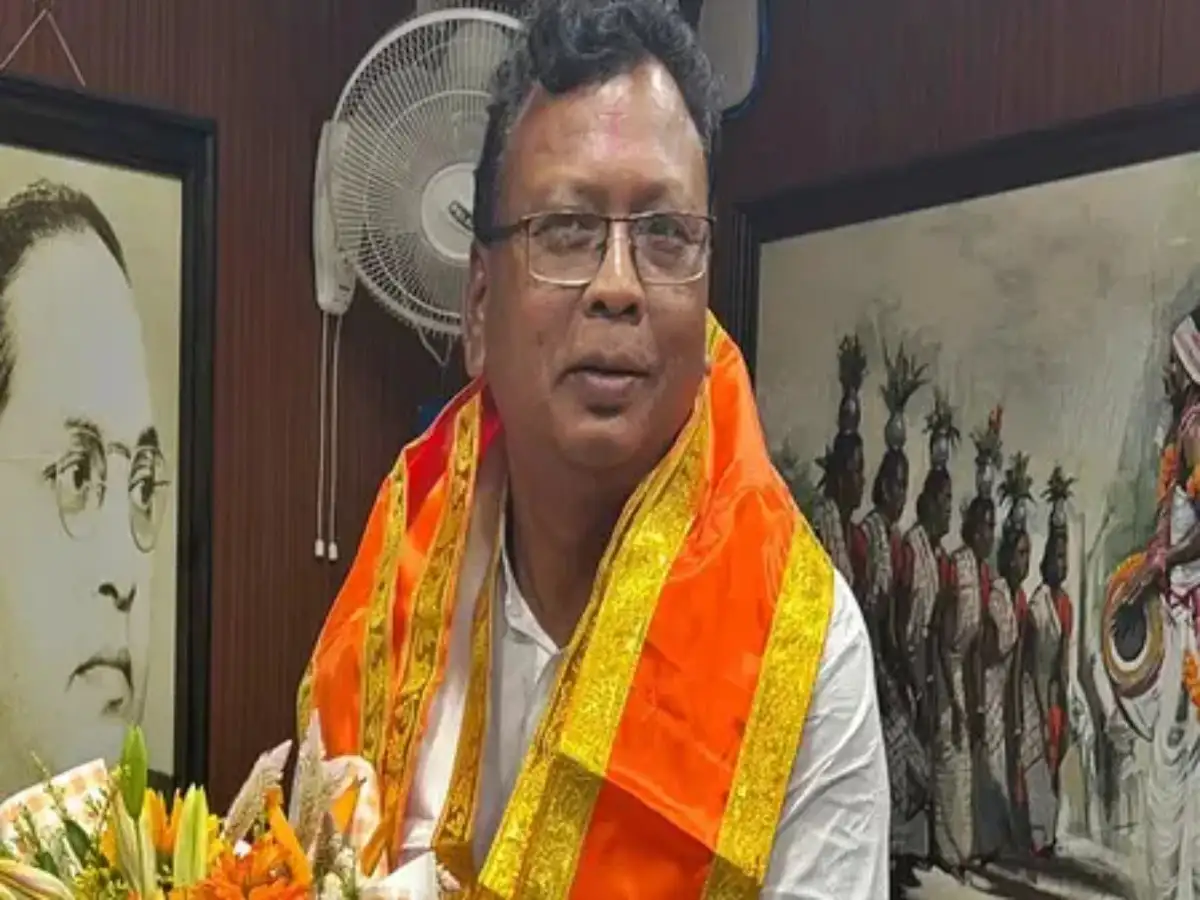
The West Bengal government just issued a huge call to action. It brings a complete transformation of the morning routine in Islamic school all over the state. In fact, students have been made to chant ‘Vande Mataram’ on each morning in the madrasas. This is not a soft recommendation, it’s a hard one. The Directorate of Madrasa Education made it an irrefutable demand. They gave a clear and official warning. All students are required to sing the song in the morning assembly, before school starts each day. State government has a new government with Chief Minister Suvendu Adhikari. They have been moving swiftly to follow their agenda. They even commanded all normal state-owned schools to do the same thing just a fortnight back. Currently, this command is being enforced with regard to madarasas too.
Rolling Out The Directive
It is a testament to the gravity of the state government’s intentions that they actually managed to distribute this order like that. They didn’t merely issue a press release. The order was pushed through the official bureaucratic system with vigor. It was sent straight to each and every district magistrate. It was put on the table of district inspectors of the schools. Formal copies were sent to the WBBOME to pass on to their network.
This is an extremely broad scope. The official order spells out who is covered by the new rules. It includes government model madarasas. It addresses the ones that are allocated direct state funds. It even ropes in the completely unaided madrasas, as long as they are officially recognized by the Minority Affairs and Madrasa Education Department. A senior official within the department tried to explain the sudden move. They allege that it is all about uniformity. They want all schools in their control to have the same assembly procedures. The new regulation will be put into effect immediately, according to the notification. No grace period is allowed.
Immediate Political Pushback
It’s not an order you can make and not get a political battle. There was a swift counterreaction. Humayun Kabir is a local political personality and former MLA who has joined his political party. He attacked the ruling on the horns of it. He categorically said that the directive will not be followed by the madarasas. He said the state government does not have the legal power to impose such a cultural practice in Islamic religious schools. He has already begun to discuss mass protests should the government itself send inspectors to enforce the rule.
Other opposition groups are denouncing that anger. They are saying that it is a “deliberate provocation to religious tension. They remind that Muslims also participated in the struggle for the independence of India, and sacrificed their lives. For them, this is a command and not patriotism, a command that is aggressive and intended to affect a specific minority group. So far, the state legislature’s primary opposition party has been fairly silent on the matter. But smaller minority groups are already making their counter-response.
Need Help With Your PhD or LLM Thesis?
Explore our thesis and dissertation writing support services for PhD and LLM students. Get subject-specific academic assistance for your research project.
Explore Our Services →The Government’s position is maintained.The Government’s attitude remains firm.
The ruling party is not budging a millimetre. Dilip Ghosh is a leading minister in the state cabinet. He went up to the mics and made it abundantly clear that there is a hard-line stance of the government. His logic is blunt. If it is a government-funded institution, it must abide by government rules. He said the song will be performed all over the world. Period. He advocated the notion of such a practice being standard nationwide.
The state BJP leadership denies that this is anything to do with the split between the Hindus and Muslims. They don’t agree with that story at all. They note that the song itself formed a huge component of the struggle for independence from the British. For them, it is simple respect for the country that they sing it. They feel it’s an insult to the people who fought for India’s Independence to oppose the song.
The Weight Of The Words
The main argument is not whether or not the students hold the country in high esteem. It’s all about the content of the song itself. Bankim Chandra Chatterjee wrote the poem in the 1870s. The lyrics are quite a bit in the Hindu sphere. The motherland is clearly identified with the goddess Durga. This is where the Islamic groups are going to have a problem.
Land is a god-given entity and the notion of personifying the land as a deity is a very Hindu concept. Over the years, different political and religious parties have questioned whether the song is secular or religious, a patriotic song or a religious song. It was the same issue that was being faced by the Indian National Congress in the year 1937. For the gatherings they had decided to sing only the first 2 stanzas of the song, and they did not sing the later stanzas where there was heavy religious language. They did this in particular to honour the sensitivities of minority groups. The mandate in effect now doesn’t appear to make that sort of distinction.
The Constitutional Conflict
This is pretty much heading toward a huge lawsuit. Ultimately, all the political bickering goes to a courtroom. It’s all about the Constitution. Article 25 and Article 19 in particular. A man’s right to the free exercise of his religion is recognized in Article 25. A large number of Islamic scholars say that the singing of ‘Vande Mataram’ is against their principles. The worship or bowing towards anything except God is strictly forbidden in Islam. By requiring a Muslim student to sing those very words, you run straight into conflict with his or her freedom of religion.
There’s Article 19.Then Article 19. The freedom of speech and expression is guaranteed in that article. The principle of freedom of speech has been previously established by courts that there is freedom to remain silent. It is possible that if a student is standing and is respectful but decides not to sing the actual words because of his/ her personal convictions, then punishing that student would be a violation of his/ her constitutional rights. Sometimes people are unable to be made to talk.