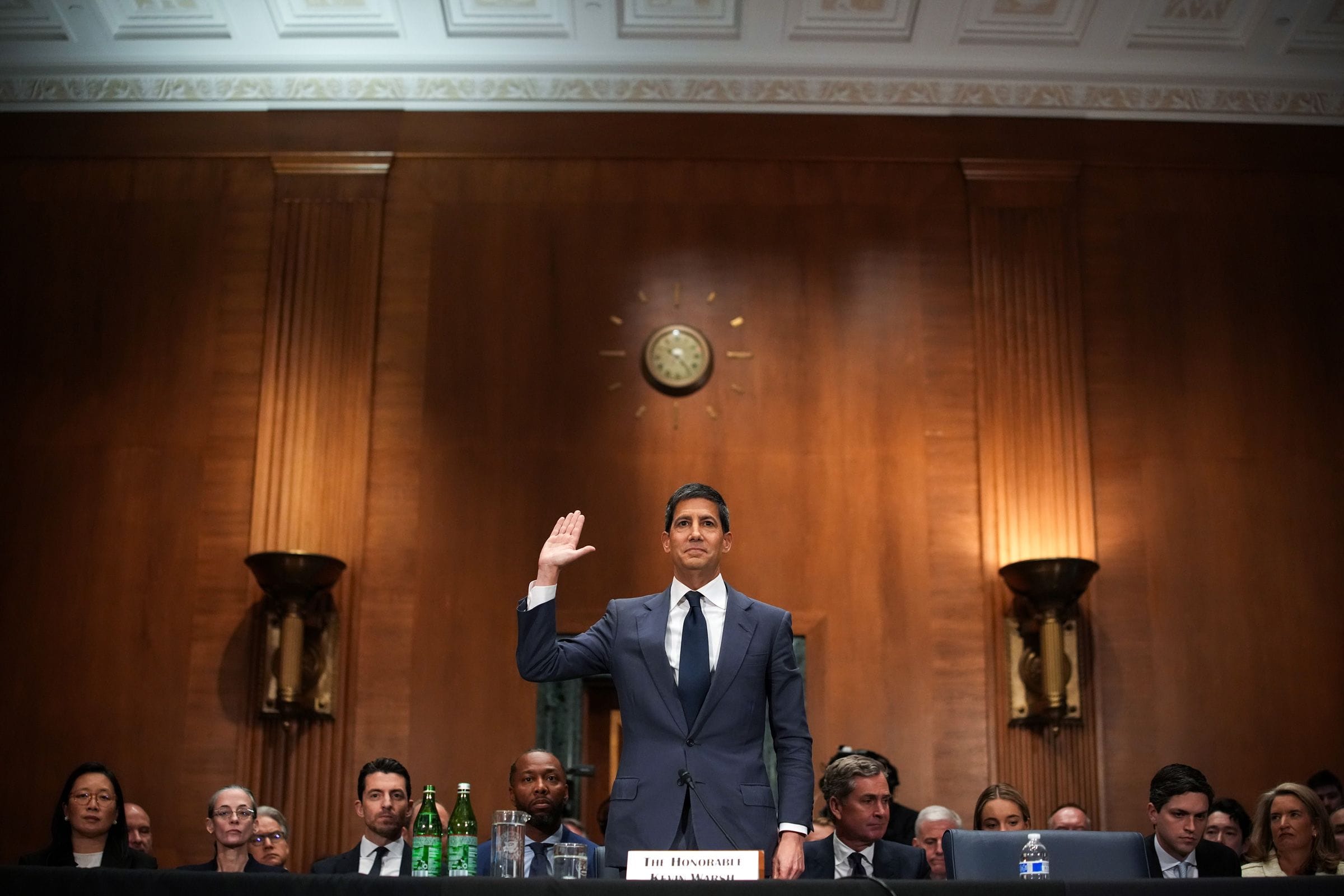
Fifty-four to forty-five. The final score on Wednesday afternoon was that way. The United States Senate formally gave the keys to the Federal Reserve to Kevin Warsh. He takes the gavel from Jerome Powell. This Friday is the official end of Powell’s term. It is a tremendous transformation of monetary power. The result of the vote was not a bombshell, either. It was nearly along party lines. Fifty-three Republican representatives voted for the yes. One Democrat defied party rules and crossed the aisle to join them. It was PA’s John Fetterman. All the others dug their heels in, and voted no.
The name ‘Warsh’ does not refer to some random outsider getting into the Eccles Building. He actually has the plumbing knowledge. He served as a Fed governor twice, under George W. Bush and Barack Obama, during the financial crisis of 2008. Now he’s 56. A former financier. He has recently been closely associated with a billionaire investor, Stanley Druckenmiller. His appointment, however, puts an end to the long, tiring political process that began months ago. The succession battle was anything but without its rough edges. Powell had been an important source of frustration for Trump who publicly berated him for months, and repeatedly called for lower interest rates and less expensive money. When war broke out, Warsh was a star in the making, who promised reform. The background he is walking into though is very dirty
The Central Bank under the microscope
Let’s discuss the rubbing. There’s just no escaping the baggage of politics falling on this confirmation. Trump has not only pushed the central bank, but he’s burst through its walls. He openly referred to Powell as a “stubborn mule. He demanded the “tightest” cuts even when the inflation figures called for “tightest” cuts. It puts Warsh in a very bizarre position, from the get-go. Does he walk on the line that the White House has drawn in the sand? Or is he Paul Volcker and listens to no one
Need Help With Your PhD or LLM Thesis?
Explore our thesis and dissertation writing support services for PhD and LLM students. Get subject-specific academic assistance for your research project.
Explore Our Services →During his confirmation hearings, Warsh swore up and down that he’d be an independent actor. He emphatically rejected rubberstamping the administration. Massachusetts Senator Elizabeth Warren didn’t believe it for a second. She flat-out called him a “sock puppet” for the president on the Senate floor. The rhetoric is tiring. But it brings to a large degree to the fore a lamentable but present fear on Capitol Hill. The Fed is specifically structured to have an insulation from elective politics. That insulation has been very fragile these days, however, because the administration is trying to remove another Fed governor, Lisa Cook, and holding a Justice Department investigation over Powell’s head for the renovations to the buildings he oversees. Think about this. Even Republican Senator Thom Tillis delayed Warsh’s confirmation for a little while to give the DOJ the opportunity to recalibrate on Powell. The amount of pressure that’s being applied from the back is incredible!
The Economic Reality Waiting for Warsh.
But it’s the mathematics that is all-important—not the politics. The math is crap. Warsh has not taken over a trouble-free train. He’s walking into a buzzsaw. The Fed’s target of two percent inflation has yet to be reached. It has remained above that mark about 5 years. The prices are slowly rising again. Much of this is first directly linked to the current war in Iran that is constantly pushing energy prices to record highs. Then, you add in the artificial intelligence revolution. That is warping capital expenditure, and leading to mispricing of stocks. The whole economic situation is totally confused
The Federal Reserve is uniquely divided. During their previous meeting, several rate-setters loudly objected. This is the first time in 19 years that such an extensive amount has not occurred. Some would like to keep rates up to suffocate inflation. Others consider the demand for cooling jobs and want to begin cutting before the bottom drops out. Warsh will have to corral these cats. He has previously lambasted the Fed’s economic actions since the pandemic. He is keen to substantially reduce their gargantuan debt. He would like to reform the way they interact with Wall Street. Replacing a car’s engine as it’s hammering down the road at eighty miles per hour generally leads to a mess.
Unpacking the Next Four Years
The term of office is 4 years. Four years in charge of the world’s biggest economy. Recent reports from Druckenmiller suggest that Warsh is arriving at a “wildly consequential time. This could be a tenth-understatement of the decade. The bond markets are already visibly jittery. Yield Curves are shifting. Traders are in a race to value in what a Fed led by Warsh looks like. Is the dovish tilt that the administration continually posts on social media actually happening? Or will Warsh be concerned by the cost of gas and groceries and tell the White House to wait?
Before sworn in, Warsh has agreed to sell off approximately $130 million in personal property. That’s just usual practice to prevent any obvious conflicts of interest. When the paper work is cleared, he’s in the chair. Powell may be kept around a couple more days as a fill-in, but the Powell era is all but gone.
Predictions for the future are anyone’s guess. It appears Wall Street is just happy a familiar name was chosen rather than a political betrothed. But Main Street is asking: When will mortgages and credit cards be less expensive? The new chair will be held accountable to both parties. He must keep a steady balance between the shrill demands of an often ferocious executive branch and the chilling hard economic numbers he is forced to face at his desk, each morning. Both sides having to make compromises, some of which are quite unpleasant, that not many could make if they didn’t have to
Warsh vowed to completely transform the institution. He wishes to abandon the policy of extensive forward guidance. He believes that the Fed is talking too much and doing too little. Soon enough, we will see if those ideas can be put into practice by him. But the gravity of the present inflation crisis may simply make him do the same as his forebear. He’s got the job. Now he has to go through with it.