The Court Steps In
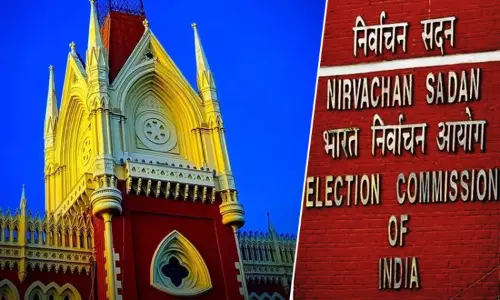
The Election Commission’s security plans have just been given a huge kick in the guts by the Calcutta High Court. The Commission’s recent ban on motorcycles on the day before voting day was on the nose of the court last week. Everyone was bewildered. The abrupt ban could have choked the daily commute of thousands of middle-class people on low-budget transport in West Bengal
A Lawyer Goes to Court
The court battle began when a lawyer, Ritankar Das, had enough. He took the election authorities to court for the abrupt transport ban. Das passionately argued that the blanket ban would completely disrupt his ability to practice his profession. Das’s petition resonated with residents who were feeling boxed in
Need Help With Your PhD or LLM Thesis?
Explore our thesis and dissertation writing support services for PhD and LLM students. Get subject-specific academic assistance for your research project.
Explore Our Services →Striking Down Blanket Bans
The case was argued by Justice Krishna Rao, who gave his frank opinion. He stated that he just couldn’t comprehend why authorities believed it was necessary to seize all two-wheelers. The will for free and fair elections does not translate to an open cheque. The judge firmly established the right to travel
Looking at the Rulebook
The court delved into the manuals dealing with election security. He explained that the standard operating procedures (SOPs) and the Representation of the People Act do not say anything about banning bikes. All it says is that they should check and frisk vehicles. It doesn’t give the state the right to clear the streets
The Pre-Election Jitters
Initially, election administrators justified their draconian approach by saying that local elections are fraught with violence. They claimed that motorcycle gangs terrorise voters in the countryside just before voting. The paramilitary also prefers to have the streets clear to easily identify suspicious people on the streets. But, trying to apply this hardline approach to large cities seemed extreme.
Fixing the Forty-Eight Hour Rule
The original message attempted to ban riding your motorcycle two days before the election. The judge decisively scrapped this particular schedule in the middle of the tense debate. He made it clear that there is no point in harassing random citizens going about their lawful business 48 hours before an election takes place. Police cannot treat each and every commuter with suspicion.
The Rallies Stay Banned
While removing the blanket ban, the high court did not rule out the possibility of intimidation. Justice Rao fully concurred that large political motorcycle rallies are a bad idea. So the order made it clear that there will be no organised bike rallies. Political bikers will simply have to find some other way to show their power.
The Twelve Hour Window
The court then laid down some very specific rules for the lead up to the election. It gets much more serious 12 hours before the polls open. For this period, random pillion riding is completely banned in the voting districts. The police can still question a number of men riding together.
Exemptions for the Common Man
The court did a good job of using common sense in drafting the list of exemptions for last night. Nothing stops you from going to the hospital. There will be no need to rush an ill family member to hospital in the early hours. You can also transport a passenger if you are attending a legitimated family function or are running a school delivery.
Polling Day Specifics
When voting day finally dawns, the rules change once again in order to maximise participation. Between the peak travel times of 6 AM and 6 PM relatives can travel together. The court explicitly safeguarded this right to ensure husbands and wives can readily reach their voting stations. No-one should be disenfranchised.
Gig Economy Gets a Pass
There was a deep sigh of relief from the gig economy workers in the city. The court has given a full pass to essential service workers who live on their bikes. Food delivery workers for Zomato and Swiggy are safe from police intervention. The same essential protection applies to bike taxi drivers for Uber as well.
A Rebuff to Excess
This whole legal saga reflects a tension between the ad-hoc election administration and the permanent judiciary. The Election Commission presumes massive super powers when the model code of conduct comes into force. Courts are increasingly having to intervene to remind them about the existence of the basic civil liberties. The convenience of a bureaucrat cannot trump necessities of life.
The Second Phase Looms
This legal clarity couldn’t have come at a better time for the second phase of the hotly contested state elections. The poll will target seven key regions, including the heavily populated capital, on April 29. The first set of restrictions resulted in chaos in the first phase. This is now a win-win situation for urban voters.
The Election Commission Reacts
The poll panel’s higher-ups did not take this court decision well. They are convinced that the key to stamping out abrupt outbursts of political violence is to control rapid movement. Denying them the power to control the streets compels the central forces to alter their street-level strategy. According to reports they quickly moved to overturn the single judge’s ruling.
Escalating to the Division Bench
The battle was on fast-forward as the weekend drew near. The Election Commission took the case to a division bench in an attempt to get back to the original stringent security measures for Monday morning. They passionately argued that the single judge did not understand the complexities involved in policing these particular very sensitive areas. The court eventually had to scrutinise the entire security plan.