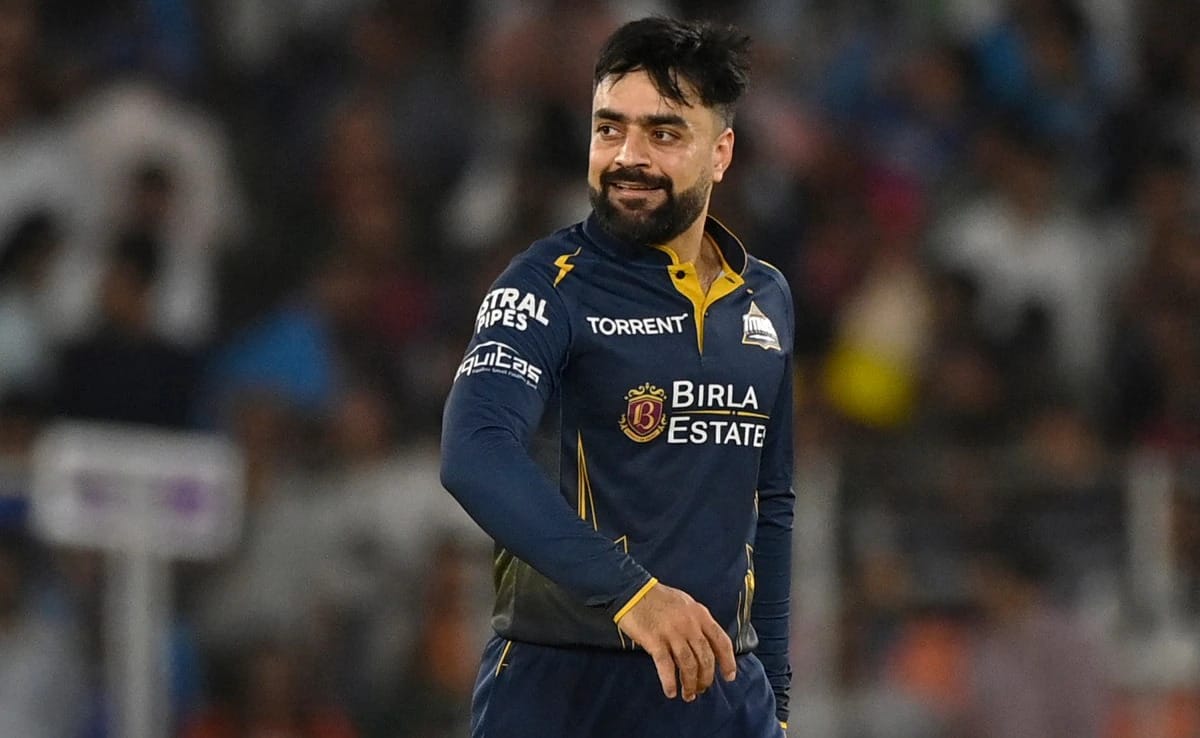
The business of professional sport is known to present strange questions but few have been discussed as extensively as the rumours surrounding the cricketing star Rashid Khan. Recently there have been rumors that the Afghan leg-spinner is being sought to adopt Indian citizenship. These tales spread so widely that even Rashid himself was forced to clear it up by making it clear that as much as he has been offered overtures, his heart has always been with Afghanistan. To a man of his vast international reputation, the fact that he chose to reject the prospect of a life in a country where he is virtually regarded like a king, speaks volumes of his own priorities and ethical sense of responsibility
The Truth to the Gossip.
The fan speculation should be distinguished and actual events. The notion of Rashid Khan merely changing his nationality came about mainly due to his great popularity in India where he has become a household name owing to his regular and match-winning performances in the Indian Premier League. Indian fans have over the years, pleaded, sometimes seriously, but often jokingly, to have him play in the Indian national side.
Rashid himself, in his own words, even in his reflections which he has recently given, has attested to the fact that he was actually urged by leading people to give a thought to Indian citizenship, particularly, of course, in view of the troubled and challenging situation in his native country. An appeal to reason was made in his favor: India was a stable place, a safer one, and there was a clear road ahead to play at the highest level of the sport. But his reply was based upon a profound feeling of loyalty. He left no doubt that he is not willing to play in any other nation other than his motherland. In the case of Rashid, being an Afghan cricketer does not represent a swapable identity, no matter the professional benefits or comfort that a different passport could offer.
Citizenship Legal Obstacles of All-Star Athlete.
There is a lot of confusion over the issue of foreign athletes and Indian citizenship. Most individuals suppose that it is easy or quick-tracked since one is a sports person globally or has high-level contacts. The legal framework that regulates the citizenship of Indians is a hard and fast rule in the reality and it lacks a certain fast-track lane that could accommodate talented sportspeople.
India has a policy of single citizenship. This happens to be the greatest challenge to any foreign athlete. The Citizenship Act of 1955 provides that one cannot have an Indian passport and at the same time he or she has the citizenship of a different country. When an international athlete desires to represent India on the international level, he/she must denounce his/her original nationality. This is not the mere step; this is the everlasting legal divorce between them and their home country. To an individual like Rashid Khan this would imply renouncing his Afghan identity to become an Indian citizen, something most professional athletes do not want to sacrifice.
Knowledge of the Representation Rules.
On top of the challenge of becoming a citizen, there is another layer of control to determine who will represent India in sports. In 2008, the Ministry of Youth Affairs and Sports made a decisive statement that transformed the situation of athletes. According to the rule, any person who would like to represent India on the international level should possess a valid Indian passport. The courts subsequently supported this, and this strengthened the fact that national representation is a sovereign right that is directly related to citizenship
This regulation practically seals the fate of those who may have an Overseas Citizen of India (OCI) card. Although the OCI card is a document of great value and enables people of Indian origin to live and work in the country, it does not enable them to become citizens of the country nor does it enable them to be able to represent the country in professional sporting events. The legal situation is rather unfriendly: until an athlete is willing to go through the entire, permanent process of naturalization, renounce his or her current passport, and devote himself or herself to the Indian state, he or she cannot participate in the competition as an Indian representative.
The Road to Naturalization.
The journey of a foreign national, who is not an Indian, towards citizenship is dictated by the naturalization process. This is a challenging path that takes a large amount of time. Applicants should have resided in India at least a year before their application. Moreover, they should have spent a total of eleven years in India between the period of twelve years preceding that last year.
This is done to make sure that the person has created a plausible long-lasting physical attachment to the nation. It is not just a couple of years of playing in a domestic league, or working in the country. Applicant should also have good character and adequate knowledge of a language listed in the Eighth Schedule of the Indian Constitution. As an athlete who is active, and in whose career, travelling and playing in different international leagues are a must, it is virtually impossible to comply with such stringent residency requirements.
The case of Rashid Khan serves as a reminder that sports and national identity are complex subjects. When the world of sports moves on movements and talent all over the globe, the world of law moves on the borders and strict commitments. When athletes opt to remain true to their roots, one tends to get the other side of them, which performance statistics can not explain. It was not only a matter of cricket but of the flag under which he grew up, which he had to honor, in spite of the other roads that were thrown across his path.