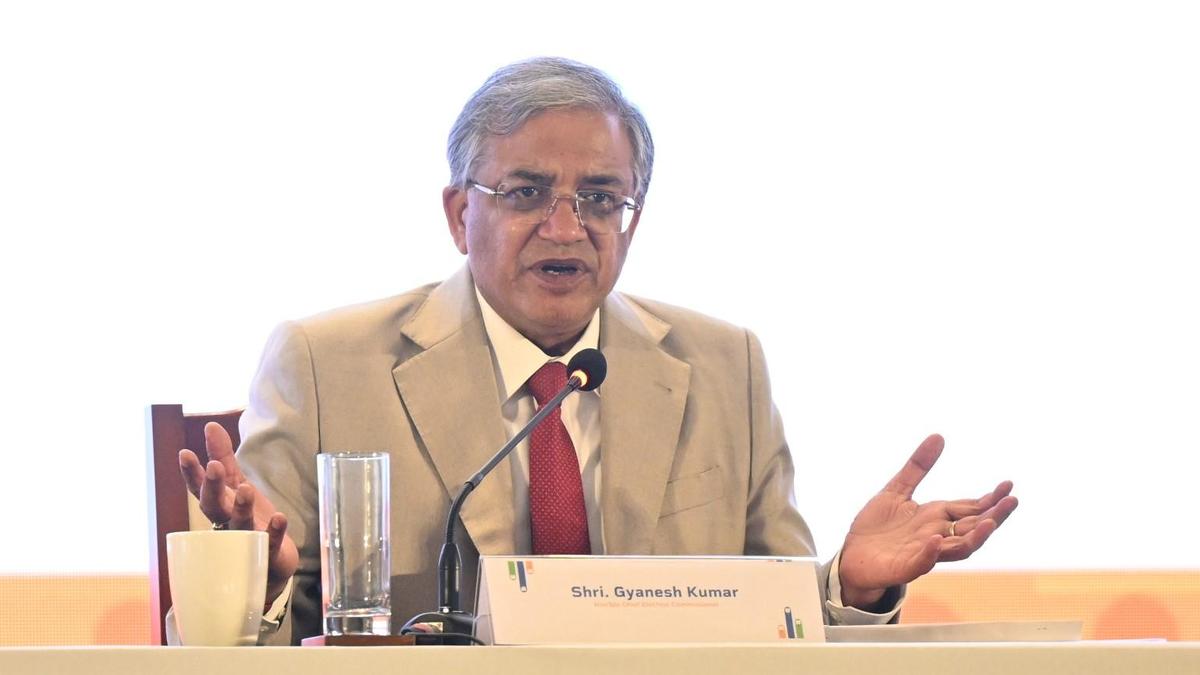
A significant development is being witnessed in the office of the Chief Election Commissioner, Gyanesh Kumar, in the political scene in New Delhi. Opposition groups are also considering a second attempt at formal proceedings after a recent effort to take formal action against the top election official. This follows just a few days after their original petition which had garnered the signatures of 193 Members of Parliament was rudely cut short in the chambers of Parliament.
To an outsider, the initial rejection was clear cut. On March 12, 2026, both the Speaker of the Lok Sabha, Om Birla, and the Chairman of the Rajya Sabha, C. P. Radhakrishnan, ruled out admitting the motions submitted. Since these motions never reached the first threshold to be admitted, the proper inquiry process, a high-stakes constitutional inquiry, never commenced. The judges who presided over the case have never offered detailed, enumerated grounds as to why the request was denied and so the opposition is left to struggle with a dead-end of the process
https://www.thehindu.com/news/national/opposition-to-move-fresh-motion-seeking-removal-of-cec-gyanesh-kumar/article70878328.ece
.
Procedural Hurdles Decoding.
A change in strategy is the main factor that is making this latest move headlines. It seems that the major actors in the INDIA bloc are currently examining the concrete, even though short feedback given by the presiding officers. Though the first rejection was a huge blow, it provided an insight into why such constitutional petitions are not taking off. Opponents leaders, who were privy to their internal deliberations, indicate that the earlier filings do not contain the detailed, concrete examples of purported misconduct that the parliamentary authorities seem to demand.
The new aim is to write a stronger paper. The opposition is still at its initial phases of developing a new version that would focus on correcting such technical gaps. They are trying to find specific incidents and definite facts that may meet the high standards that have to be met to admit a motion to remove. This is not just a political gimmick but a well-planned endeavor to meet the letter of the law that is, the stipulations in Article 324(5) of the Constitution of India.
The Constitutional Burden of the Office.
To understand the reason why this is such a heavy lift, it would be important to examine the protection of the Chief Election Commissioner. The Chief Election Commissioner has been given a status resembling that of a Supreme Court judge by the Constitution. This is by design. The authors of the Constitution were concerned that the individual in charge of such huge democratic processes in India be insulated against the fancies of the executive arm.
To get rid of the Chief Election Commissioner, it is not enough to have a majority vote during a normal legislative session. The Judges (Inquiry) Act, 1968, regulates the process. It is a multi-layered marathon. It takes a considerable number of members to get the conversation started, 100 in Lok Sabha, or 50 in the Rajya Sabha to sign a notice. In case of the presiding officer having to admit the motion, a three-member committee should be constituted to probe the claims of proven misbehaviour or incapacity. Such a committee would consist of a judge of the Supreme Court, a Chief Justice of a High Court and a leading legal personage. The case would only be brought to a vote in both Houses, by a special majority, after such a committee has found substance to the charges.
The Wider Political Environment.
The constant opposition towards Gyanesh Kumar is taking place with other tensions in Parliament. Much of the frustration today has been caused by issues relating to electoral rolls and claims of voter disenfranchisement. This is viewed by some of the opposition parties with the Trinamool Congress on the forefront as a much needed check in the constitutional organs.
The political arithmetic is however, complex. Recent legislative defeats of the government such as the defeat of the Constitution amendment bill on delimitation and women quotas appear to have given the opposition courage. They seem to be utilizing these parliamentary avenues as a way of indicating their displeasure with the way the current government is dealing with the independent constitutional institutions. The success of this new effort will all depend on their capacity to make a case that meets the high evidentiary bar that will be established by the presiding officers.
Up to this point, the discussions are still in their initial stages. The opposition still has to decide the logistics; whether to submit in both houses as they used to be previously, or to concentrate on one house so that they can make the most out of their political influence. It is certain that the following weeks will prove crucial in deciding whether this motion will continue to be merely a political declaration, or turn into a formal parliamentary investigation.
Parliament turns down CEC removal motion.
This news report will offer important background information about the parliamentary vote to dismiss the original impeachment motion against the Chief Election Commissioner which is important in comprehending the prevailing political situations.
http://googleusercontent.com/youtube_content/0