Introduction
In a landmark piece of legislation, the Lok Sabha voted down the proposed Constitution (131st Amendment) Bill, 2026, which sought to give the Lok Sabha more power by raising its number of seats to 850. After the rejection, the Union Government too determined to withdraw the accompanying Delimitation Bill. The consequences of this ruling are profound on the parliamentary system and political equilibrium in India.
Background of the Proposal.
The Constitution (131st Amendment) Bill came up with the aim of increasing, according to the increasing population of India, representation in the Lok Sabha. The proposal aimed at electing more representatives so as to have a better representation of the citizens across states.
At the same time the government was proposing a Delimitation Bill to redefine the constituency boundaries using revised population figures. Delimitation is vital whenever there is an increase in the number of seats since it helps in the equitable distribution of seats.
Amendment Purpose.
The main objective of the amendment was to render Parliament more representative. The growth of population in India has not been equal across states and as a result, there were disparities in representation.
There are certain constituencies that represent a huge population in comparison with others. Adding seats was viewed as a solution to this imbalance and enhance democratic representation.
Debate in the Lok Sabha
The Bill caused heated debate in Lok Sabha. Its supporters claimed that more seats needed to be added due to the realities of the population today to enhance democracy.
Nonetheless, some of the members expressed concern over the timing and implications of the proposal. Among the key issues was that, states that had more population growth would have more seats, which could change the balance of political power.
Federal Concerns
The Southern states and other parts raised concern that they would be left behind in regards to the proposed changes. These states have managed to keep population growth down over the years and were apprehensive about losing relative representation in Parliament.
This brought significant concerns regarding the balance and equity between states on the federal level.
Practical Challenges
Besides political considerations, other practical considerations regarding expanding the size of the Lok Sabha existed.
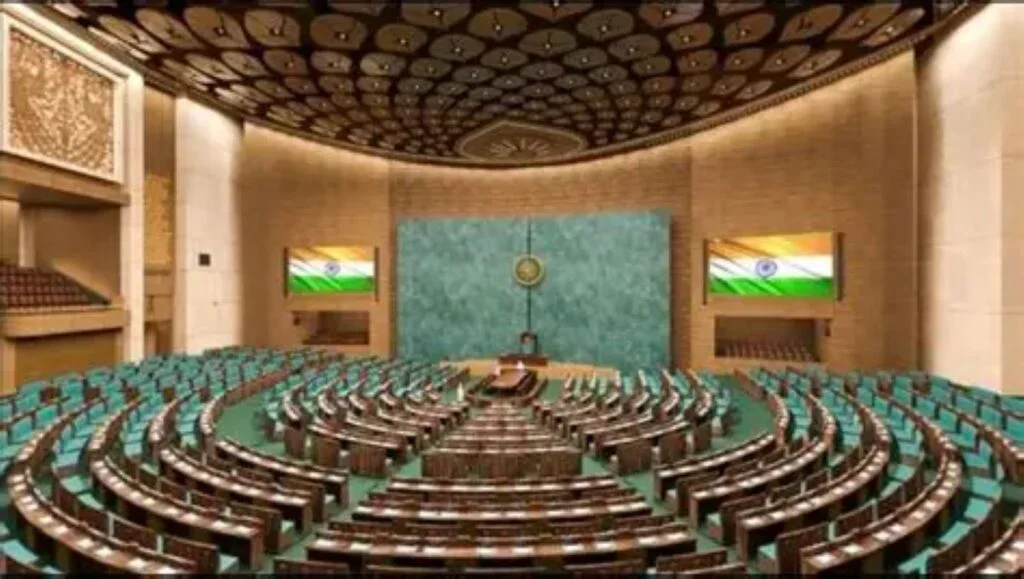
The 850-member house would demand enormous infrastructural adjustments, such as the building of the Parliament house, seats, and the administrative facilities.
It was also feared that increasing the size of the House would impact on the efficiency of debates and decision making.
The Bill was thrown out.
The Lok Sabha failed to pass the Constitution (131st Amendment) Bill after a lot of deliberations. The fact that not all members were in consensus was a major factor in its rejection.
The amendments made to the constitution are made with the help of a special majority so the opposition can stop any amendment in case of a significant opposition. The Bill failed to pass through the second reading is indicative of the difficulty in getting consensus over such significant structural alterations.
Delimitation Bill withdrawn.
After the amendment was rejected, the Centre withdrew the Delimitation Bill. Delimitation was directly proportional to the number of seats, so that, once the amendment was unsuccessful, it was not necessary to go through with it.
Such a withdrawal is a pointer that the government might be willing to rethink its approach or even come up with an updated proposal in the future.
Constitutional and Legal.
Article 368 of the Constitution provides that it can only be amended by a special majority in both Houses of Parliament. It also needs to be ratified by state legislatures, in certain cases.
This Bill was rejected demonstrating how hard it is to amend the provisions with the far-reaching political and federal consequences.
Impact on Representation
The ruling implies that the present strength of the Lok Sabha will not be reduced to 543 seats in the meantime. The problem of disproportional representation among the constituencies will persist.
Nevertheless, the discussion has highlighted the necessity of reforms in the future.
Political Implications
The political implications of the Bill being rejected are both to the ruling government and opposition parties. It brings out the difficulties of reaching an agreement on matters that influence the sharing of power.
The controversy has also placed regional issues on the spot, highlighting the significance of the cooperative federalism.
Future Possibilities
Delimitation and representation is a problem that is not likely to go away even though the Bill has been rejected. With the next census and future demographic changes, the need for reform will continue to be discussed.
The government can present a new idea that concerns the issues of various states and political forces.
The rejection of the Constitution (131st Amendment) Bill, 2026, and the withdrawal of the Delimitation Bill are a landmark in the history of Indian Parliament. Although the proposal was intended to enhance representation, it was met with intense resistance because of political, regional, and practical issues.
The process accentuates the intricacy of constitutional changes in the multinational nation such as India. It also highlights the importance of proper preparation, extensive consultation, and consensus-making prior to initiating significant structural changes to the democratic system.
Keywords
131st Constitutional Amendment, Lok Sabha amendment bill, 131st Constitutional Amendment, delimitation bill, withdrawn, Parliament India, representation issue, federalism India, seat increase debate, constitutional law India, political reform India, legislative news.