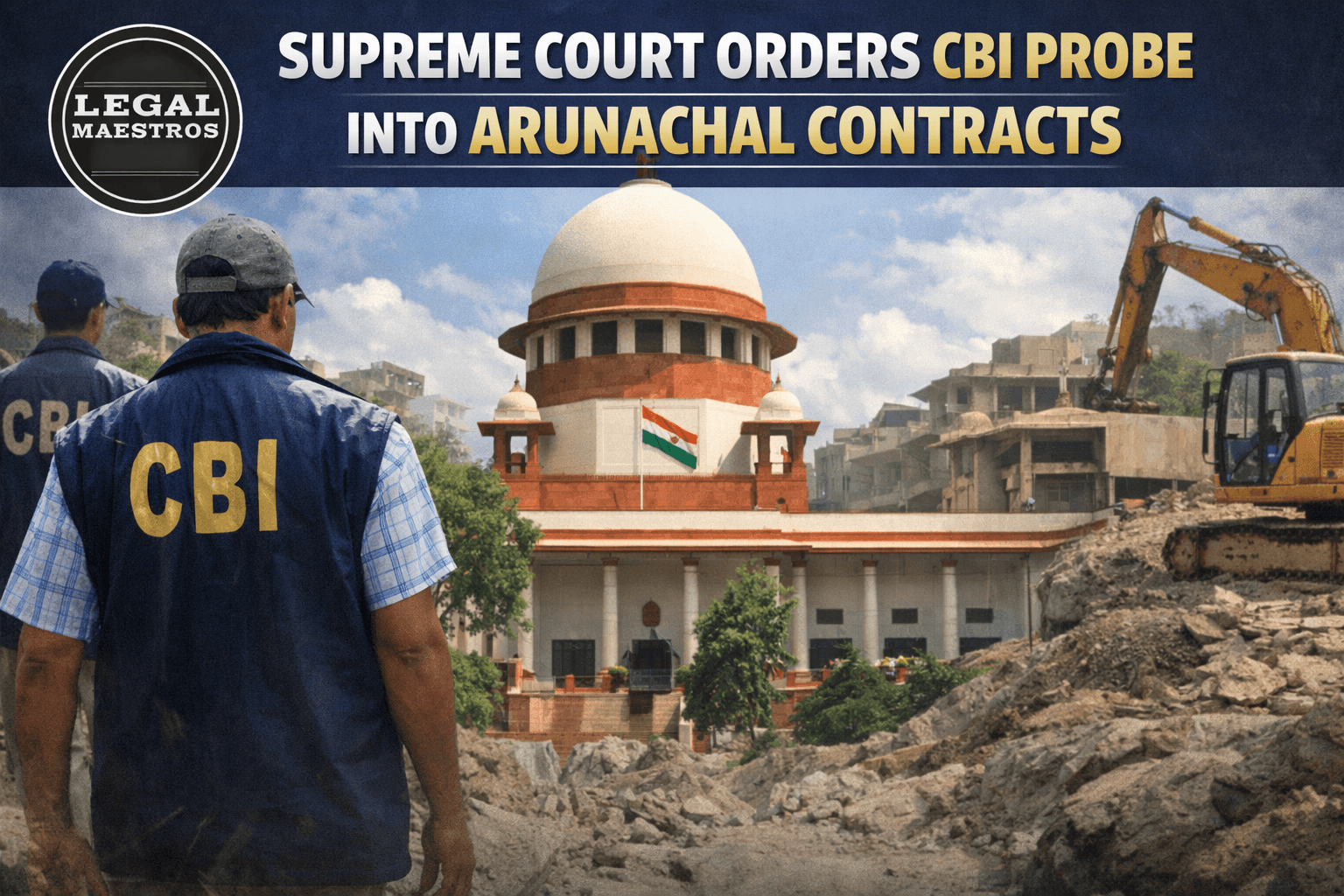
Strong Stance on Transparency: Supreme Court Orders CBI Investigation on Arunachal Pradesh Contracts.
Introduction
In Save Mon Region Federation vs State of Arunachal Pradesh and others, the Supreme Court of India made a historic ruling, which emphasized the need to have transparency and fairness in the contracts awarded to the citizens.
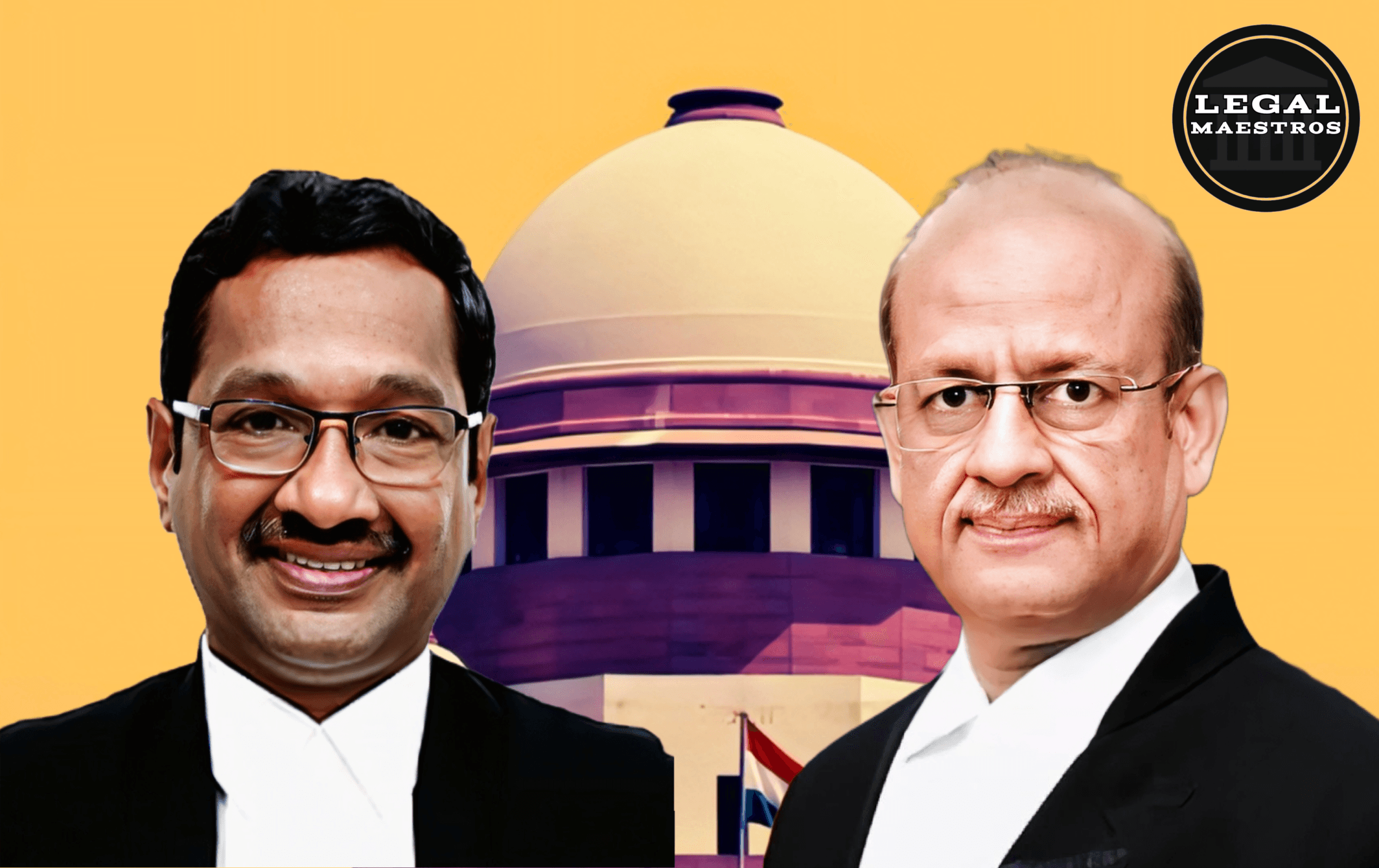
On the 6 April 2026, Justice Vikram Nath, Justice Sandeep Mehta, and Justice N. V. Anjaria passed the judgment.
In this case, there are grave charges of corruption, favouritism and transparency lapse in the process of granting government contracts to Arunachal Pradesh.
Background of the Case
An organisation known as Save Mon Region Federation filed the case as a public interest litigation in the Article 32 of the Constitution.
The petitioners claimed that the awarding of the public works contracts in the state of Arunachal Pradesh was not being done fairly.
They claimed that:
Contract awards were not done in a proper manner.
Some companies and individuals who were affiliated to influential political figures were favoured severally.
Some essential documents concerning contracts were not present.
The petitioners insisted on an autonomous enquiry by such agencies as CBI or Special Investigation Team.
Primary Question in the Case.
Whether the allegations were serious enough to warrant an independent investigation by Central Bureau of Investigation was the main question before the Court.
The Court needed to determine if the current system was reliable or not and that an independent investigation was needed so that the justice could be served.
Learning Public Procurement Law.
The Court stated that in issuing contracts by the government, it is not a party acting privately but rather a trustee of the resources of the population.
Thus, all decisions should be made in accordance with the principles of fairness, transparency, and equality in accordance with Article 14 of the Constitution.
The Court pointed out that public contracts are normally to be won through open and competitive tendering.
Any exemption of this rule should be explained by specific and documented reasons.
Results of the Record and CAG Report.
The Court considered closely the material that had been presented before it, such as a report by the Comptroller and Auditor General (CAG).
The results were worrying:
Most of the projects were carried out without tendering.
Important documents like vouchers and tender records were missing.
Even audit authorities were unable to check the ways that contracts were awarded in certain situations.
Patterns of irregularities were repeated in various departments.
The Court observed that they were not minor missteps but major concerns that impacted on the accountability of the populace.
Arguments of the State Government
The State of Arunachal Pradesh defended itself by saying:
The conditions of locality and legal provisions necessitated the use of work orders.
Related parties got only a small percentage of the contracts.
The legislature should review the audit report and not the Court.
The Supreme Court however dismissed these arguments.
It believed that not even one instance of inequity in the government contracts is permissible under the Constitution.
Court’s Analysis
The Court observed that:
The lack of documentation is a cause of a great concern.
Absence of transparency in contract awarding is against the constitutional principles.
By the virtue of using work orders, fair procedures cannot be sidelined.
Potential illegality cannot be covered by statistical arguments.
The Court put it clear that administrative convenience is not as significant as public trust.
Independent Investigation Requirement.
The Court determined that:
Even high-ranking public officials were implicated in the claims.
The current system might not be able to give people confidence.
The case entailed governmental funds on a mass scale and grave accusations.
Thus, there was a need to conduct an independent investigation.
The Court found that an agency such as the Central Bureau of Investigation was the only agency that could investigate such issues.
Final Judgment
The Supreme Court ordered the CBI to:
Carry out a primary investigation.
Research 2015 to 2025 contracts and work orders.
Review tender process, lack of records, and funds.
Research relationships between contractors and political leaders.
The State government was instructed to provide full co-operation and keep all records.
The Court further explained that it was not ruling guilt rather it was merely ordering an investigation.
Significance of the Judgment
This decision is highly significant as it:
Enhances accountability of government contracts.
Gives a powerful warning about corruption and favouritism.
Prevents the abuse of public resources.
Strengthens the fact that no one is above the law.
Conclusion
The ruling of the Supreme Court indicates that it is keen on safeguarding public interest and in accountability in governance.
The Court has gone a long way to ensuring fairness and restoring the trust of the citizens by ordering a CBI investigation.
The case will have a long-term effect on the awarding of public contracts in India.
Keywords
Arunachal Pradesh, Supreme Court contracts, Justice Vikram Nath, Justice Sandeep Mehta, Justice N V Anjaria, CBI investigation, public procurement, corruption charges, Article 14, transparency, CAG report.