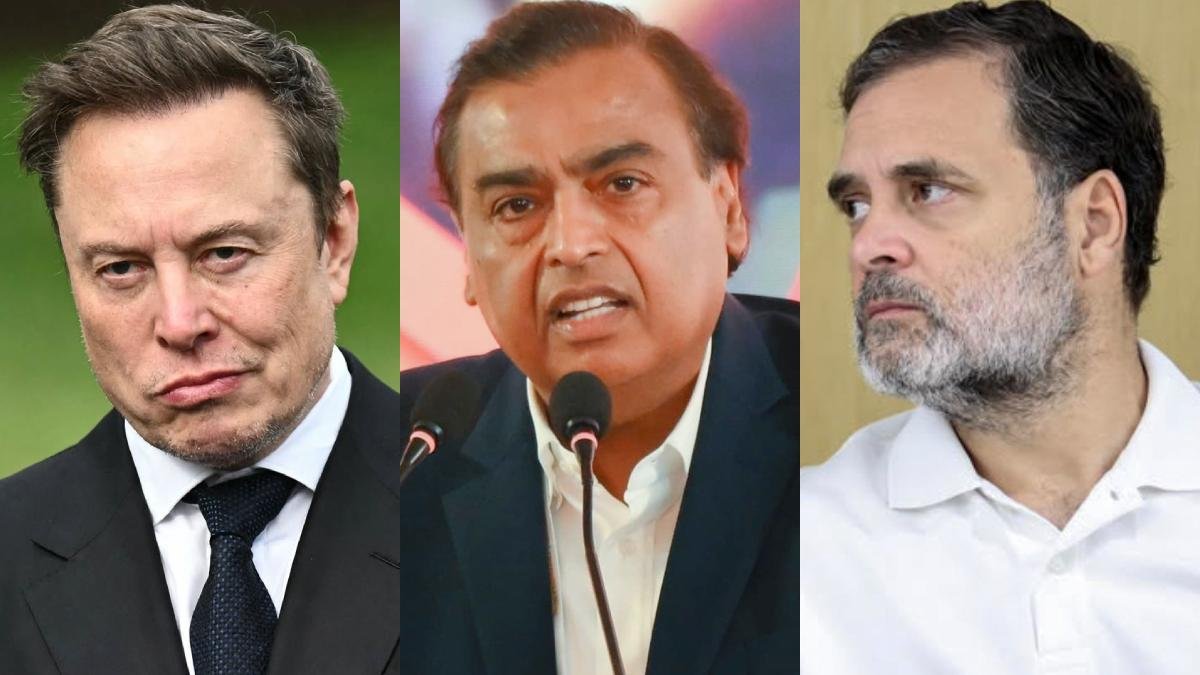
Elon Musk’s bid to deploy Starlink satellite Internet services in India has reignited a long-standing debate on competition, regulatory oversight and business influence. Musk announced on October 7, 2026, that he had made those businesses’ interests “difficult” by preventing Starlink’s entry into India. The comments triggered speculation that Musk was referencing India’s telecoms barons, chief among them Mukesh Ambani’s Reliance Jio. The Indian government denied being hostile to any particular group of providers and said the approval process was similar across the board. The controversy raises an interesting legal question: When regulatory approval is delayed, can a company challenge a delay under India’s competition law?
Why Is Starlink’s Entry Into India Delayed?
Starlink is a satellite internet provider which is operated by Elon Musk’s company, SpaceX. Its technology is especially relevant for rural locations, where setting up fibre broadband and mobile connections can be costly or difficult. India might be a big target market since satellite internet can improve coverage in hilly, remote and low-income regions.
Starlink has received some key regulatory approvals such as a license from the Department of Telecommunications and approval from the Indian National Space Promotion and Authorisation Centre but has yet to enter commercial services in India as there are other conditions that need to be met, including security clearances and spectrum-sharing arrangements. In October 2026, Communications Minister Jyotiraditya Scindia said three satellite communication operators had been licensed but had yet to clear security conditions.
What Is the Dispute Between Elon Musk and Mukesh Ambani?
The spat is emblematic of a broader debate about how India should manage satellite broadband. Reliance Jio and Bharti Airtel control large chunks of the country’s telecoms sector and have also built up satellite ambitions of their own. Musk said traditional businesses have prevented Starlink from breaking into the Indian market, while the government has said the subsidy application was granted on equal terms.
However, these community-based complaints cannot be said to prove any mala fide intent by Mukesh Ambani or Reliance Jio in manipulating the licensing process. The government has clarified that Starlink and satellite service providers are also government security-cleared entities. The critical difference lies in the fact that there is a legal difference between a firm challenging a rival’s plan of conducting business by making formal submissions before the regulators and conducting an activity that is explicitly covered by competition law.
Can the Competition Commission of India Investigate the Matter?
The Competition Act, 2002, is the main law in India designed to prevent anti-competitive practices. Under section 3, anti-competitive agreements are unlawful while under section 4, the abuse of a dominant position is unlawful. These provisions will come into play if the evidence suggest that there has been an agreement to squeeze out Starlink or that the dominant position has been abused by an enterprise.
For instance, a practice of cartel by rivals to prevent a new entrant or conduct of a larger undertaking which prevents any other person from entering into a market of trade or business could be qualified for a ‘probe’ under the Act. Section 4 of the Act has explicitly provided activities such as denial of market access (with the caveat of statutory requirements and circumstances of the case). The Competition Commission of India would require proof of the purported activity, the market concerned, position of both the entities and effect of such actions upon competition before coming to any conclusion about infringement.
But delay by a government department in issuing a licence does not constitute, in itself, a breach of competition law. There would have to be evidence linking the delay to behaviour that is unlawful under the Competition Act. If delay is due to security considerations, spectrum allocation or other such regulatory requirements that are applied on a proper basis, then that is a different circumstance to a case where there is an established attempt to exclude a competitor.
Can Starlink Challenge the Government’s Decision in Court?
Starlink may have grounds to file a writ of judicial review if it considers that the delayed decision or administration of a decision by a regulatory authority would be arbitrary, unreasonable, discriminatory, or in contravention of the rule of law. According to Article 14 of the Constitution, the law should provide for equality before the law and equal protection of the laws.
A High Court under Article 226 could challenge on the grounds that the relevant procedure had been followed, relevant factors considered and powers exercised within the bounds of law. Depending on the circumstances, a company could pray for a direction directing the authorities to exercise their power to consider or decide an application as soon as possible in the manner prescribed by law. It could stop short of granting a licence or spectrum until the security and technical questions are decided.
There’s also a difference between licensing and spectrum assignment. The Department of Telecommunications notes: ‘A licence in the licensing schedule as also any permission granted for use of spectrum through spectrum assignment, are distinctly two different things. A licence may not automatically carry the right to use spectrum and spectrum allocation requires separate assignment in the spectrum allocation schedule under the spectrum framework’.
What Does the Dispute Mean for Competition in India?
The satellite broadband market in India is emerging in a complex regulatory landscape that is caught between conflicting imperatives. These are those of providing access, attracting investment, upholding national security and ensuring fair competition between industry players. The government’s intervention in the space is valid but regulatory processes can’t be ad hoc.
In the case of an allegation that regulators have been skewed by competitors, a company would need evidence backing up the claim, not just the delay to its launch. And on the more far-fetched prospect of a complaint about capricious government action, constitutional judicial review might be more relevant than an action under competition law. Legal strategy depends on who was supposedly wrong and what evidence exists.
Currently, the public record does not suggest the delays were due to Mukesh Ambani or Reliance Jio or breach of the Competition Act. The issue is the same – are the necessary approvals going through? And that will be a matter of evidence, final government decisions and legal proceedings by the parties.