Current Legal Update

India Faces COVID-19 Revival: Division of Powers Under Schedule VII for Union and State Governments in Public Health Crisis Response

As COVID-19 cases rise again in India, the division of powers under Schedule VII becomes crucial. It defines how Union and State governments share responsibilities in managing public health, emphasizing the importance of cooperative federalism during national health emergencies.

As COVID-19 cases rise again in India, the division of powers under Schedule VII becomes crucial. It defines how Union and State governments share responsibilities in managing public health, emphasizing the importance of cooperative federalism during national health emergencies.

Current Legal Update

Intensifying Heatwaves in Rajasthan: Constitutional Analysis of India’s Environmental Laws and Climate Adaptation Gaps

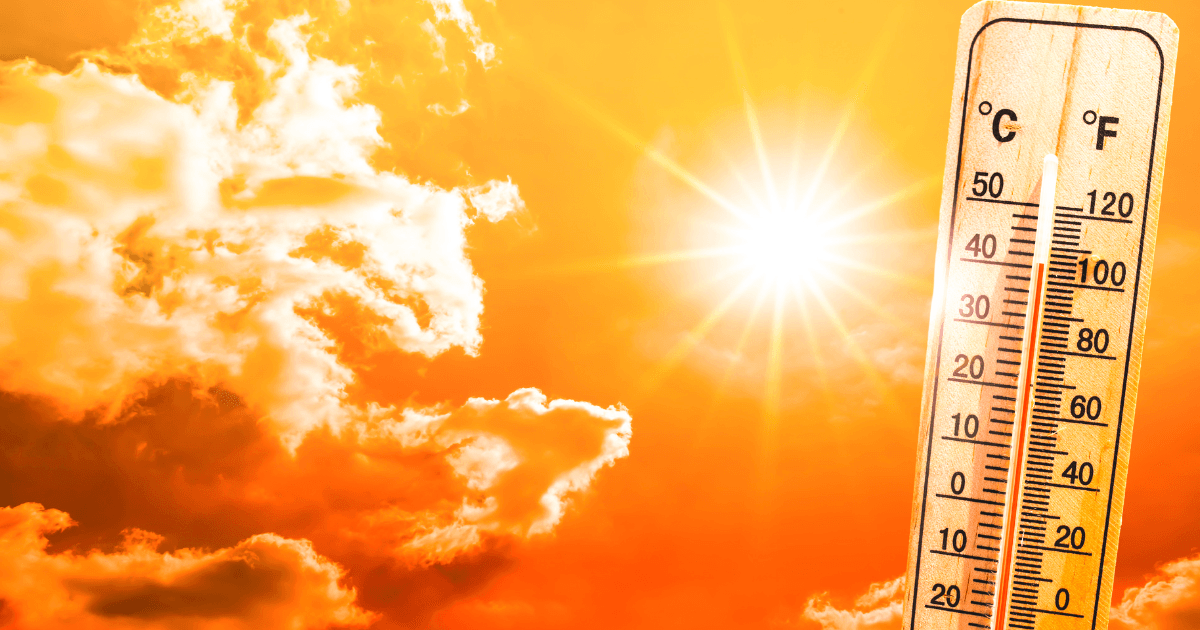
The state of Rajasthan has emerged as a climate hotspot, with heatwaves intensifying both in frequency and severity over the past decade. Temperatures exceeding 45°C have become alarmingly common, placing immense pressure on public health systems, water resources, and vulnerable communities. Despite the gravity of the crisis, India’s environmental legal framework has struggled to evolve from a conservation-centric approach to one that adequately addresses climate adaptation and resilience.

At the constitutional level, Article 21—the right to life—has been interpreted by Indian courts to include the right to a clean and healthy environment. Yet, in practice, the application of this right in the context of climate-induced disasters remains limited and inconsistent. While Article 48A of the Directive Principles of State Policy calls for the protection and improvement of the environment, and Article 51A(g) places a duty on citizens to safeguard natural resources, there is a notable absence of enforceable mechanisms that translate these provisions into meaningful climate action, especially at the state level.

This gap is particularly evident in Rajasthan, where legal mandates and disaster management policies remain fragmented and reactive rather than preventive or adaptive. State action has often been guided by short-term relief measures rather than long-term climate resilience planning. Moreover, the lack of climate-specific legislation results in an over-reliance on generic environmental laws and judicial activism, which, while valuable, cannot substitute for a coherent statutory framework.

This excerpt lays the groundwork for a deeper analysis of how constitutional principles and environmental statutes can and must evolve to meet the unprecedented challenges posed by climate change in India’s most vulnerable regions.

Current Legal Update

Linking Delhi Heatwaves to Article 21: Protecting the Constitutional Right to Life Amid Climate Crisis

The heightening heatwaves in Delhi drive home the urgency to tackle climate change as an issue of human rights. The right to life, as under Article 21 of the Indian Constitution, includes the right to a clean and stable environment. The judiciary acknowledging this right vis-a-vis the negative impacts of climate change is a responsibility placed on the state to take viable steps to abate these consequences. This involves setting up detailed heat action plans, encouraging sustainable city planning, maintaining access to primary resources such as water, and safeguarding at-risk populations. Ensuring adherence to these roles is essential for the protection of Delhi’s citizen constitutional rights from the intensifying climate crisis.

CRIMINAL LAW

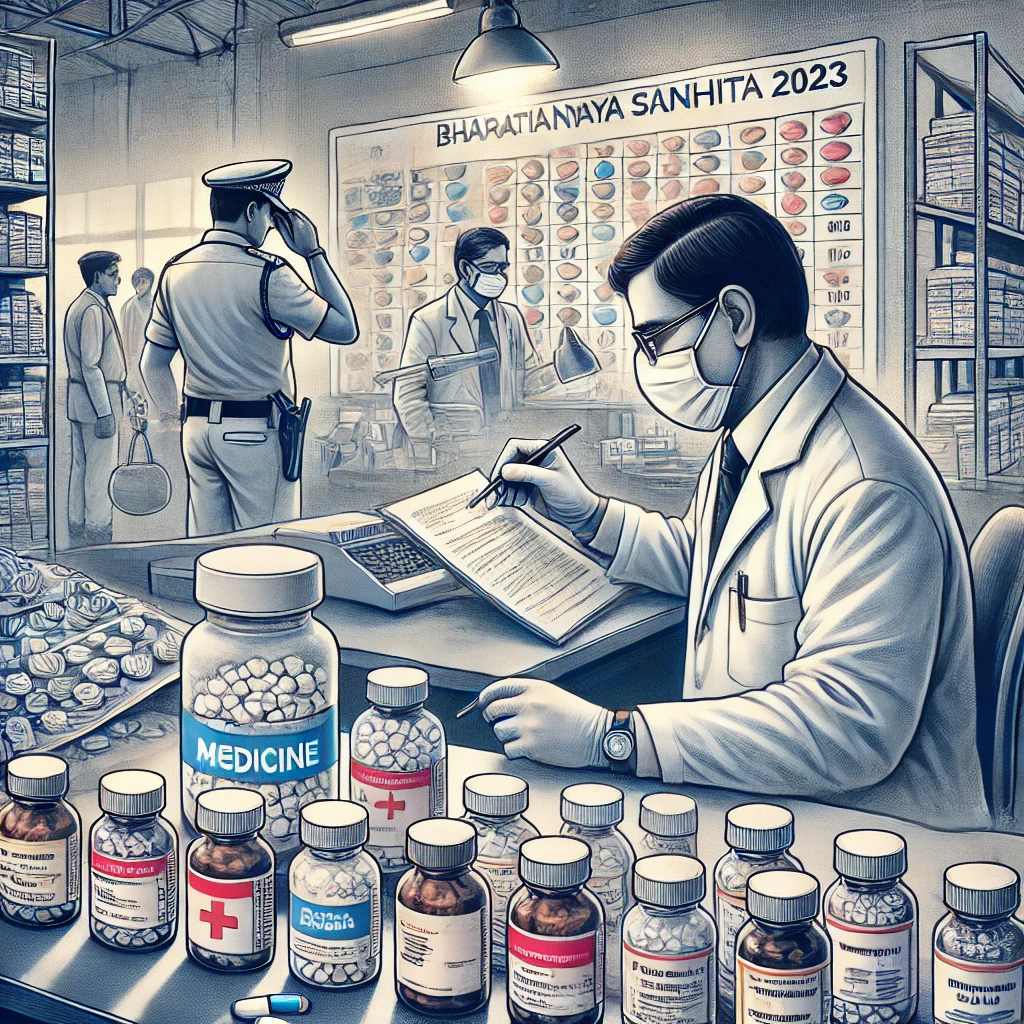
“Ensuring Safety in Medicine: Bharatiya Nyaya Sanhita 2023 on Drug Adulteration and Mislabeling

The Bharatiya Nyaya Sanhita (BNS), 2023, from July 1, 2024, enhances protection against drug adulteration and misbranding to maintain medicinal safety in India. Adulterating drugs with intent to cause harm under Section 274 carries a maximum of 7 years’ imprisonment, while selling misbranded or spurious drugs under Section 275 is dealt with similarly. Substituting provisions of the Indian Penal Code, these sections aim at acts endangering public health with a focus on deterrence by imposing severe punishment. The BNS is aligned with the Drugs and Cosmetics Act, augmenting accountability within the pharmaceutical industry and safeguarding consumers against dangerous medical products.

CRIMINAL LAW

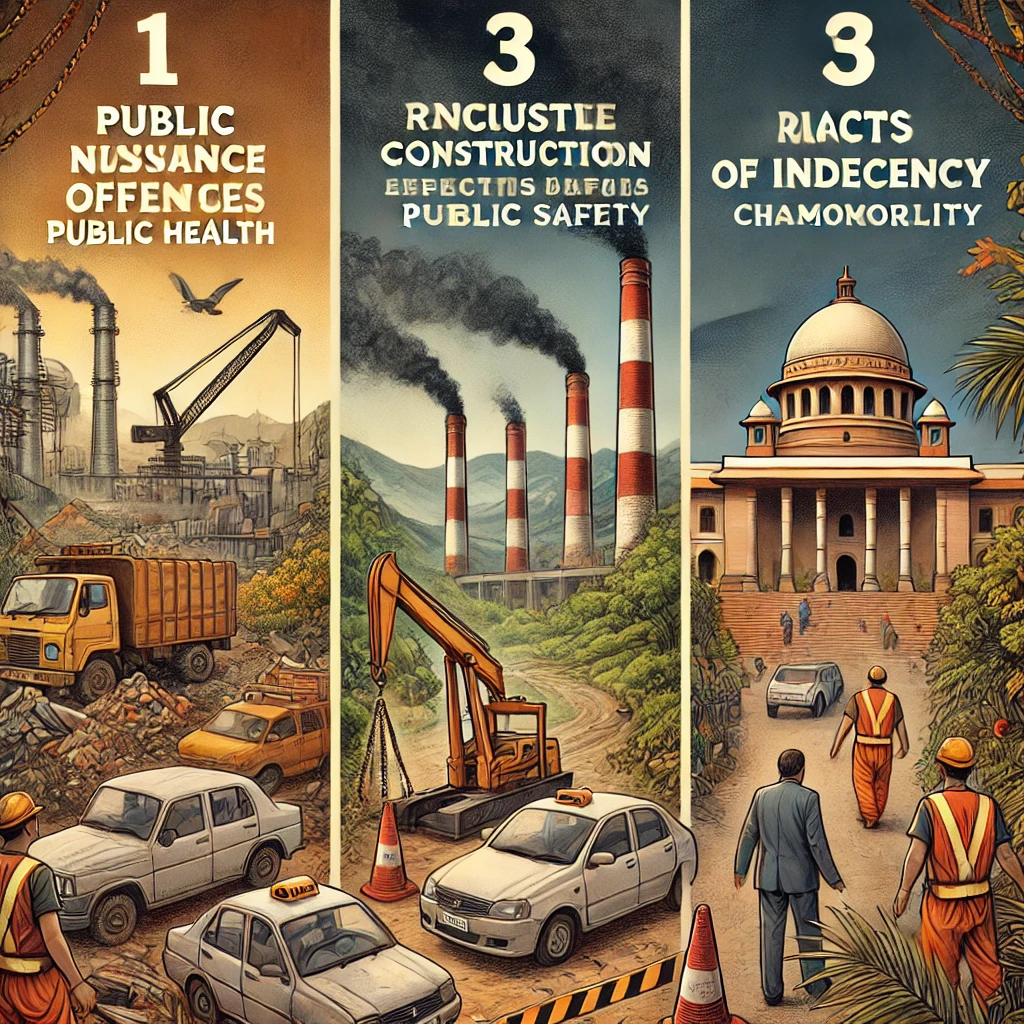
Public Nuisance Offenses in Bharatiya Nyaya Sanhita, 2023: Public Health, Safety, and Morality

The Bharatiya Nyaya Sanhita (BNS), 2023, which came into effect on 1st July, 2024, supersedes the Indian Penal Code, dealing with public nuisance crimes under Chapter XV. Sections 268-295 describe actions affecting public health, security, and morality, including the propagation of infectious diseases (Section 271), contamination of water (Section 277), and obscene behaviour (Section 296). Punishments range from fines to imprisonment, depending upon the gravity, with Section 292 prescribing up to ₹1,000 for general public nuisances. This model updates legal responses to prioritize public welfare and moral decency and to add community service for minor offenses, in sync with the needs of modern society.