Jio Airtel Duopoly Under Scrutiny: How the Competition Act, 2002 Addresses Anti-Competitive Practices in India’s Telecom Sector
It has also seen a stark turn in the healthcare sector, with the telecom market moving from a pool of…
Keeping Pace with Legal Change
It has also seen a stark turn in the healthcare sector, with the telecom market moving from a pool of…
The Indian electric car market is a tale of innovation and hope and companies such as Ola Electric are leading…
In the persisting conflict between old-fashioned auto-rickshaw drivers and taxis and the new breed of vehicles providing bike taxis such…
The following paper will discuss the case of bribery with alleged NMC doctor during the testing in a medical college, including the details of this event and the punishment that will follow under the preamble of the Prevention of Corruption Act, 1988 of India. It points out to the strict measures, blacklisting and sanctioning the involved college, taken by the NMC in upholding integrity in medical education.
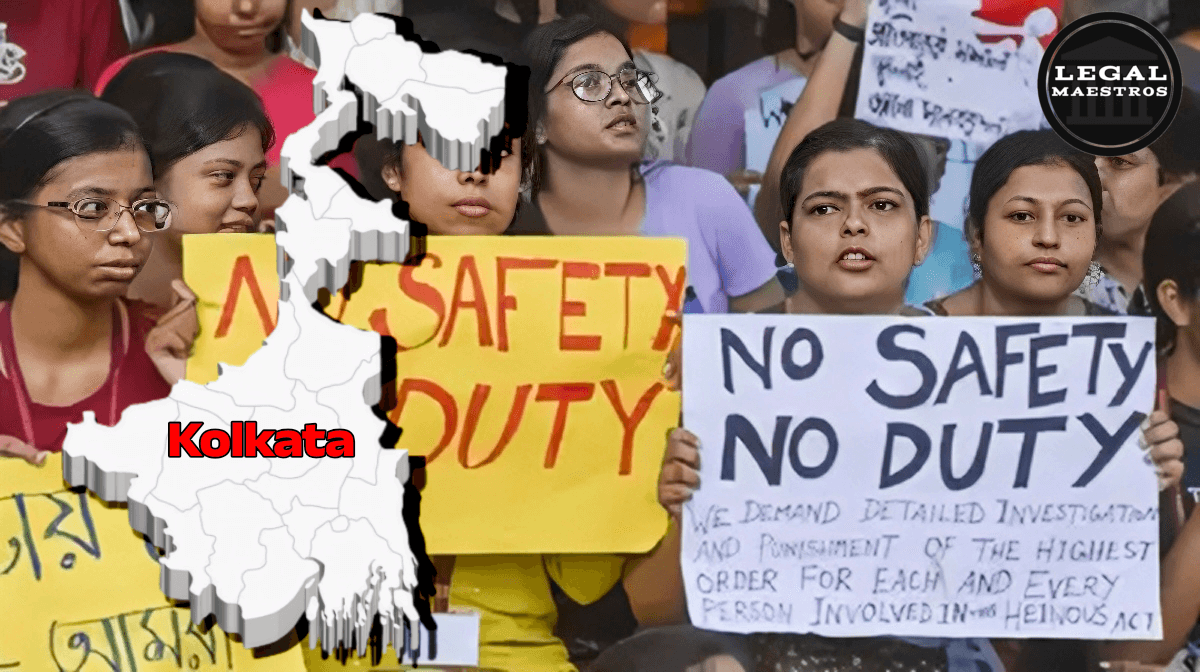
This article discusses two recent cases of the RG Kar Medical College Kolkata and a college law College of South Kolkata, with a view of bringing light to the issue of female safety in academic institutions. It outlines legal measures, societal reactions, and the available legal framework to the cases of these crimes, and stressed the necessity to deploy effective safety measures.
This article focuses on rhetoric used by leaders of MNS based on language in Maharashtra that presents a challenge over constitutional rights, that is, freedom of speech versus freedom of order. It outlines the existence of Indian laws that bear relevance to hate speech and examines past and contemporary examples with attention to the damages on the basic rights and the position of the regulators to maintain conformity to the constitutional ideals.
The purpose of this page is to provide an explanation of Sections 12, 13, and 14 of the Bharatiya Nagarik Suraksha Sanhita, 2023. These sections outline the local jurisdiction, subordination, and powers of Judicial and Executive Magistrates in straightforward English. Additionally, this article includes all of the most important provisions along with practical illustrations.
With a particular emphasis on Sections 6, 7, and 8, this article provides an explanation of the composition and organizational structure of criminal courts and offices that fall under the jurisdiction of the Bharatiya Nagarik Suraksha Sanhita, 2023. Using straightforward language, it provides information regarding the categorization, jurisdiction, appointments, and operational procedures of the judicial system.
There is a growing concern in India regarding cyber fraud that occurs through WhatsApp photos. Both the Information Technology Act of 2000 and the Bharatiya Nyaya Sanhita of 2023 detail the severe penalties that are stipulated for offenses of this nature. In this article, important legal provisions and the implications of those provisions are discussed.
The state of Rajasthan has emerged as a climate hotspot, with heatwaves intensifying both in frequency and severity over the past decade. Temperatures exceeding 45°C have become alarmingly common, placing immense pressure on public health systems, water resources, and vulnerable communities. Despite the gravity of the crisis, India’s environmental legal framework has struggled to evolve from a conservation-centric approach to one that adequately addresses climate adaptation and resilience.
At the constitutional level, Article 21—the right to life—has been interpreted by Indian courts to include the right to a clean and healthy environment. Yet, in practice, the application of this right in the context of climate-induced disasters remains limited and inconsistent. While Article 48A of the Directive Principles of State Policy calls for the protection and improvement of the environment, and Article 51A(g) places a duty on citizens to safeguard natural resources, there is a notable absence of enforceable mechanisms that translate these provisions into meaningful climate action, especially at the state level.
This gap is particularly evident in Rajasthan, where legal mandates and disaster management policies remain fragmented and reactive rather than preventive or adaptive. State action has often been guided by short-term relief measures rather than long-term climate resilience planning. Moreover, the lack of climate-specific legislation results in an over-reliance on generic environmental laws and judicial activism, which, while valuable, cannot substitute for a coherent statutory framework.
This excerpt lays the groundwork for a deeper analysis of how constitutional principles and environmental statutes can and must evolve to meet the unprecedented challenges posed by climate change in India’s most vulnerable regions.