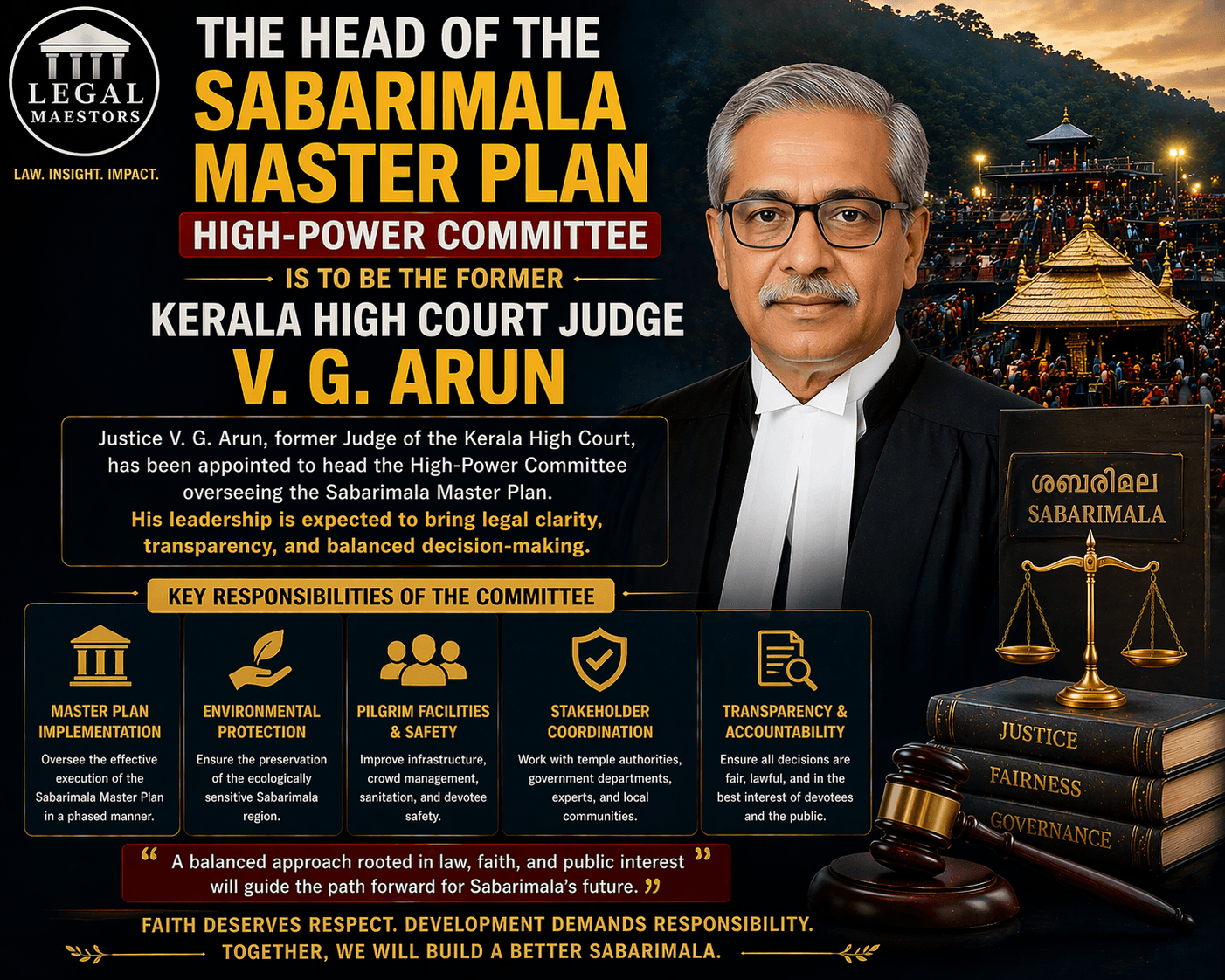
The Head of the Sabarimala Master Plan High-Power Committee is to be the former Kerala High Court Judge V. G. Arun.
. Introduction As a big step in managing and future planning of one of the most frequent pilgrimage sites in…
Keeping Pace with Legal Change
. Introduction As a big step in managing and future planning of one of the most frequent pilgrimage sites in…
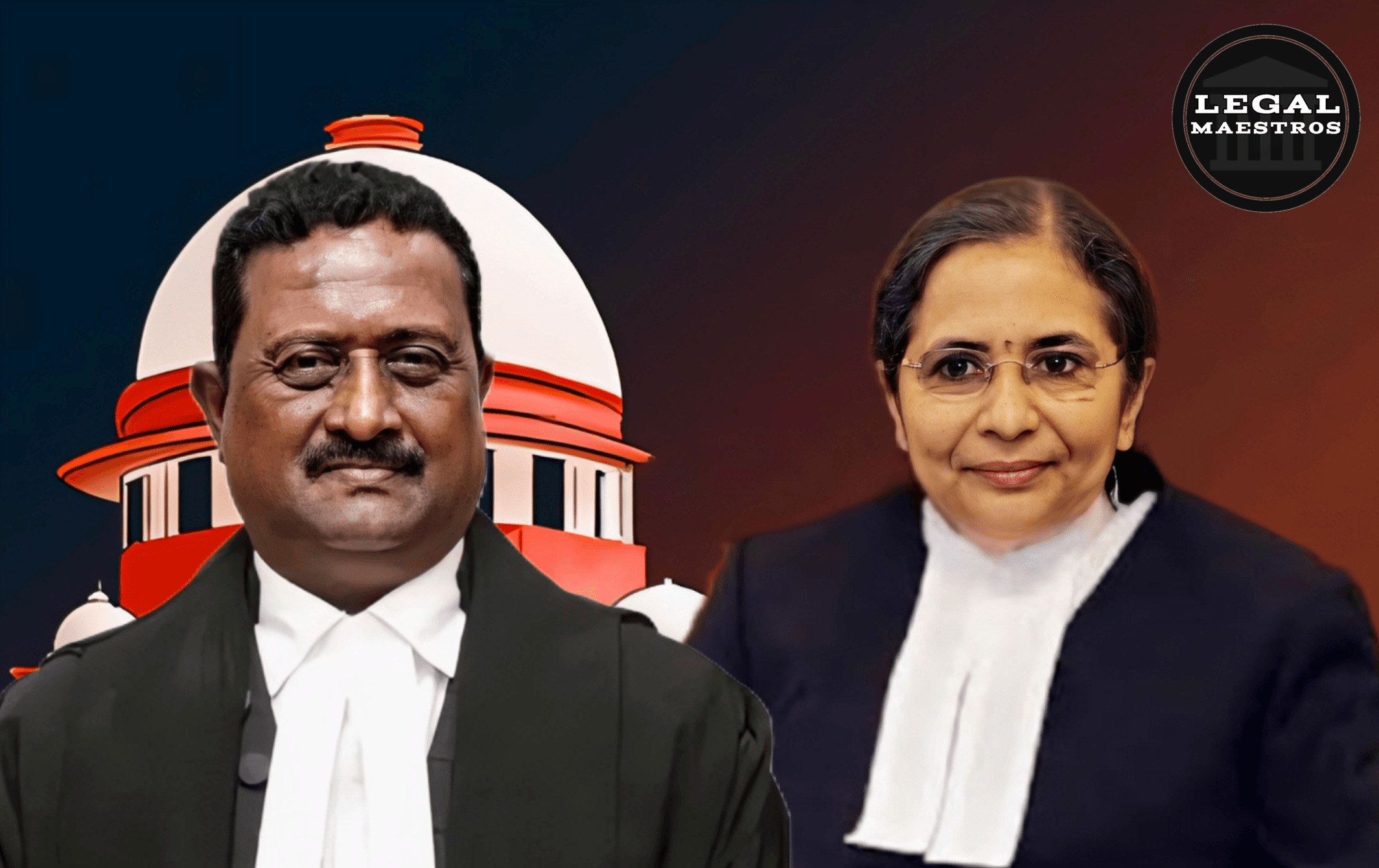
The President of India has also taken a firm stand in a long protracted judicial administrative issue on a High Court judge. Justice J. Nisha Banu, who is a current judge at the Madras High Court, has been officially instructed to take her new position in the Kerala High Court.
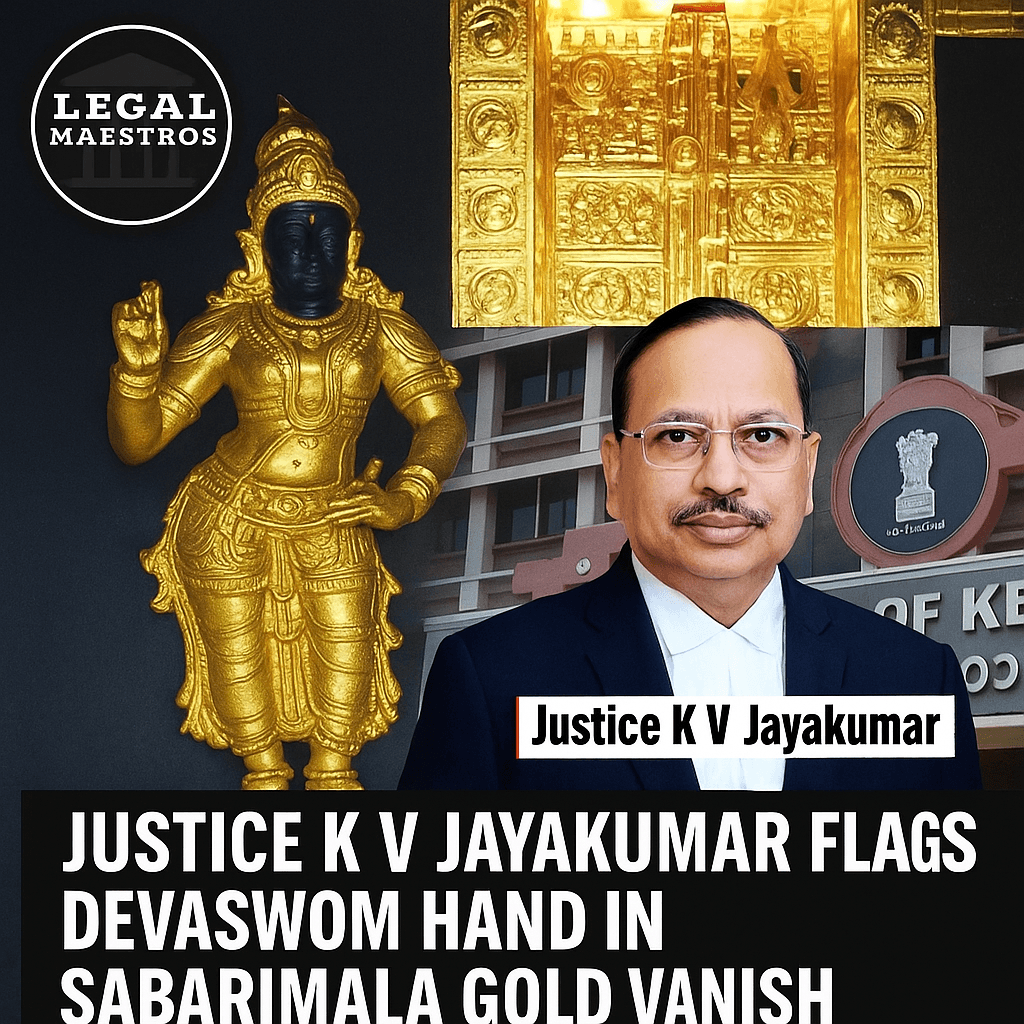
A highly alarming report to the Kerala High Court has given grave concerns about how the Sabarimala temple was run. Major irregularities in the treasury of the temple have been raised by Justice K V Jayakumar who sits as the Sabarimala Special Commissioner.
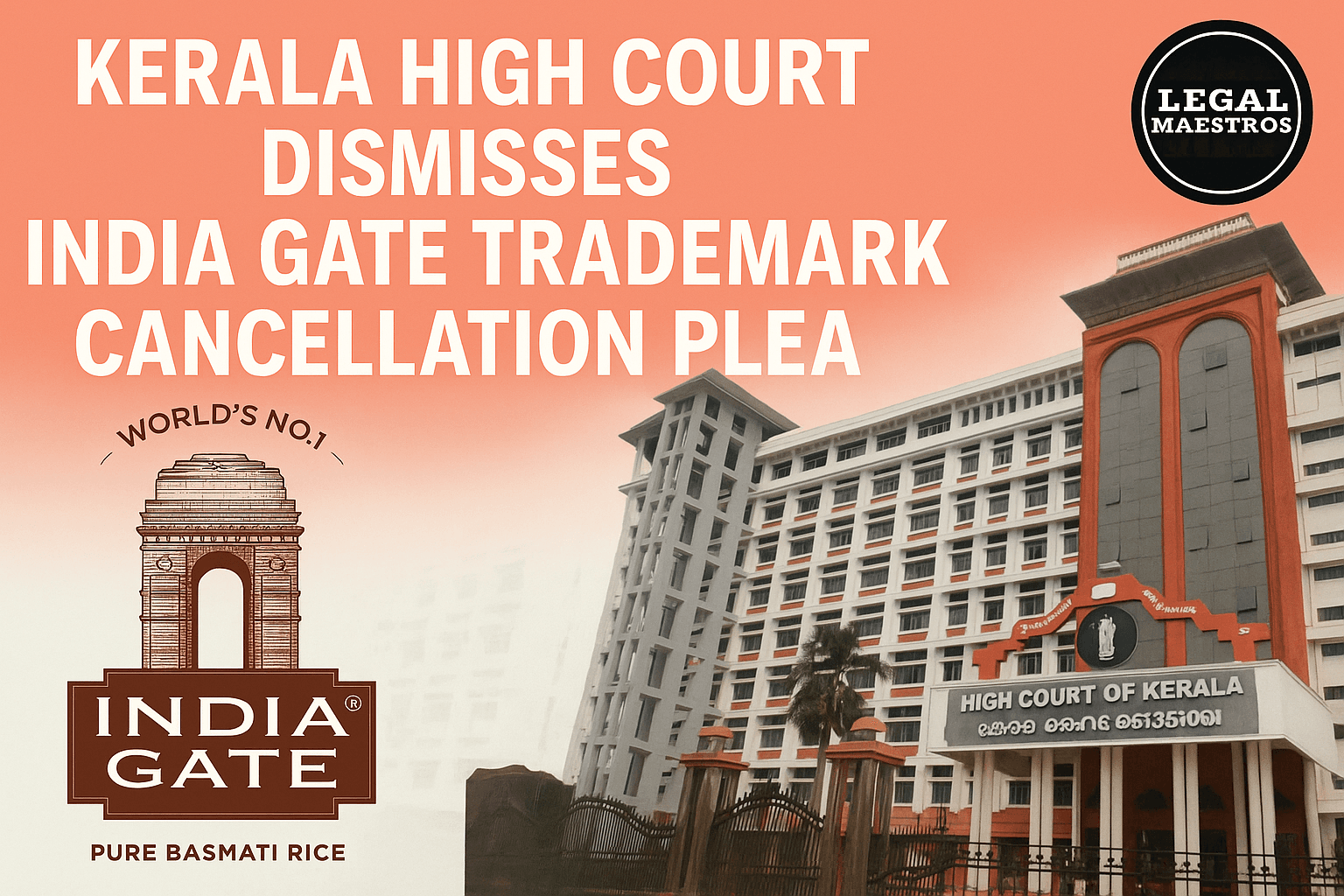
The Kerala High Court has quashed a petition to cancel the famous trademark of the India Gate in a major case on the intellectual property law. It is the famous trademark of the so-called basmati rice manufactured by a company named KRBL Limited situated in Delhi
Background of the Government Order On 16 July 2025, the Government of Kerala gave an order permitting the local bodies…
In Mathai M.V. v. State GST, the Kerala High Court held that GST notices issued through WhatsApp are not legitimate under Section 169 of the CGST Act. The court emphasized that compliance with procedure and statutory means such as registered post or e-mail is to be followed for legal notice. It held that WhatsApp communication, which is allowed only as a pandemic exception, is against natural justice when used otherwise. The order of confiscation was therefore set aside, and fresh notice was directed.
The Kerala High Court instructed the CBFC to issue a censor certificate for the Malayalam movie JSK: Janaki v/s State of Kerala, denying excessive censorship for alleged religious insensitivity. The court ruled that minor alterations were adequate and stressed that artistic freedom under Articles 19(1)(a) and 19(1)(g) should not be stifled by subjective criteria. The decision is an important precedent balancing creative expression with communal sensibility within constitutional limits.
In a landmark decision for maritime law and environmental responsibility, Kerala High Court has issued a conditional arrest of the…
A Public Interest Litigation has been moved in the Kerala High Court in the wake of the building collapse at the old bathroom block at Kottayam Medical College Hospital that resulted in the death of one woman and left three others injured. The PIL points to gross administrative failures, infrastructure deterioration, and seeks judicial intervention for ensuring hospital safety and responsibility.
This paper will analyse a ruling of the Supreme Court that was given against a ruling of the High Court in a case that concerned cancellation of a government tender. It notes how the Court has attached importance to issues of public interest, administrative discretion and little judicial review in contractual circumstances, particularly in the event of the unavailability of mala fides.