CRIMINAL LAW

Section 16 of Bhartiya Nyaya Sanhita 2023 No Offense for Acts Done in Good Faith Under Court Orders

The Bhartiya Nyaya Sanhita 2023 provision protects individuals who act according to court orders in good faith. It acknowledges that there can be judicial errors but ensures that individuals who only implement decisions are not unjustly penalized. This provision is essential for ensuring that there is trust in the judicial system and that legal orders are obeyed as long as they are lawful without fear of facing legal repercussions. But it further stresses that this protection is only extended when the individual actually believes in the authority of the court and does not intend to do ill.
CRIMINAL LAW

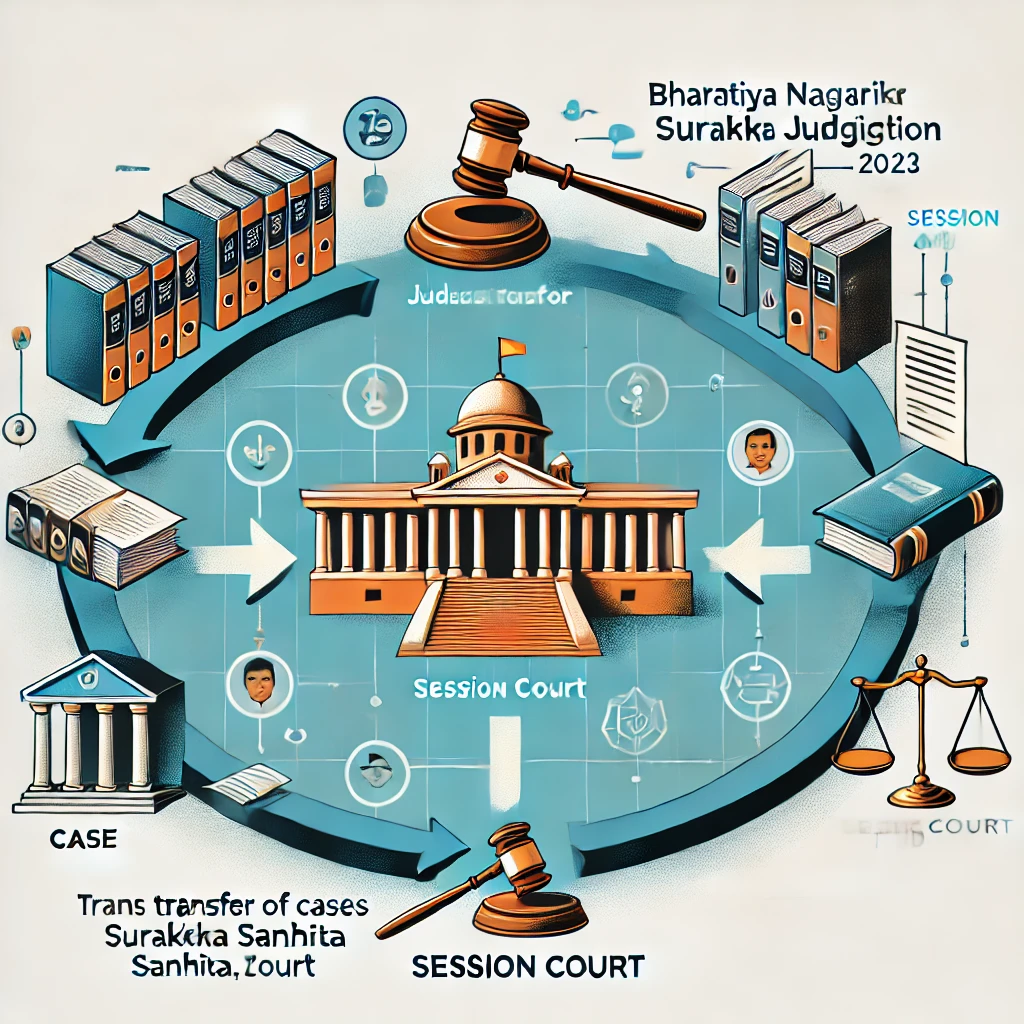
Judicial Transfer of Cases and Session Court Jurisdiction under Bharatiya Nagarik Suraksha Sanhita, 2023

The Bharatiya Nagarik Suraksha Sanhita (BNSS), 2023, improves judicial efficiency by streamlining case transfers and Sessions Court jurisdiction, superseding the Criminal Procedure Code, 1973. Section 406 authorises High Courts and the Supreme Court to transfer cases from one court to another for equity or public interest. Sessions Courts under Section 26 deal with grave offences tried only by them, with enhanced powers to determine complicated cases. The BNSS harmonizes electronic case management processes to facilitate quick transfers and trials. These provisions seek to eliminate jurisdictional overlaps and accelerate the delivery of justice in India’s criminal justice system.

CRIMINAL LAW

Handling Offences Committed Outside Jurisdiction under the Bharatiya Nagarik Suraksha Sanhita, 2023

The Bharatiya Nagarik Suraksha Sanhita (BNSS), 2023, establishes strong mechanisms for dealing with offences that have taken place outside a court’s jurisdiction, replacing the Criminal Procedure Code, 1973. Section 188 authorizes Indian courts to prosecute offences that have been committed abroad by Indian nationals or on Indian ships, as long as they affect national interests. Extradition and mutual legal assistance are made easy to aid prosecution. Courts can initiate investigations or trials on the basis of complaints or evidence received, even electronically, to facilitate procedural flexibility. These provisions bolster India’s legal system to tackle cross-border crime effectively, while balancing sovereignty and justice.

CRIMINAL LAW

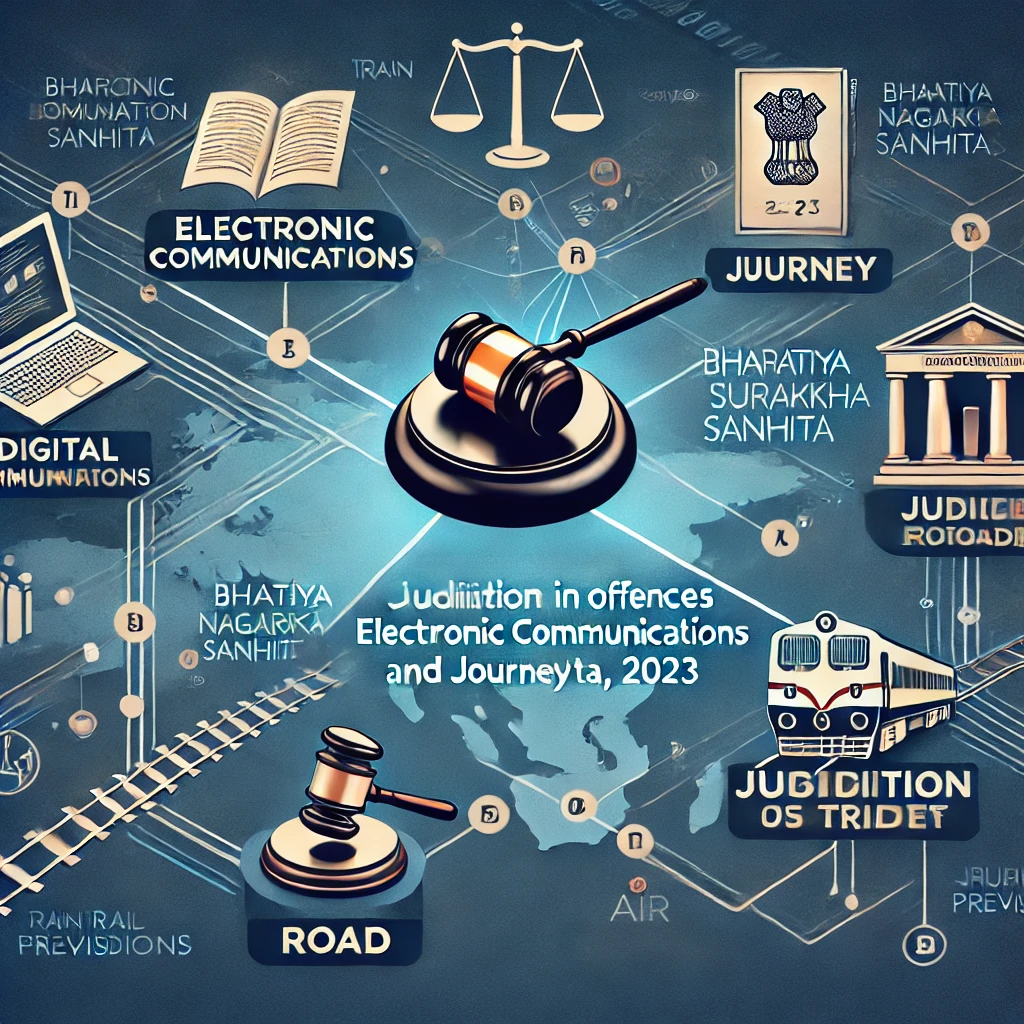
Jurisdiction in Offences Involving Electronic Communications and Journey: Provisions of Bharatiya Nagarik Suraksha Sanhita, 2023

The Bharatiya Nagarik Suraksha Sanhita (BNSS) 2023 presents provisions for jurisdiction for electronic communication and journey offences, supplanting the Criminal Procedure Code 1973. According to Section 13 of BNSS, electronic communication-based offences can be tried by courts where messages are received or sent, ranging digital crime adaptability. For offences related to journeys, jurisdiction is widened to courts along the route of journey, which facilitates procedural flexibility. These reforms seek to update India’s criminal justice system, addressing delays and technological deficits. The BNSS facil

CRIMINAL LAW

Jurisdiction of Courts for Specific Offences under Bharatiya Nagarik Suraksha Sanhita, 2023

The Bharatiya Nagarik Suraksha Sanhita, 2023 (BNSS), which replaces the Criminal Procedure Code of 1973, clearly outlines the jurisdiction of courts for various offenses, ensuring that legal processes are well-defined. Sections 187-189 specify both territorial and hierarchical jurisdiction, determining where cases are tried based on the location of the offense or its seriousness. For example, Sessions Courts are designated to handle serious crimes (Sections 225-237), while Magistrates deal with less severe offenses (Sections 190-199). Additionally, special provisions like Section 198 address offenses related to marriage, customizing jurisdiction according to the nature of the crime. This organized framework aims to improve judicial efficiency and clarity, contributing to the modernization of India’s criminal justice system.

CRIMINAL LAW

Jurisdiction of Criminal Courts: Understanding Inquiry and Trial Procedures under the Bharatiya Nagarik Suraksha Sanhita, 2023

The Bharatiya Nagarik Suraksha Sanhita, 2023 (BNSS), which replaces the Criminal Procedure Code of 1973, redefines the roles of criminal courts in conducting inquiries and trials, making judicial processes more efficient. Sections 187-189 specify the hierarchy of courts and their territorial jurisdiction, while Sections 193-199 outline the procedures for inquiries, giving magistrates the authority to start investigations and gather evidence. The trial procedures detailed in Sections 225-265 focus on efficiency, fairness, and the rights of victims, incorporating modern tools such as electronic summons (Section 195). This new framework aims to improve accessibility and accountability, in line with ongoing reforms in India’s justice system.