BNSS

Sections 6, 7, and 8 of the Bharatiya Nagarik Suraksha Sanhita, 2023 – Establishing a Unified Framework for Criminal Courts: Court Classes, Sessions Divisions, and Operational Protocols

With a particular emphasis on Sections 6, 7, and 8, this article provides an explanation of the composition and organizational structure of criminal courts and offices that fall under the jurisdiction of the Bharatiya Nagarik Suraksha Sanhita, 2023. Using straightforward language, it provides information regarding the categorization, jurisdiction, appointments, and operational procedures of the judicial system.
Current Legal Update

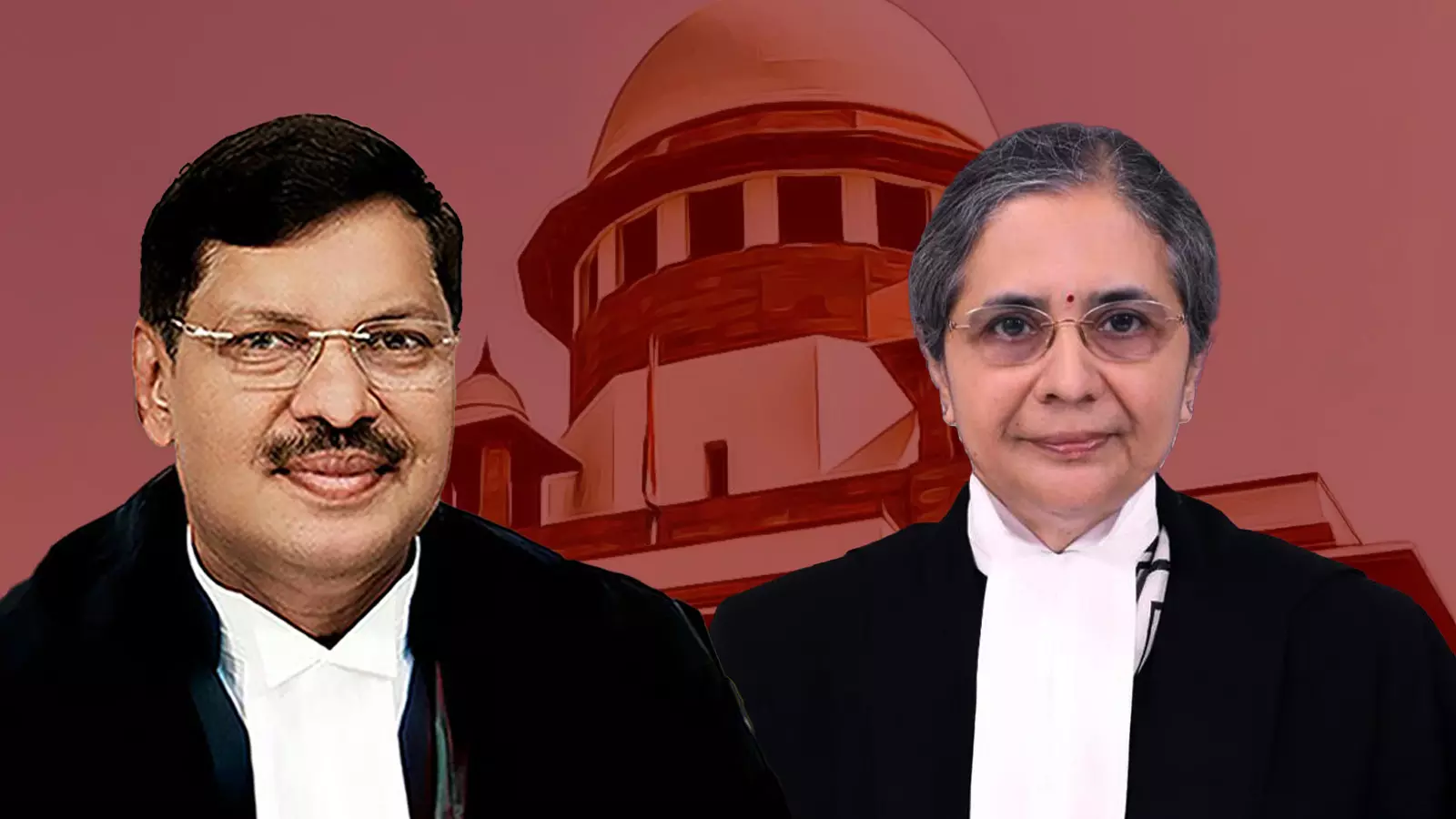
Why Supreme Court Bar Association was Discontent with Justice Bela Trivedi’s Perceived Anti-Lawyer Rulings

The Supreme Court Bar Association’s decision to forgo Justice Bela Trivedi’s customary farewell spoke volumes about deep-seated frustration within the legal community. Lawyers felt her courtroom displayed an unrelenting focus on procedural rigidity, often at the expense of fairness and compassion. Her insistence on involving national investigative agencies in alleged lawyer misconduct, and a tough stance on bail in white-collar and security-related cases, fueled perceptions of bias against practitioners.

Critics also pointed to recurring assignments of sensitive, high-profile matters to her bench, suggesting a tilt toward government priorities. Many advocates came to see her judgments as prioritizing strict legal formalism over the human element of justice, eroding the collegial respect that underpins bench-Bar relations.

CRIMINAL LAW

Jurisdiction of Courts for Specific Offences under Bharatiya Nagarik Suraksha Sanhita, 2023

The Bharatiya Nagarik Suraksha Sanhita, 2023 (BNSS), which replaces the Criminal Procedure Code of 1973, clearly outlines the jurisdiction of courts for various offenses, ensuring that legal processes are well-defined. Sections 187-189 specify both territorial and hierarchical jurisdiction, determining where cases are tried based on the location of the offense or its seriousness. For example, Sessions Courts are designated to handle serious crimes (Sections 225-237), while Magistrates deal with less severe offenses (Sections 190-199). Additionally, special provisions like Section 198 address offenses related to marriage, customizing jurisdiction according to the nature of the crime. This organized framework aims to improve judicial efficiency and clarity, contributing to the modernization of India’s criminal justice system.

CRIMINAL LAW

Jurisdiction of Criminal Courts: Understanding Inquiry and Trial Procedures under the Bharatiya Nagarik Suraksha Sanhita, 2023

The Bharatiya Nagarik Suraksha Sanhita, 2023 (BNSS), which replaces the Criminal Procedure Code of 1973, redefines the roles of criminal courts in conducting inquiries and trials, making judicial processes more efficient. Sections 187-189 specify the hierarchy of courts and their territorial jurisdiction, while Sections 193-199 outline the procedures for inquiries, giving magistrates the authority to start investigations and gather evidence. The trial procedures detailed in Sections 225-265 focus on efficiency, fairness, and the rights of victims, incorporating modern tools such as electronic summons (Section 195). This new framework aims to improve accessibility and accountability, in line with ongoing reforms in India’s justice system.

CRIMINAL LAW

Bharatiya Nagarik Suraksha Sanhita, 2023: Detailed Explanation of Section 196 and Related Provisions

The Bharatiya Nagarik Suraksha Sanhita, 2023 (BNSS), which replaces the Criminal Procedure Code of 1973, introduces Section 196, which outlines how police should examine witnesses during investigations. This section requires that statements be recorded under oath to ensure their accuracy and legal validity, aligning with the BNSS’s emphasis on strong evidence collection. Additionally, related provisions such as Section 194 (which deals with the initiation of investigations) and Section 195 (which covers the summoning of individuals) create a comprehensive framework for building cases effectively. Section 196 highlights the importance of witness cooperation and procedural transparency, adapting to the needs of modern policing while maintaining fairness. This demonstrates India’s dedication to reforming its criminal justice system.

CRIMINAL LAW

Bharatiya Nagarik Suraksha Sanhita, 2023: A Comprehensive Overview of Section 195 and Related Provisions

The Bharatiya Nagarik Suraksha Sanhita, 2023 (BNSS), which replaces the Criminal Procedure Code of 1973, introduces Section 195. This section gives police officers the authority to summon individuals who have knowledge of the case during investigations as outlined in Section 194. This change aims to improve the efficiency of investigations by requiring those summoned to comply, which aligns with the BNSS’s goal of modernizing criminal procedures. Additionally, related sections like 194 (investigation powers) and 196 (examination of witnesses) provide greater clarity in the process, focusing on the quick collection of evidence and the cooperation of witnesses. These revisions reflect the ongoing evolution of India’s justice system, emphasizing the importance of streamlined processes and accountability.

CRIMINAL LAW

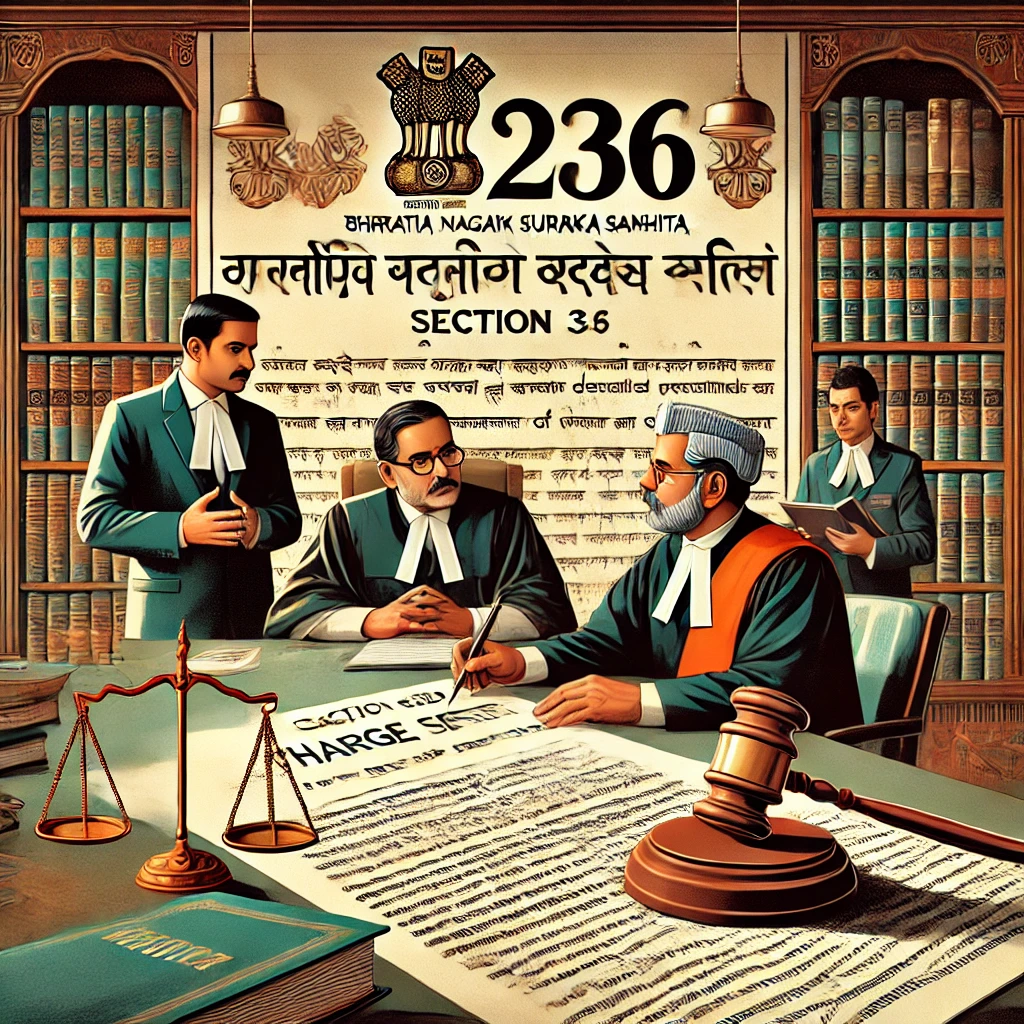
Section 236 of the Bharatiya Nagarik Suraksha Sanhita, 2023: Detailed Particulars for Clear Charges

Section 236 of the Bharatiya Nagarik Suraksha Sanhita (BNSS), 2023, directs specific details in criminal charges for the sake of clarity and transparency, overriding the CrPC, 1973. Prosecutors must state definite facts—such as the mode, means, or circumstances of the offence—beyond minimum legal references. The provision is designed to banish uncertainty so that the accused may fully grasp allegations and mount a defense. By imposing detailed charge framing, Section 236 promotes judicial effectiveness, minimizes trial mistakes, and maintains justice, representing a progressive development in India’s criminal justice reforms.

Uncategorized

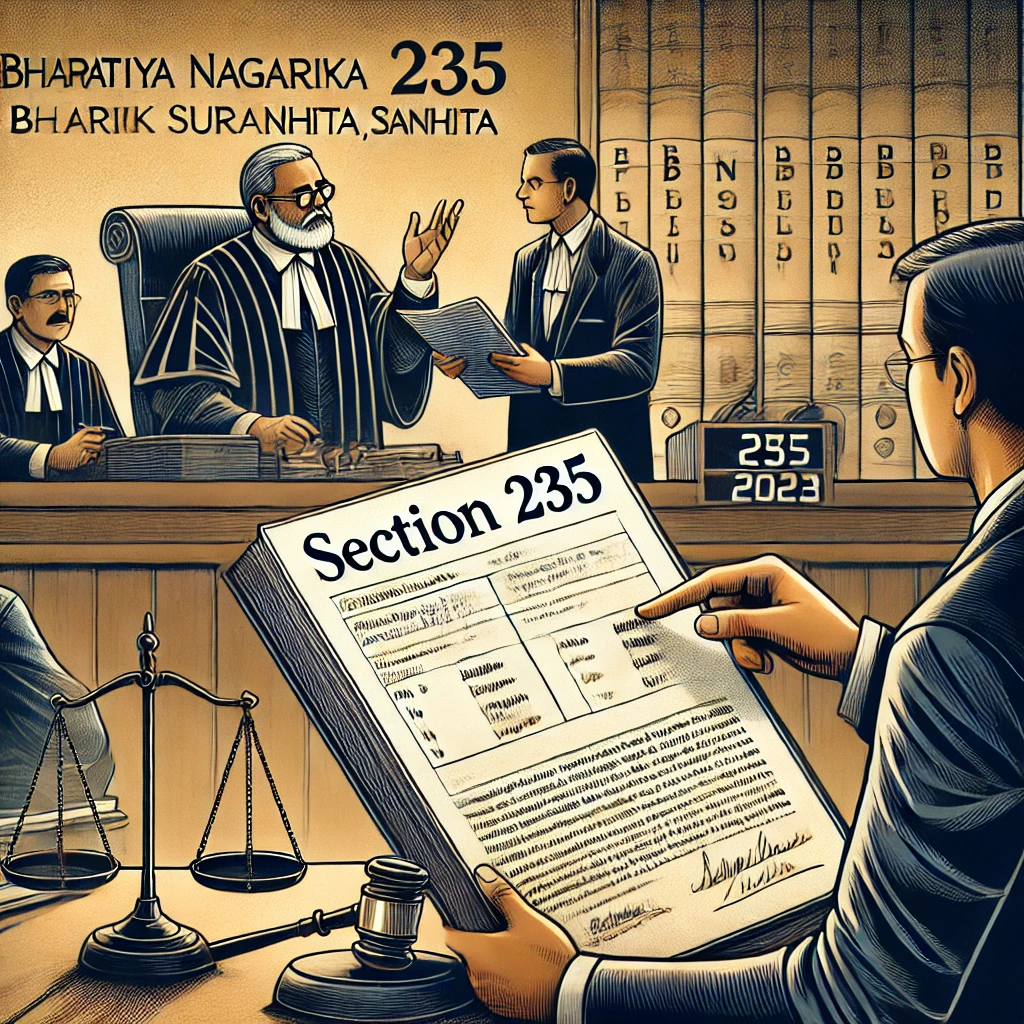
Understanding Section 235 of the Bharatiya Nagarik Suraksha Sanhita, 2023: Specifics of Time, Place, and Person in Criminal Charges

Section 235 of the Bharatiya Nagarik Suraksha Sanhita (BNSS), 2023, requires criminal charges to detail the time, location, and individual involved in an offence, superseding vague expressions under the CrPC, 1973. This section provides clarity in allegations, allowing the accused to present a proper defense while increasing judicial clarity. By mandating these details, Section 235 minimizes misinterpretation, discourages frivolous litigation, and enhances procedural fairness. It indicates a movement towards openness and accountability within India’s criminal justice system, bringing legal procedures in line with modern standards.

CRIMINAL LAW

Practical Implications of the Charge Provisions in the Bharatiya Nagarik Suraksha Sanhita, 2023

The provisions for charges in the Bharatiya Nagarik Suraksha Sanhita (BNSS), 2023, have important practical effects on India’s criminal justice system. By requiring specific framing of charges under Section 234, the BNSS ensures the accused knows what is alleged against them, minimizing vagueness and trial delays. Joinder of charges simplifies multiple-offence cases, improving judicial efficiency. Courts can correct mistakes without prejudicing rights, striking a balance between fairness and expediency. These provisions enhance prosecution clarity, enhance defense readiness, and facilitate speedier delivery of justice, keeping pace with contemporary legal expectations in place of the CrPC, 1973.

CRIMINAL LAW

Concept of Charges in the Bharatiya Nagarik Suraksha Sanhita, 2023

The Bharatiya Nagarik Suraksha Sanhita (BNSS), 2023, updates the charging framework of India’s criminal procedure, replacing the CrPC, 1973. A charge is a specific accusation, defining the offence to notify the accused and ensure a just trial. Chapter XVIII, Sections such as 234 focus on stating the offence clearly, legal provisions, and particulars of the act. The BNSS facilitates joinder of charges for efficiency but prevents errors from compromising justice. This enhances legal accountability and procedural integrity, as it conforms to the needs of modern justice.